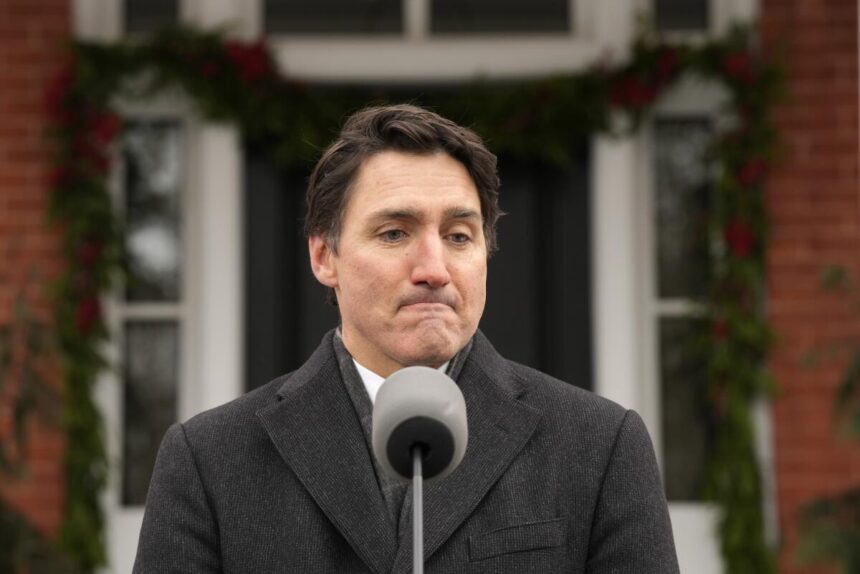
Immigration, a topic that has long divided many Western countries, has become a focal point of public debate in Canada, a nation traditionally known for its welcoming stance towards newcomers. However, recent shifts in public sentiment regarding immigration, compounded by the housing crisis and economic pressures, seem to have played a crucial role in Justin Trudeau’s resignation as Prime Minister. The growing frustration over housing shortages, rising rent prices, and the increasing number of immigrants has fueled widespread discontent, which many argue contributed to the political upheaval that led to Trudeau stepping down in January 2025, just before a crucial election year.
For many Canadians, the struggle to find affordable housing has reached a tipping point. Across the country, rental prices have soared in recent years, with a single bedroom in the Toronto suburb of Brampton being advertised for as low as C$550 per month, a price that appears to be a bargain until one realizes that the space is a converted bathroom, offering little more than a mattress next to a sink and toilet. Similar listings in Ontario reveal cramped and inadequate living spaces, with beds placed in kitchens and laundry areas, highlighting the dire state of the housing market. According to a report by property consultancy Urbanation, rents have increased by almost 20% over the past three years, leaving many Canadians living in overcrowded, substandard conditions. A government report also reveals that nearly 2.4 million families are living in homes that are too small, in urgent need of repairs, or simply unaffordable.
This accommodation crisis has coincided with rising inflation and has sparked broader concerns about Canada’s immigration policy. For the first time in recent history, a majority of Canadians have begun to question the scale of immigration and its impact on housing, jobs, and social services. While Canada has long prided itself on its multiculturalism, the debate surrounding immigration has become increasingly polarized, with many citizens expressing concern over the country’s ability to absorb such large numbers of newcomers. According to a 2024 survey by Environics, 58% of Canadians now believe that too many immigrants are entering the country, a sharp increase from just 27% in 2022.
The situation has given rise to protests and anti-immigration campaigns across the country. In major cities like Ottawa, Vancouver, and Calgary, marches have been organized calling for a reduction in immigration. Peter Kratzar, the founder of a protest group called Cost of Living Canada, argues that the rapid influx of immigrants, coupled with the housing shortage, has left many Canadians feeling anxious about the future. “People might say it’s anecdotal, but the evidence keeps popping up. The housing crisis is driving concerns about immigration,” Kratzar explains.
This growing unease over immigration was one of the key factors that contributed to Trudeau’s downfall. Although immigration was not the sole cause of his low approval ratings and eventual resignation, many believe it acted as a catalyst in the broader discontent with his leadership. Under Trudeau’s administration, Canada saw a sharp increase in immigration levels, with the population growing from 35 million to over 40 million in just a decade. A significant portion of this growth was driven by immigration, which accounted for over 90% of the country’s population increase in 2024. This surge in newcomers, combined with rising housing costs, has led to mounting frustration, particularly in major urban centers like Toronto and Vancouver.
Trudeau’s decision to boost immigration in the aftermath of the pandemic, with the aim of stimulating economic growth through an influx of foreign students, temporary workers, and skilled immigrants, has been met with growing criticism. Many argue that the government failed to adequately address the housing and infrastructure needs that accompany such population growth. As a result, Canadians have become increasingly vocal about their concerns over immigration levels, with some accusing Trudeau of failing to listen to the public’s growing anxiety.
Trudeau’s resignation, announced on January 6, 2025, came amid a perfect storm of rising discontent. His approval rating had plummeted to just 22%, a sharp decline from the 65% approval he enjoyed at the start of his tenure. While Trudeau cited “internal battles” as the primary reason for his departure, many observers believe that his delayed response to the housing and immigration issues played a significant role in his decision to step down. Jonathan Rose, a political expert from Queen’s University, believes that immigration concerns were not the immediate cause of Trudeau’s resignation but were certainly an important factor. “It reflects his perceived inability to read the room in terms of public opinion,” Rose explains.
As Canada looks to its future, questions arise about who will replace Trudeau as leader of the Liberal Party. With the next election approaching, polls suggest that the Conservative Party, led by Pierre Poilievre, is currently favored to win. Poilievre has been vocal about the need to control immigration levels and link them to housing construction, arguing that the number of new arrivals should not exceed the number of new homes being built. The arrival of Donald Trump for a second term in the United States is likely to intensify the immigration debate in Canada. Trump, who has made mass deportations and stricter border controls central to his political agenda, has already caused ripples in Canadian politics. Poilievre, in particular, has been drawing comparisons to Trump and has increasingly focused on immigration issues, hoping to sway voters who are concerned about the growing number of migrants entering the country.
Trump’s policies, including plans to impose tariffs on Canadian goods unless border security is tightened, are expected to further inflame the immigration debate on both sides of the border. With Canada and the US sharing the world’s longest undefended border, there are concerns that Trump’s rhetoric will fuel anti-immigrant sentiment in Canada, putting even more pressure on Trudeau’s successor to address the issue.
Despite the growing frustration over immigration, not everyone blames the housing crisis on the increase in migrants. Toronto Mayor Olivia Chow, an immigrant herself, has pointed to the failure of politicians over the past three decades to build enough affordable housing as the root cause of the current crisis. Many believe that the conversation around immigration has become a convenient scapegoat for the country’s housing and economic challenges.
As Canada moves forward, the debate over immigration is expected to remain a key issue in the upcoming election. While some politicians call for a reduction in immigration, others argue that the country must continue to welcome newcomers to combat Canada’s falling birth rate and drive economic growth. However, political leaders will need to tread carefully, balancing the concerns of voters who fear the impact of immigration on housing and job opportunities with the country’s long-standing commitment to multiculturalism and diversity.
In the coming months, as Canada grapples with its housing crisis and the rising tide of anti-immigrant sentiment, the fate of the country’s immigration policy will be closely tied to the political future of Justin Trudeau’s successor. As debates around immigration, housing, and economic growth continue to dominate the national conversation, the outcome of the next election will likely shape the future of Canada’s approach to newcomers and the challenges of an increasingly globalized world.