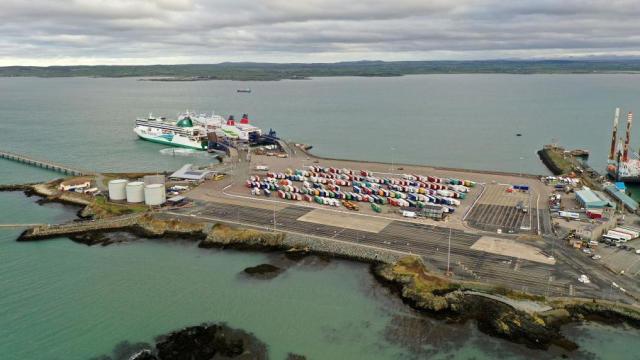
Holyhead, the UK’s second busiest port, is slowly returning to normal after more than a month of disruption caused by damage from Storm Darragh. The storm, which struck on 7 December, significantly affected the port’s infrastructure, leading to the closure of two berths that connect North Wales to Dublin. This shutdown caused widespread disruptions, particularly for thousands of travellers, parcel deliveries during the Christmas season, and businesses in the surrounding area.
Although the port owners, Stena Line and Irish Ferries, are working to restore services, only one of the damaged berths is expected to reopen on Thursday. As a result, both ferry companies will have to run their regular four daily services from a single berth, which is a major logistical challenge, given that they usually operate from two separate berths. A temporary timetable has been put in place for the partial reopening, while the second berth remains under repair.
The Welsh government has stated that it will assess the results of a survey conducted by Anglesey Council before making decisions on the next steps. The council is collecting evidence on the impact of the port’s closure, with a focus on businesses affected by the reduced footfall and disrupted supply chains. The closure of the port has already resulted in a substantial drop in earnings, particularly for local traders and service providers.
Traders in Holyhead have expressed concerns over the significant financial loss experienced since the port shut down. Jeff Evans, a councillor for Anglesey, explained that the loss of Irish-bound traffic has had a direct impact on the town’s businesses, with fewer shoppers and tourists in the area. He emphasized that, although Stena Line is working to address the issue, the partial reopening of the port is not enough to fully restore business activity. “The sooner it’s reopened normally, the better. We can’t ever have this happening again,” Evans said.
Claudia Howard, who owns the Boathouse Hotel, highlighted the severe impact on her business, noting that 147 bookings had been cancelled, resulting in a loss of approximately £14,700. This figure does not account for additional revenue lost from bar sales, meals, and other services. Howard also mentioned that coach parties, which traditionally travel to Ireland via the ferry, had to cancel their bookings, further exacerbating the financial strain. In addition to the lost revenue, the hotel had to pay for roof repairs caused by storm damage.
Local businesses are also grappling with disruptions to supply chains, with companies that provide essential services, such as linen suppliers, unable to meet the demand due to the port’s closure. Despite these challenges, Howard expressed cautious optimism about the resumption of ferry services, hoping that business activity will pick up. However, she also expressed concerns that with four ferries now operating instead of the usual two, fewer passengers may choose to stay in Holyhead, which could continue to affect local businesses.
Gary Pritchard, the leader of Anglesey Council, has called for the creation of a hardship fund to support businesses impacted by the closure. He pointed out that the Irish government had already established a fund to assist the haulage industry, and he suggested that a similar initiative could help businesses in Holyhead recover from the financial setbacks caused by the port’s disruption.
In a statement, the Welsh government acknowledged the challenges faced by businesses and reiterated its commitment to gathering evidence to understand the full extent of the impact. A survey is available on the Anglesey Council website for local businesses to complete, and the government has assured that it will consider the findings carefully before deciding on further action.
Meanwhile, the Irish government has expressed its satisfaction with the expected resumption of ferry services between Holyhead and Dublin. Describing the reopening as “very positive news,” the Irish government highlighted the significance of the service for passengers, freight operators, and the broader maritime sector. It added that the impact of the port’s closure during the Christmas period will be reviewed and assessed in due course.
As Holyhead works towards full recovery, both port authorities and local businesses continue to face significant challenges. While the resumption of ferry services is a step in the right direction, it remains to be seen how quickly the port and the surrounding community can fully bounce back from the financial losses sustained during the prolonged disruption.