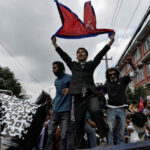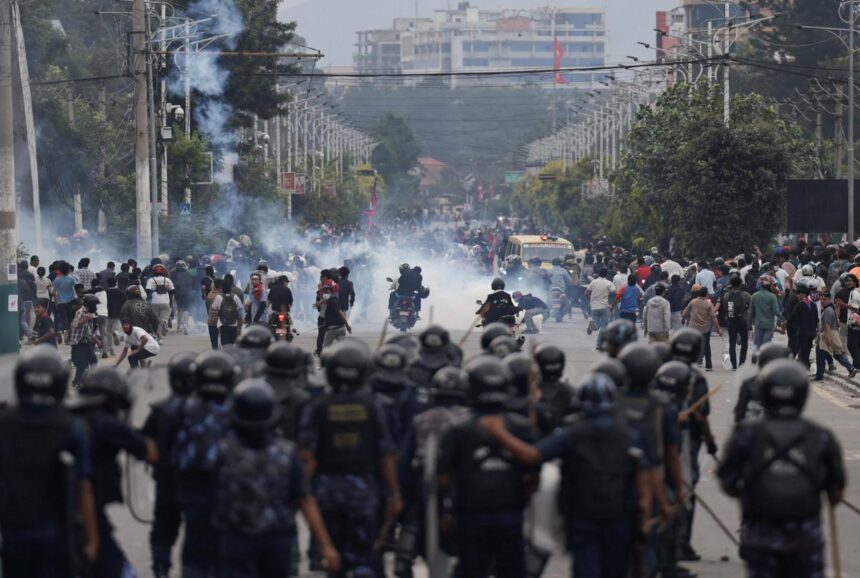
As Nepal grapples with its most intense wave of unrest in years, the tremors of the crisis are being felt across the border in India. The Uttar Pradesh government has placed all seven districts along the Indo-Nepal border under high alert after violent anti-government protests in Kathmandu and other cities spiraled into full-scale clashes, leaving dozens dead and hundreds injured. The protests, driven largely by young demonstrators from Nepal’s Gen Z, have targeted government buildings, disrupted daily life, and sparked fears of regional instability. The situation has drawn sharp responses from law enforcement, political leadership, and security forces on both sides of the border, highlighting the urgency of containing unrest before it spills further.
Uttar Pradesh strengthens vigilance as Nepal burns
The state of Uttar Pradesh has been quick to respond to the crisis unfolding just beyond its northern boundary. Chief Minister Yogi Adityanath’s administration has directed law enforcement agencies to remain on constant watch, deploying additional personnel to sensitive zones in Shravasti, Balrampur, Bahraich, Pilibhit, Lakhimpur Kheri, Siddharthnagar, and Maharajganj—districts directly linked to the Himalayan nation.
Director General of Police Rajiv Krishna has taken a hands-on approach, ordering round-the-clock surveillance and intensified patrolling. Security has been ramped up not only along known entry points but also in remote areas prone to infiltration by anti-social elements. The Sashastra Seema Bal (SSB), tasked with guarding the open border, has escalated its monitoring efforts to prevent any spillover of violence or the entry of miscreants exploiting the unrest.
A special control room has been established at the Police Headquarters in Lucknow to assist Indian nationals stranded in Nepal. Officials have announced three helpline numbers—0522-2390257, 0522-2724010, and a WhatsApp-enabled line at 9454401674—that will function round the clock to respond to emergencies. According to Additional Director General of Police (Law and Order) Amitabh Yash, the Uttar Pradesh Police remain “fully committed” to ensuring law and order while extending all possible support to citizens in distress.
While the Indo-Nepal border has not been officially sealed, authorities have made it clear that vigilance has been tightened to an unprecedented degree. District magistrates across Devipatan division have been instructed by Commissioner Shashi Lal Bhushan Sushil to coordinate closely with police and SSB officials. This inter-agency cooperation is intended to ensure that any disturbances on Nepalese soil do not directly threaten Indian territory or escalate into cross-border complications.
The heightened alert was triggered after Nepal witnessed an extraordinary escalation of violence. In Kathmandu, angry protesters stormed the Parliament building and torched the President’s office at Shital Niwas, alongside residences of top political leaders. The scale of destruction was immense, and reports suggest that more than 19 people have been killed so far, with over 500 injured in clashes with security forces. For Indian authorities, the specter of chaos spilling into UP’s border towns has turned the unrest from a regional concern into a direct security challenge.
Nepal’s Gen Z protests intensify against corruption and digital crackdown
The roots of the current crisis lie in a combustible mix of public anger against corruption and outrage over government attempts to regulate digital life. In late August, the Nepalese government imposed a sweeping ban on 26 social media platforms, including WhatsApp, Instagram, and YouTube. Officials cited reasons of revenue leakage, cybersecurity threats, and harmful online influence. But for a population increasingly dependent on digital communication, especially younger citizens, the ban was seen as an attack on freedom of expression and access to information.
Although the ban was revoked amid public backlash, the damage had already been done. What began as localized student-led demonstrations soon transformed into a nationwide movement demanding greater accountability, an end to corruption, and respect for civil liberties. The protests gained further momentum when Prime Minister KP Sharma Oli tendered his resignation under immense pressure, a development that left a leadership vacuum at the heart of Nepal’s government.
The protests have been particularly intense in Kathmandu, Dang, and Nepalgunj. In many cities, curfews have been imposed to contain the chaos, while the Nepal Army has been given charge of security operations after dusk. Roads have been barricaded with burning tyres, businesses shuttered, and schools forced to close. In border towns like Nepalgunj, the impact of the protests has been severe, with economic activity grinding to a halt for consecutive days.
The situation escalated further when demonstrators stormed critical government facilities. The burning of Parliament and the President’s office has been described by local media as one of the darkest moments in Nepal’s democratic history since the civil war era. The clashes with police have also been brutal, with reports of live ammunition being used to disperse crowds. This has only hardened public anger, drawing sympathy for the demonstrators and fueling further participation in the protests.
In a bid to calm tensions, Nepalese President Ram Chandra Paudel issued an appeal to protesters, urging them to embrace dialogue over destruction. His message, however, has done little to quell the anger on the streets. For many young Nepalis, the protests are not just about social media but about a broader demand for a system that listens, reforms, and delivers.
The instability has also disrupted international connectivity. Major airlines, including Air India, SpiceJet, and IndiGo, have cancelled flights to Kathmandu after mobs attempted to storm Tribhuvan International Airport. This has left hundreds of Indian travelers stranded in Nepal, compounding the humanitarian concerns already tied to the unrest.
The intensity of the movement has highlighted a generational shift in Nepalese politics. Gen Z protesters, often armed with smartphones and digital tools, have been at the forefront of mobilizing support and spreading awareness. Unlike earlier waves of protests, these demonstrators are less bound by traditional party loyalties and more motivated by issues of transparency, accountability, and personal freedoms. Their tactics—rapid mobilization, decentralized organization, and the use of digital networks—have made them particularly difficult for authorities to suppress.
For India, the implications are profound. The open border with Nepal has always been both a bridge of friendship and a challenge for security. With unrest showing no signs of abating, Indian authorities are preparing for possible refugee inflows, disruptions in trade, and risks of cross-border criminal activity. The cancellation of flights, the closure of businesses in Nepal, and the disruption of daily life have all begun to reverberate across India’s border states.
At the same time, the crisis in Nepal is being watched carefully in New Delhi for its diplomatic implications. India has historically played a significant role in Nepal’s political transitions, and the instability of its northern neighbor could compel more active involvement in the coming weeks. With China also maintaining a deep strategic interest in Nepal, the trajectory of the current protests could reshape regional dynamics in South Asia.