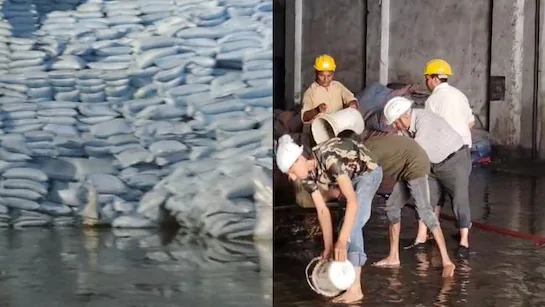
A night of heavy rain in Haryana has led to massive financial losses at Asia’s largest sugar mill, Saraswati Sugar Mill in Yamunanagar, after floodwaters entered the premises and damaged a significant portion of stored sugar worth Rs 50 to 60 crore. The incident, which officials say is unprecedented in the mill’s history, has sparked concerns over poor drainage management, with officials now assessing the full extent of the damage while working to clear the waterlogged warehouse.
The Saraswati Sugar Mill, considered Asia’s largest sugar compound, had around 2,20,000 quintals of sugar stored in its Yamunanagar warehouse, valued at nearly Rs 97 crore. Officials now estimate that 40 percent of this stock has been damaged due to water seeping in after heavy overnight rainfall, which was further compounded by an overflow from a nearby municipal drain.
Encroachment Blocked Drainage, Causing Flooding
According to Rajiv Mishra, the general manager of Saraswati Sugar Mill, the flooding was worsened by an encroachment near the municipal corporation drain, which passes directly behind the warehouse. The blockage caused the drain’s water level to rise rapidly, pushing floodwaters into the warehouse and soaking large quantities of sugar.
“It rained extremely heavy last night, and around midnight, our security staff alerted us about water entering the premises,” Mr Mishra said. “Sugar, being highly hygroscopic in nature, was heavily affected, leading to substantial losses. We estimate a loss of Rs 50 to 60 crore, but the exact figure will be clearer after scanning the entire warehouse.”
Mr Mishra shared that in the long operational history of the Saraswati Sugar Mill, this is the first time the facility has experienced flooding on this scale, leaving the management and staff unprepared for such a disaster. Efforts are now underway to pump out the water using cranes and clear the damaged sections for further inspection.
Local Markets Unlikely To Be Affected
Despite the heavy financial blow to the mill, Mr Mishra mentioned that the flooding may not significantly affect sugar availability in local markets. The damaged sugar, however, represents a substantial financial setback for the mill’s operations, and the recovery process will likely take time.
Experts have warned that if such drainage management issues and administrative negligence continue, similar incidents could become a recurring problem, affecting not just the financial stability of industries like Saraswati Sugar Mill but also creating challenges related to food security in the future.
While municipal authorities are expected to investigate the encroachment and drainage issues that led to this disaster, the incident serves as a reminder of how critical proper urban planning and maintenance are to industrial safety. For now, the Saraswati Sugar Mill is focused on damage control, salvage operations, and ensuring operations return to normal while assessing long-term plans to prevent a repeat of such flooding.