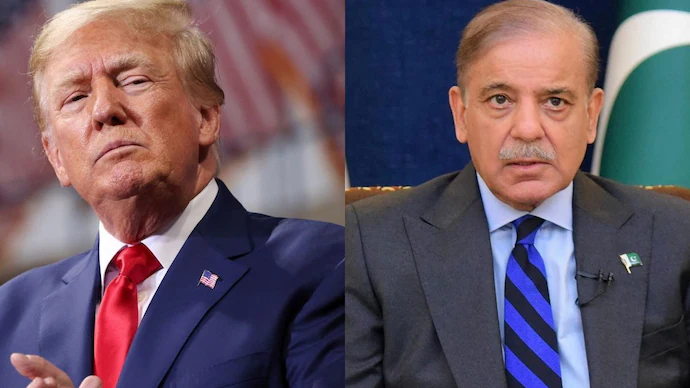
In a sudden and dramatic shift in US trade policy, President Donald Trump announced a 19% tariff on Pakistani goods just one day after celebrating a major energy partnership with Islamabad. While the energy deal was projected as a breakthrough in bilateral relations, the tariffs form part of Donald Trump’s broader global trade overhaul under the newly expanded “Liberation Day” executive order. This unexpected move has raised eyebrows internationally, especially as it comes on the heels of what was portrayed as a “landmark” agreement on joint oil development. The new tariffs, which will take effect on August 7, reflect a complex mix of strategic energy interests and protectionist economic goals.
Donald Trump’s mixed signals on Pakistan
Just days ago, Donald Trump had taken to his platform, Truth Social, to announce what he described as a “significant beginning” of a long-term energy collaboration between the US and Pakistan. The focal point of this preliminary agreement, according to Donald Trump, is the exploration and development of Pakistan’s “massive oil reserves”—a term that caught many analysts by surprise, as no such proven reserves have been officially acknowledged on that scale.
As per the outlines of the deal, the two countries agreed to partner in exploring untapped energy fields within Pakistan, with Donald Trump hinting at the possibility of Pakistan exporting oil to regional players like India in the future. Without naming the companies involved or providing a clear timeline, Donald Trump claimed the US was in the process of selecting the oil firm that would spearhead this new alliance. Despite the enthusiasm surrounding this partnership, he made no reference to the impending tariff hike at the time.
Interestingly, the tariff announcement arrived just a day after this energy partnership was made public. The updated tariff list, published by the White House as part of the revised Liberation Day initiative, lowered Pakistan’s duty from an earlier 29% to 19%—but still represented a steep charge compared to global averages.
Pakistan, for its part, committed to importing US-origin crude oil for the first time in a significant volume. Cnergyico, the country’s largest private refiner, has already finalized a deal to bring in 1 million barrels of West Texas Intermediate (WTI) crude from global trading firm Vitol in October. This marks a substantial shift in Pakistan’s energy sourcing, which has traditionally been heavily reliant on Middle Eastern suppliers.
The White House has not clarified why the tariff announcement was made so soon after such a strategic agreement or how this might affect the developing energy relationship.
Tariffs rolled out across multiple countries
The imposition of tariffs on Pakistan is just one part of a sweeping update to Donald Trump’s trade policy. Under the revised Liberation Day directive, dozens of countries are now subject to new import duties aimed at narrowing trade deficits and boosting domestic revenues. Most nations without bilateral trade adjustments will now face a default 10% tariff, with many others seeing significantly higher rates.
India, for example, faces a 25% tariff—announced earlier this week directly via Donald Trump’s social media. Taiwan and Vietnam are each hit with 20% levies, while South African goods are now subject to a steep 30% duty. Thailand and Cambodia, which reportedly reached last-minute agreements with the US, received 19% tariffs similar to Pakistan. Other Southeast Asian countries, such as Indonesia and the Philippines, are subject to the same rate.
Donald Trump’s team has also warned that any goods discovered to be transshipped to avoid these new tariffs could face additional levies. However, major economies like China, Mexico, and Canada are currently being handled under different trade frameworks, suggesting a selective and tiered approach to global economic engagement.
According to the Donald Trump administration, the tariff plan is part of a broader “reciprocal trade strategy” that seeks to correct what it views as long-standing imbalances in international trade. Critics argue that this approach risks escalating tensions with key economic partners and may undercut some of the same strategic partnerships the US is trying to build, like the one just announced with Pakistan.
The release of the updated tariff schedule has already led to sharp responses from several nations. Some are expected to contest the measures through diplomatic channels or retaliatory tariffs, which could further strain global trade flows at a time of economic uncertainty. The surprise inclusion of partner nations who had just signed or were in the process of negotiating trade agreements with the US adds to the confusion and concern among international observers.
While Donald Trump has yet to elaborate on how the energy deal with Pakistan will move forward under these new tariff conditions, analysts note that the tension between strategic diplomacy and protectionist economic measures is becoming increasingly visible in his administration’s policy choices.
In essence, Donald Trump’s latest maneuver reflects a high-risk balancing act. On one hand, the administration is pursuing deeper energy ties with countries like Pakistan; on the other, it is simultaneously leveraging tariffs as tools of both pressure and revenue. Whether these dual objectives can be aligned—or if they will ultimately conflict—remains to be seen in the weeks ahead as the tariffs take effect.