The Haryana Congress has announced its decision to bring a no-confidence motion against the BJP-led state government during the upcoming winter session of the Haryana Vidhan Sabha, aiming to corner the ruling party on governance, electoral integrity, and public welfare issues.
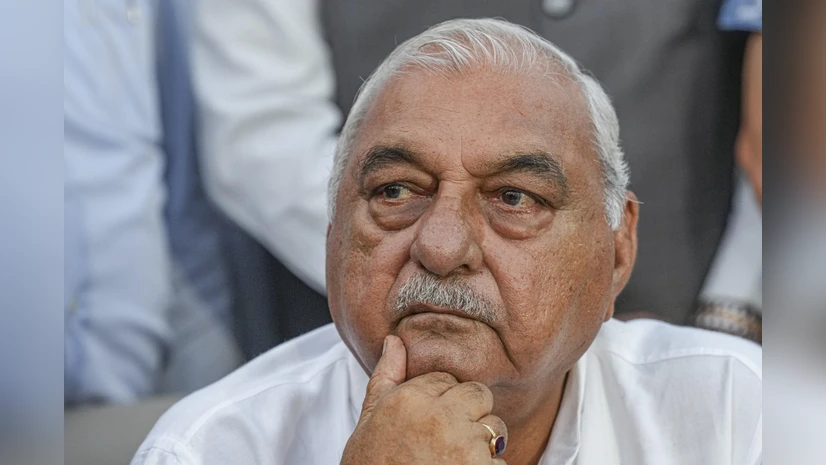
The winter session of the Haryana Vidhan Sabha is scheduled to begin on December 18, and it is expected to be politically charged, with the Congress preparing an aggressive legislative strategy. The party’s move to bring a no-confidence motion reflects its intent to directly challenge the legitimacy and functioning of the BJP government. The decision was taken at a meeting of the Congress Legislature Party held on Tuesday, chaired by Leader of Opposition Bhupinder Singh Hooda. Haryana Pradesh Congress Committee president Rao Narendra Singh presided over the meeting, which was attended by party MLAs and senior leaders.
According to Congress leaders, the no-confidence motion will be used as a platform to expose what the party describes as the government’s failures on multiple fronts. The Congress believes that the BJP has failed to live up to the expectations of the people of Haryana and has instead focused on consolidating power through questionable means. The party plans to use the winter session to raise issues affecting farmers, youth, workers, and marginalised communities, while also questioning the manner in which the BJP formed the government after the October 2024 Assembly elections.
The Business Advisory Committee of the Assembly is scheduled to meet on Wednesday to decide the duration of the session and the business to be taken up. Congress leaders have indicated that they will seek sufficient time for debates and discussions on key public issues, arguing that the Assembly should function as a forum for accountability rather than a mere formality.
Strategy and legislative agenda of the congress
During the Congress Legislature Party meeting, there was a detailed discussion on the issues that the party intends to raise during the Assembly session. The Congress has decided to bring adjournment motions, calling attention motions, and zero-hour submissions to highlight what it sees as serious lapses in governance. Among the key issues identified were the poor condition of sports facilities across the state, alleged irregularities in the electoral process, and the alleged misuse of government machinery by the ruling party.
The Congress has claimed that sports infrastructure in Haryana, a state known for producing national and international athletes, is in a dilapidated condition. Party leaders argued that many sports complexes lack basic equipment and maintenance, which has adversely affected young athletes. The issue is expected to be raised through adjournment motions to draw immediate attention and seek accountability from the government.
Another major plank of the Congress’s strategy is the allegation of vote theft during the October 2024 Assembly elections. The party has repeatedly accused the BJP of manipulating the electoral process through illegal inducements and administrative influence. According to Bhupinder Singh Hooda, the Congress believes that the BJP resorted to unethical practices to secure its majority and form the government. The no-confidence motion, he said, would provide an opportunity to bring these allegations on record and demand answers from the ruling party.
In addition to these issues, the Congress plans to raise concerns related to environmental protection, particularly the preservation of the Aravalli range. Party leaders have accused the government of failing to take adequate steps to protect the ecologically sensitive region from mining and encroachment. Compensation for farmers affected by waterlogging, rising pollution levels, and the alleged paddy scam are also on the Congress’s agenda.
The party has also decided to focus on employment and rural development issues. MNREGA implementation, rising unemployment among youth, and allegations of corruption in recruitment processes are expected to be raised through calling attention and short-duration discussion motions. The Congress has accused the Haryana Public Service Commission of giving undue priority to candidates from outside the state in government jobs, a charge that resonates strongly with local youth.
Drug abuse, particularly among the younger population, is another issue that the Congress intends to highlight. Party leaders have expressed concern over the growing menace of drugs and have accused the government of failing to curb trafficking and addiction. Education and health services, which the Congress claims have deteriorated under the BJP regime, will also be raised during the session.
Political confrontation and allegations against the bjp
The upcoming winter session is expected to witness sharp political confrontation, with the Congress adopting an aggressive tone against the BJP. Bhupinder Singh Hooda has stated that the party will demand discussions on statements made by certain BJP MLAs and MPs that allegedly promote caste-based hatred. According to the Congress, such statements have the potential to disturb social harmony in the state and must be debated and condemned within the Assembly.
The Congress will also seek discussions on long-pending and sensitive issues such as the completion of the Assembly complex, the Sutlej-Yamuna Link canal, law and order, and the status of Chandigarh. These issues have significant political and emotional resonance in Haryana, and the Congress believes that the BJP government has failed to make meaningful progress on them.
Speaking after the Congress Legislature Party meeting, Hooda alleged that the BJP had formed the government in Haryana by stealing votes. He claimed that the ruling party resorted to tactics such as offering illegal inducements before the elections and creating multiple votes for a single person. According to him, these actions undermined the democratic process and justified the bringing of a no-confidence motion against the government. Hooda asserted that the Congress would expose what he termed the government’s misdeeds on the floor of the House.
The Congress Legislature Party meeting also welcomed the court’s decision to reject the chargesheet in the National Herald case, describing it as a vindication of the party’s stand. A condolence resolution was passed on the demise of senior Congress leader and former Union Minister Shivraj Patil and former MLA Sahib Singh Saini. Members observed a two-minute silence to pay tribute to the departed leaders, reflecting a moment of unity and respect amid the charged political atmosphere.
After the meeting, Rao Narendra Singh addressed journalists and announced that the Congress would hold district-level protests across Haryana to oppose the renaming of the MGNREGA scheme. He said that the party viewed the proposed renaming as an attempt to erase the legacy of welfare initiatives associated with previous governments. The protests, scheduled for Wednesday, are intended to mobilise public opinion and demonstrate the Congress’s opposition both inside and outside the Assembly.
The political arithmetic in the current Haryana Vidhan Sabha adds another layer of significance to the Congress’s move. The BJP has 48 MLAs in the House, while the Congress has 37. Two MLAs belong to the Indian National Lok Dal, and three are Independents. Although the BJP enjoys a numerical advantage, the Congress believes that raising uncomfortable questions and forcing debates can put the government on the defensive and highlight dissenting voices.
The no-confidence motion, while unlikely to succeed in terms of numbers, is seen by political observers as a strategic tool. It allows the opposition to consolidate its narrative, attract public attention, and position itself as a vigilant watchdog. For the Congress, the motion is also an opportunity to signal its intent to regroup and strengthen its organisation ahead of future electoral battles.
As the winter session approaches, the focus will be on how effectively the Congress is able to articulate its criticisms and whether the BJP can counter the allegations with convincing responses. The Assembly proceedings are expected to be closely watched, not only for their immediate outcomes but also for their impact on the broader political discourse in Haryana.