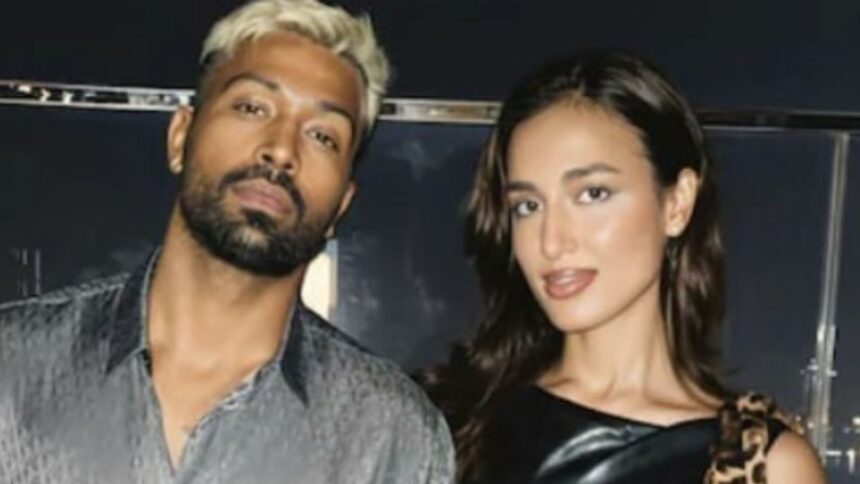
The growing debate around celebrity privacy resurfaced sharply when Indian cricketer Hardik Pandya criticised paparazzi for capturing intrusive photographs of his girlfriend Mahieka Sharma outside a Mumbai restaurant. The incident reignited questions about ethical boundaries in media coverage, the dignity owed to women in public spaces and the increasing tendency to sensationalise routine moments for entertainment value.
Hardik Pandya calls out media for crossing personal boundaries
Hardik Pandya, known for his outspoken nature on and off the field, expressed profound disappointment after photos and videos of Mahieka leaving a Bandra restaurant went viral on Tuesday. According to Pandya, the photographs were taken from an inappropriate angle, reducing a simple outing to what he termed “cheap sensationalism”. His criticism was not directed at the profession itself but at the persistent pattern of certain photographers disregarding respect and basic humanity in pursuit of viral content.
The cricketer shared a strongly worded note on social media, stating that he understands the constant scrutiny that comes with his public life. He acknowledged that attention is an inevitable part of the profession he has chosen, yet emphasised that even celebrities deserve fundamental respect and personal boundaries. Pandya’s message reflected his belief that public figures may accept visibility, but this visibility should not translate into exploitation, especially when women are involved.
In his Instagram story, Pandya explained that Mahieka was simply descending a staircase at a Bandra restaurant when paparazzi captured her from an angle that he felt no woman should ever be photographed from. He called the act an invasion of privacy and condemned the way a private moment was turned into an opportunity for sensationalised content. His remarks echoed the frustrations of several celebrities who have voiced concerns about unethical photography that disregards dignity, context and consent.
While urging restraint, Pandya extended respectful acknowledgment to media workers, stating that he understands and appreciates their hard work. He asserted that he consistently cooperates with photographers and recognises the demanding nature of their profession. However, he requested them to exercise mindfulness and sensitivity, reminding them that not every moment needs to be documented and not every angle needs to be taken. His appeal was directed not only at the photographers involved but at the broader media culture that frequently prioritises sensationalism over integrity.
The video of photographers trailing Mahieka as she exited the restaurant quickly circulated across social media platforms, triggering conversations among fans and commentators. Many users speculated whether this viral clip was the catalyst behind Hardik’s impassioned response. The circulation of the footage further demonstrated how quickly personal moments can become public property in the digital age, raising concerns about the balance between public curiosity and personal privacy.
Pandya’s message appeared during a crucial period in his professional life. As he prepared for his international comeback in the T20I series against South Africa, his focus was intended to be on cricket. The series opener in Guwahati was set for Tuesday, December 9, marking a significant return after a two-month absence due to a quadriceps injury sustained during the Asia Cup. Instead, the conversation surrounding him was pulled into the domain of privacy, media ethics and personal dignity.
During his recovery, Pandya was seen spending quality time with his family and girlfriend, signalling a phase of personal grounding away from competitive cricket. In October, he officially confirmed his relationship with Mahieka by posting photographs from a beach holiday, which subsequently attracted considerable attention. Soon after, the couple was spotted together at the Mumbai airport, marking their first public appearance. This growing visibility made them a focal point for paparazzi, amplifying the intensity of their public scrutiny.
Pandya’s criticism has sparked broader reflection within the entertainment and sports industries. As celebrities increasingly express discomfort over intrusive media behaviour, his message adds to a collective call for more ethical and responsible photography practices. It underscores the importance of approaching public figures with empathy rather than opportunism, especially when personal moments are involved.
Mahieka Sharma’s rising prominence and personal journey
Mahieka Sharma, the woman at the centre of the recent controversy, has been steadily gaining recognition in the world of fashion and modelling. According to public information available through her online profiles, she has earned notable accolades such as IFA Model of the Year, GQ Best Dressed, India’s Next Supermodel and Elle Model of the Season. These achievements reflect her growing influence within the fashion and entertainment industries.
Before stepping into the limelight, Mahieka reportedly pursued academic studies in economics and finance, highlighting her multifaceted background. This blend of intellectual grounding and creative ambition has contributed to her versatile persona. Her modelling career includes collaborations with distinguished brands such as Uniqlo and Tanishq, showcasing her ability to represent global and domestic labels with confidence and elegance.
She has also walked the ramp for celebrated designers including Manish Malhotra, Anita Dongre and Tarun Tahilani, further cementing her place in high-fashion circles. Each appearance has expanded her visibility, helping her cultivate a professional identity characterised by sophistication and poise. This rising popularity has naturally drawn media attention, though the recent incident illuminates the challenges faced by public personalities whose personal lives are constantly monitored.
Mahieka’s association with Hardik Pandya made headlines earlier in the year when the couple made their relationship public. Their beach holiday photographs, shared by Pandya, initiated widespread interest and conversation among fans. While the couple has generally kept their relationship low-profile, their rare public outings tend to attract significant attention. For Mahieka, whose career relies on visibility in professional settings, the shift toward personal exposure appears less welcome, especially when framed through invasive media practices.
The viral video that prompted Hardik’s reaction not only sparked concern among fans but also raised questions about consent and the ethics of photographing women in vulnerable or unguarded moments. As an emerging public figure, Mahieka’s experience serves as a reminder of the uncomfortable intersections between fame, curiosity and personal dignity.
Her steady rise in modelling reflects hard work, discipline and professional commitment. Yet moments such as the recent paparazzi encounter reveal how quickly personal privacy can be eroded when public fascination becomes unrestrained. Hardik’s defence of her dignity further underscores how deeply the issue resonated with him on a personal level, beyond his status as a celebrity or athlete.
Personal transitions and public reactions surrounding Hardik Pandya
Hardik Pandya’s relationship with Mahieka Sharma began attracting attention shortly after his amicable separation from his former wife Natasha Stankovic. Their divorce in 2024 was widely discussed, largely because both individuals were well-known figures. Pandya addressed the separation openly, emphasising that the decision was mutual and grounded in respect. He stated that they were committed to co-parenting their son, Agastya, maintaining stability and affection in his life despite the changes in their marital relationship.
Public interest in Pandya’s personal life has remained high due to his celebrity status, athletic achievements and candid approach to personal matters. This backdrop made his response to the paparazzi incident even more prominent. Fans and commentators noted that his message reflected a shift towards protectiveness and emotional clarity, particularly regarding Mahieka’s wellbeing and public image.
As Pandya prepared to return to cricket following his injury recovery, discussions about his personal boundaries dominated headlines. His firm tone in addressing media behaviour signalled a desire to reset expectations and assert control over how his private life is portrayed. While some supporters praised him for taking a stand, others viewed the incident as part of the ongoing struggle between celebrity privacy and public curiosity.
The incident also reignited conversations about how female companions of public figures are often subjected to disproportionate scrutiny. Many observers pointed out that Mahieka, despite her successful career, became the centre of attention for reasons unrelated to her work. Pandya’s message, therefore, resonated not just as a personal appeal but as a broader reminder that women in the public eye deserve respect and sensitivity.
The paparazzi culture in Mumbai, known for its relentless pursuit of exclusives, has faced criticism before for similar incidents. Pandya’s statement adds to growing concerns about the need for ethical boundaries, especially in situations where individuals are simply going about their personal lives. While some paparazzi operate responsibly, the actions of a few continue to cast a shadow over the practice.
The timing of Pandya’s message also aligned with his anticipated cricket return, creating a juxtaposition between his professional comeback and his personal frustrations with media intrusion. His willingness to address the issue publicly suggests an intention to establish a firmer boundary between his private life and the sometimes invasive nature of celebrity coverage.
His comments conveyed a desire for a more humane approach to media interactions. By urging photographers to be mindful and respectful, Pandya encouraged a shift in perspective—one that values human dignity above sensationalism. His appeal underscored the need for a media culture that honours consent, context and common decency.