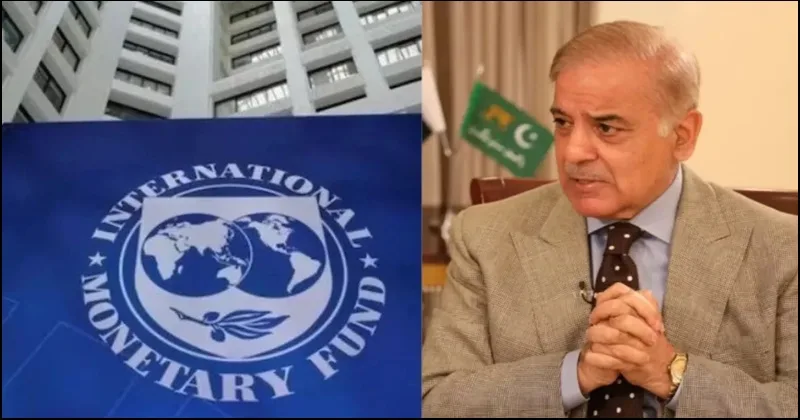
The International Monetary Fund has approved a fresh loan package for Pakistan at a time when the nation is grappling with deep economic instability, rising debt obligations and increasing dependence on global financial institutions. The newly sanctioned funding signals both international confidence in Pakistan’s reform commitments and the urgency of the country’s need for external support to stabilise its fragile economy.
IMF extends new tranche amid ongoing bailout programme and rising vulnerabilities
The IMF has approved $1.2 billion—approximately ₹11,000 crore—to help Pakistan address its ongoing economic challenges. This package includes a $1 billion loan and an additional $200 million under the IMF’s climate programme, reflecting a dual approach aimed at stabilising Pakistan’s finances while enhancing resilience to climate-related vulnerabilities. The approval forms a key part of the 37-month bailout programme launched in 2024, under which Pakistan is expected to receive a total of $7 billion in phases. The newly sanctioned amount marks the third instalment of the programme, cleared after the IMF completed a review of the second tranche.
On December 9, the IMF Executive Board finalised two performance reviews of Pakistan’s economy and authorised this additional support. With the latest transfer, Pakistan has received a cumulative $3.3 billion—about ₹29,650 crore—since the beginning of the extended programme. The approval comes at a crucial moment as Pakistan contends with low foreign exchange reserves, slow growth, high inflation and a mounting debt burden that has now reached nearly ₹22 lakh crore.
The IMF assistance, however, is contingent upon stringent conditions designed to ensure long-term macroeconomic stability. Pakistan is required to rebuild its foreign exchange reserves, strengthen tax collection, and reform loss-making state-owned enterprises. These enterprises, burdened by corruption, inefficiency and chronic financial losses, have significantly contributed to Pakistan’s fiscal stress. The IMF’s policy prescriptions aim to address these structural weaknesses and reduce Pakistan’s dependence on repeated external bailouts.
A separate portion of the approved funds—allocated under the IMF’s climate facility—must be dedicated exclusively to disaster-response systems, efficient water-resource management and improvements in climate-related financial reporting. Given Pakistan’s vulnerability to floods, droughts and extreme weather events, these measures are intended to strengthen the institutional framework for climate resilience, especially in a country that has faced severe economic setbacks following catastrophic floods in recent years.
Pakistan’s prolonged reliance on IMF loans and bilateral assistance from friendly countries underscores the persistent fragility of its financial system. For decades, the country has struggled to generate adequate revenue, maintain stable reserves and implement reforms robust enough to shift it away from external dependence. The continuation of IMF involvement reflects both the challenges Pakistan faces and the global community’s interest in maintaining stability in a strategically significant region.
The newly approved tranche comes mere months after Pakistan secured another major instalment in May, though that approval was met with opposition from India. During the IMF Executive Board meeting, India strongly objected to further financial assistance being granted to Pakistan. India argued that the funds might be diverted for purposes other than economic recovery, including activities related to cross-border terrorism. India’s representative refused to participate in the voting process, declaring concern over the potential misuse of international financial support.
India stated that continued support for Pakistan without accountability undermines global confidence in international institutions. According to India’s submission, the financing could inadvertently enable destabilising activities and weaken the values upheld by lending agencies. These concerns reflect broader geopolitical tensions and longstanding issues between the two neighbouring countries. Nonetheless, the IMF proceeded with the approval, noting Pakistan’s compliance with programme requirements and its commitment to economic reforms.
The IMF Executive Board plays a central role in determining the fate of loan requests, financial packages and policy recommendations. As the organisation’s primary decision-making body, it evaluates economic performance, negotiates reform conditions and oversees global financial developments. The Board comprises twenty-four Executive Directors, each representing either a single country or a group of countries. India, as a significant emerging economy, has its own independent representative who articulates national positions and safeguards India’s economic interests during IMF deliberations.
How IMF voting power works and why the United States holds decisive influence
The process by which the IMF approves loans is shaped by a weighted voting system, where each of the 191 member countries holds a certain vote value based on its financial quota. Although every country receives one vote, the actual influence of that vote varies widely. Countries with larger quotas—determined by metrics such as GDP, foreign exchange reserves, trade volume and overall economic stability—command greater voting strength.
India’s vote share is approximately 2.75 percent, reflecting its economic size and contribution to the IMF’s financial resources. Pakistan’s share stands at just 0.43 percent, giving it limited influence within the organisation’s decision-making process. By contrast, the United States holds the largest quota at 16.5 percent, granting it unparalleled voting power. Because most IMF decisions require an 85 percent majority to pass, the United States effectively possesses veto authority. If the US abstains from a vote, the threshold cannot be met, giving it decisive control over major policies and loan approvals.
Countries’ voting rights consist of basic votes—250 equal votes given to every member—and quota-based votes, which depend on the amount of IMF currency (Special Drawing Rights, or SDRs) that a country holds. Nations receive one vote for every 100,000 SDRs. The sum of basic votes and quota-based votes makes up the total voting power of each member.
Special Drawing Rights themselves are not a currency but a financial instrument created by the IMF to provide liquidity to member states. SDRs function as an international reserve asset that countries can use in transactions or exchange for usable currency. They help support global financial stability, especially during crises when countries face reserve shortages.
The United States’ dominant quota ensures that no major IMF decision can be taken without its agreement. This structure, while controversial at times, reflects the historical financial influence of the US and its substantial contribution to IMF resources. Because many developing nations depend heavily on IMF loans and stabilisation programmes, American support often becomes a determining factor in whether aid is released.
In Pakistan’s case, the US continues to support IMF-led stabilisation measures, viewing economic stability in the region as essential. Pakistan’s strategic location and its role in regional security contribute to continued American interest in supporting IMF engagement, even as other countries raise concerns about transparency and accountability in the use of funds.
Pakistan’s growing external debt, now crossing ₹22 lakh crore, remains a significant challenge despite successive IMF support packages. Its economic prospects hinge on its ability to implement structural reforms, increase domestic revenue, stabilise currency fluctuations and improve governance across public institutions. The IMF continues to emphasise that Pakistan must transition from dependence on external financing to a model rooted in sustainable, long-term economic stability.
The latest loan approval demonstrates both the IMF’s confidence in Pakistan’s commitment to reforms and the urgency of the economic crisis the country is facing. It also highlights the geopolitical complexities that surround international lending, where financial decisions intersect with diplomatic postures and regional security concerns. As Pakistan navigates this difficult financial terrain, the global community remains focused on how effectively it uses the assistance and whether the required reforms can place the nation on a more sustainable path.