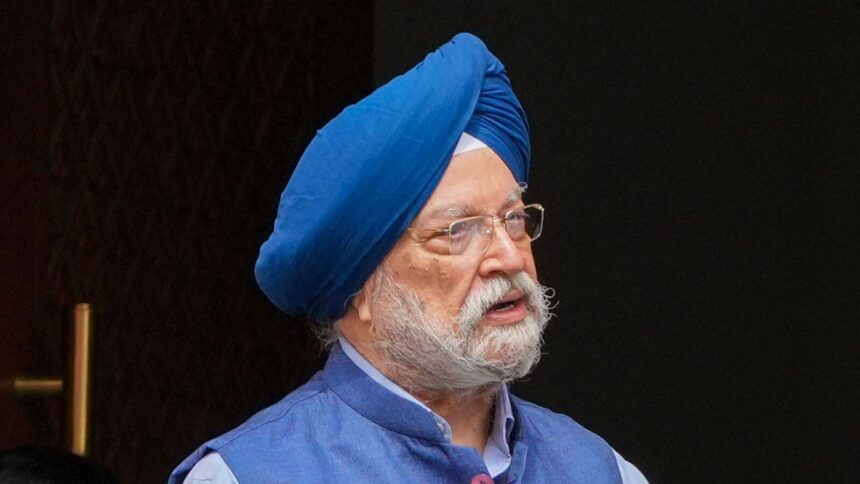
Union Oil Minister Hardeep Singh Puri has strongly refuted claims that E20 biofuel damages vehicle engines, describing such concerns as baseless and emphasizing the environmental benefits of petrol blended with 20 percent ethanol. Speaking at KPMG’s annual ENRich 2025 energy and resources conclave, Puri addressed widespread misconceptions regarding the use of ethanol-blended fuel in India, highlighting that older vehicles may require minor adjustments to rubber parts and gaskets, which is a simple process, while asserting that E20 is safe for modern automobiles and is crucial for India’s transition toward cleaner and more sustainable energy sources. He further explained that the increase in ethanol blending from 1.4 percent in 2014 to 20 percent today represents a deliberate, phased approach designed to enhance energy security, reduce emissions, and increase farmers’ incomes, countering narratives that exaggerate potential engine issues or fuel inefficiency.
E20 Biofuel: Safety, Misconceptions, and Engine Performance
Hardeep Singh Puri addressed the widespread debate surrounding E20 petrol, dismissing claims of engine damage as exaggerated and baseless. He described stories linking ethanol-blended fuel to vehicle malfunctions as “a lot of BS,” emphasizing that while some older cars might require minor part replacements, modern vehicles are fully compatible with E20. The minister clarified that ethanol in petrol, derived from sugarcane or food grains, is environmentally safe and contributes to lowering emissions, thereby promoting a cleaner energy mix for the country.
Over the last few months, some motorists expressed concerns about the impact of E20 on older vehicles, which was compounded by initial statements from certain automakers suggesting that the fuel had not been tested for compatibility with older models. Later, these companies clarified that E20 is safe, but minor maintenance or replacement of rubber gaskets may be required in certain vehicles. Puri emphasized that these are simple procedures and do not pose any long-term risks to engine performance or durability.
The minister also addressed claims that E20 leads to reduced fuel efficiency. He noted that while ethanol has a lower calorific value than petrol—29.7 compared to 46.4 for petrol—its impact on mileage is marginal. For vehicles designed for E10 and calibrated for E20, the decrease in mileage is estimated at only 1-2 percent, and 3-6 percent for other vehicles. He reinforced that concerns over drastic efficiency drops are misplaced, adding that E20 can even improve vehicle acceleration in some cases.
Puri stressed that public discourse often focuses on isolated incidents, such as when a car owned by an automobile engineer reportedly showed reduced efficiency after switching to E20. However, he clarified that numerous factors—such as local driving conditions, vehicle maintenance, and traffic patterns—affect performance, and using such examples to generalize the impact of E20 on all vehicles is misleading. He highlighted that in cities like Delhi and Gurugram, dense traffic and frequent stops can account for perceived inefficiency rather than the fuel itself.
The minister’s comments underscore the government’s commitment to expanding biofuel use as part of India’s national energy strategy. By gradually increasing ethanol blending in petrol from 1.4 percent in 2014 to 20 percent today, authorities aim to balance environmental objectives, energy security, and economic incentives for farmers. The shift to E20 also aligns with international trends toward sustainable fuels and reduces India’s dependence on imported oil, which currently accounts for around 88 percent of domestic consumption.
Biofuel Policy, Social Media Debates, and Agricultural Benefits
The introduction of E20 petrol across India has sparked debate on social media, with some users claiming that ethanol blends corrode fuel systems, degrade rubber and plastic components, and necessitate part replacements. Hardeep Puri and his ministry have repeatedly emphasized that such fears are largely unfounded. While minor adjustments in older vehicles may be necessary, modern vehicles are engineered to tolerate up to 20 percent ethanol, and these adjustments are straightforward.
The biofuel program is part of a broader national initiative to reduce carbon emissions, encourage cleaner fuels, and enhance the income of farmers producing sugarcane, maize, and other feedstocks for ethanol production. Doping petrol with 20 percent ethanol is aimed at both environmental and socio-economic objectives, providing an incentive for domestic agriculture while supporting India’s commitments to sustainable energy development.
Puri highlighted that the Ministry of Petroleum and Natural Gas has implemented E20 across the country, with over 90,000 petrol pumps now offering the blend. This initiative is designed to standardize fuel quality nationwide while ensuring that consumers and automobile users benefit from cleaner, environmentally friendly fuel options. The move also reflects India’s commitment to achieving its biofuel targets while modernizing fuel infrastructure and reducing emissions from transport, which contributes significantly to urban air pollution.
Addressing claims from social media and some media reports, Puri noted that fears about engine degradation due to E20 often exaggerate or misinterpret scientific data. Research indicates that ethanol-blended fuel can affect certain older rubber components, but this does not compromise overall vehicle safety. The ministry has advised that periodic maintenance and simple part replacements, if necessary, are sufficient to ensure the safe operation of older vehicles. Modern engines, especially those produced in recent years, are fully compatible with E20, and no adverse long-term effects have been reported in extensive field testing.
Further, the minister highlighted the role of public perception in shaping debates around E20. By focusing on anecdotal examples or isolated incidents, critics risk creating unnecessary fear among motorists, undermining the broader objectives of the biofuel program. Puri emphasized the importance of educating the public about fuel properties, proper maintenance practices, and the environmental and economic benefits of ethanol blending.
He also addressed projections by the International Energy Agency indicating that India’s demand for energy will grow significantly over the next two decades, outpacing global growth. Puri stressed that biofuels, cleaner energy sources, and domestic ethanol production are essential components of India’s strategy to meet this rising demand sustainably. By investing in biofuel infrastructure, promoting ethanol cultivation, and encouraging the adoption of E20 across the automotive sector, India aims to reduce its oil import dependency and mitigate the impact of volatile international crude prices.
The minister provided data highlighting the growth of the global clean energy and biofuel sector in India. From 700 gas collection centers (GCCs) in 2010, the number has increased to 1,800, and is projected to reach 2,200 by 2030. These centers currently employ approximately 1.9 million professionals and generate USD 65 billion in annual revenue, which is expected to grow to over USD 100 billion, supporting 2.8 million jobs by 2030. This expansion underscores the economic significance of biofuel initiatives in generating employment, revenue, and energy security for the country.
Puri’s remarks also counter narratives suggesting that the government is moving too quickly in ethanol adoption. By emphasizing a gradual increase in blending percentages, the government ensures a measured, technically feasible approach that avoids sudden disruptions to automotive performance or fuel infrastructure. The minister clarified that, after reaching 20 percent blending, the government would carefully assess the next steps, refuting claims of an immediate leap to higher ethanol percentages.
He further addressed public concerns related to fuel efficiency, noting that ethanol’s energy density is lower than petrol, but its impact on day-to-day performance is minimal and largely dependent on driving patterns. Puri reiterated that the benefits of E20, including reduced emissions, cleaner air, and support for domestic agriculture, outweigh any minor differences in mileage. The program, he said, has been deliberately designed to maximize environmental and socio-economic benefits while maintaining compatibility with the existing vehicle fleet.
The minister also explained that negative narratives around E20 often stem from a misunderstanding of scientific data and isolated experiences. By creating awareness, providing technical guidance, and ensuring that motorists understand maintenance requirements, authorities aim to minimize misconceptions while encouraging widespread adoption of ethanol-blended fuels. The ministry’s efforts include training petrol pump staff, disseminating guidelines, and monitoring fuel quality to ensure safe and consistent distribution.
Puri concluded by emphasizing that biofuels are not only a key environmental initiative but also a strategic necessity. As India’s energy demand continues to rise, E20 and future ethanol blends will play a pivotal role in reducing reliance on imported crude, decreasing carbon emissions, supporting agricultural income, and fostering technological growth in the clean energy sector. By dispelling myths and providing factual information, the government seeks to ensure public confidence in ethanol-blended fuels and support a sustainable energy transition for India.
The transition to E20 represents a critical milestone in India’s pursuit of cleaner, more resilient, and environmentally friendly energy solutions. By addressing public concerns, ensuring vehicle compatibility, and demonstrating the economic and environmental benefits of ethanol blending, the government is actively shaping India’s long-term energy strategy. Hardeep Puri’s statements highlight the need to balance technological feasibility, environmental responsibility, and public awareness in advancing biofuel adoption across the country.
The adoption of E20, according to Puri, is not merely a fuel policy but a broader socio-environmental program aimed at integrating cleaner energy practices with economic growth, energy security, and agricultural development. Through gradual implementation, technical guidance, and widespread public engagement, the biofuel program seeks to achieve a sustainable balance between environmental goals and vehicle performance, reassuring motorists and stakeholders alike of the safety and efficiency of E20.