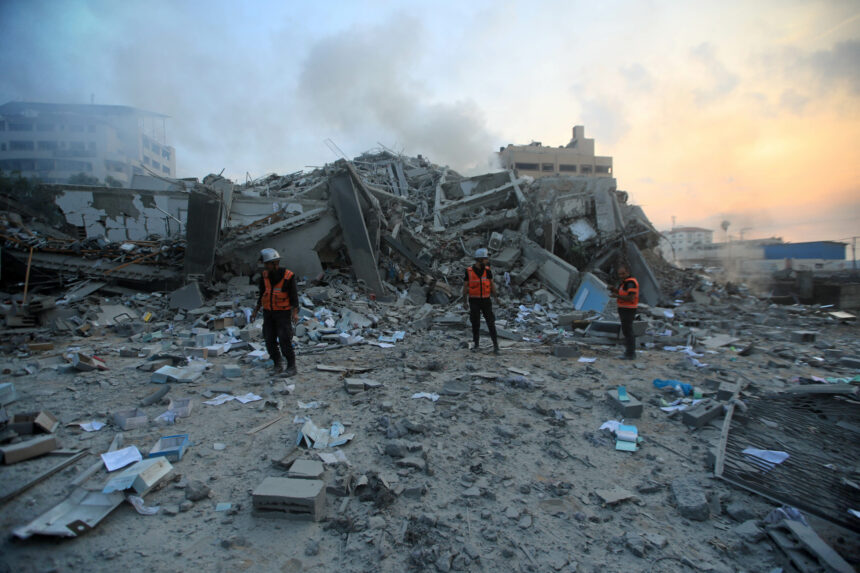
In the latest twist in the protracted conflict between Israel and Hamas, a statement by the militant group has drawn global attention after it indicated a conditional willingness to coordinate aid delivery to Israeli hostages held in Gaza. The offer comes at a time of intensifying international concern over the dire humanitarian situation in the region, with famine looming, hostages in critical conditions, and a death toll that continues to rise.
Hamas Sets Conditions for Humanitarian Access to Hostages
On Sunday, Hamas publicly stated that it would work with the International Committee of the Red Cross (ICRC) to allow aid for hostages—provided Israel agrees to two major conditions: a complete halt to airstrikes during aid distribution, and the permanent opening of humanitarian corridors into Gaza. This marks a rare instance of conditional cooperation from the militant group, which has so far barred humanitarian agencies from accessing the hostages.
This development follows a disturbing video released by Hamas showing an emaciated Israeli hostage, Evyatar David, digging what he claims is his own grave. The footage, with visible signs of starvation, has provoked global outrage. Governments from France, Germany, the United Kingdom, and the United States condemned the act, calling it a violation of international humanitarian norms. Israel, in response, called for an emergency session of the UN Security Council to address the hostage situation.
Israeli authorities report that about 50 hostages remain in Gaza, with only 20 believed to be alive. Families of these captives have been given little to no information about their wellbeing. The Hostages Families Forum issued a strong statement reiterating that Hamas is solely responsible for the lives and health of those it abducted, stressing that any deaths among them would lie squarely on the militant group.
Mounting Humanitarian Toll in Gaza and International Responses
At the same time, the humanitarian crisis in Gaza continues to deteriorate. Gaza’s health ministry reported that six more people died of starvation or malnutrition within 24 hours, bringing the official death toll from starvation-related causes to 175, including 93 children. Israel, under mounting global pressure, has slightly relaxed its stringent blockade, allowing some fuel and aid into the territory.
On Sunday, Egypt’s Al Qahera News reported that two fuel trucks carrying 107 tons of diesel were set to enter Gaza, marking a rare delivery following months of severe restrictions. The Israeli military coordination agency COGAT confirmed that four U.N. fuel tankers had entered Gaza to support hospitals, bakeries, and essential public services. Still, confirmation of the diesel trucks’ entry was pending at the time.
Medical facilities in Gaza are operating under severe fuel shortages, forcing doctors to prioritize only the most critically ill patients. Since March, fuel deliveries have been sporadic, with Israeli officials citing the need to pressure Hamas into releasing hostages as justification for aid restrictions.
Despite recent improvements in aid volume—with COGAT reporting over 23,000 tons of aid in 1,200 trucks entering Gaza in the past week—distribution has been hampered. Hundreds of these trucks have yet to reach their intended distribution hubs due to logistical challenges and a lack of coordination with humanitarian agencies. Meanwhile, desperate civilians and armed gangs have reportedly looted aid trucks, further complicating relief efforts.
In addition to land deliveries, international efforts to provide humanitarian assistance via air have escalated. Belgium began a joint airdrop mission with Jordan, while France recently dropped 40 tons of aid into Gaza. However, UN agencies maintain that air drops are insufficient and urge Israel to permit larger aid deliveries by land to stem the unfolding famine.
Adding to the urgency, Palestinian medics reported that at least 80 people were killed on Sunday alone in Israeli strikes across Gaza, including individuals en route to aid distribution points. Among the casualties was a member of the Palestinian Red Crescent Society, following a strike on its Khan Younis headquarters.
The Gaza conflict began on October 7, 2023, when Hamas launched a cross-border attack into southern Israel, killing over 1,200 people and capturing 251 hostages, according to Israeli figures. In response, Israel launched an intense air and ground campaign in the densely populated territory. Since then, Gaza health officials claim that over 60,000 Palestinians have been killed.
As the conflict grinds on and global outrage grows, the conversation around hostages, humanitarian access, and war conduct is intensifying. Hamas’s latest offer introduces a potential diplomatic opening, but whether it leads to real progress remains uncertain in a region battered by war and humanitarian disaster.