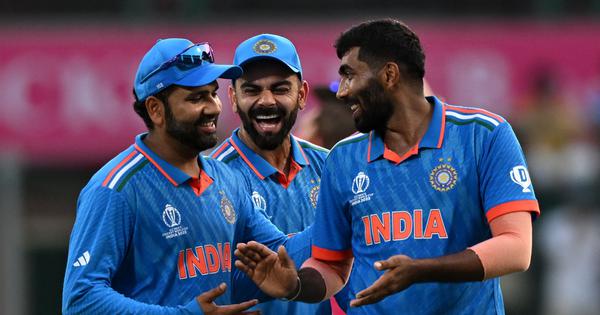
The Indian cricket selectors are preparing for an important squad selection meeting ahead of India’s upcoming Test and One Day International series against Afghanistan, with several major decisions expected regarding player fitness, workload management, team balance, and the inclusion of emerging talent. The series has attracted significant attention because it comes immediately after a demanding Indian Premier League season and ahead of an important international calendar for the Indian cricket team.
The selection discussions are expected to revolve around some of the biggest names in Indian cricket including Jasprit Bumrah, Rohit Sharma, Virat Kohli and Hardik Pandya, while promising young players such as Prince Yadav and Devdutt Padikkal are also expected to feature in the conversation.
India will play a one off Test match against Afghanistan beginning June 6 in Mullanpur followed by a three match ODI series in Dharamsala, Lucknow and Chennai later in the month. The scheduling has created a difficult challenge for selectors because the Indian Premier League final concludes only days before the start of the Test match, leaving very little recovery and preparation time for players participating in the tournament.
One of the biggest topics under discussion is expected to be the workload management of Jasprit Bumrah. The Indian pace spearhead remains the most important fast bowler in the national setup across formats. However, team management and selectors are reportedly cautious about overburdening him immediately after a physically exhausting IPL season.
Given the long term importance of Bumrah for India’s future international campaigns, particularly in major tournaments and overseas assignments, there is growing belief that he may not be selected for both the Test and ODI series. Selectors may choose to prioritize his participation in the longer format while resting him from the ODI matches to avoid unnecessary injury risk and workload stress.
India’s recent experiences with injuries to fast bowlers have forced the management to adopt a more scientific approach toward player rotation and recovery. Modern cricket schedules are increasingly intense with international fixtures, franchise leagues, travel demands and limited recovery periods. As a result, protecting key bowlers from burnout has become a major strategic priority.
Another critical issue facing selectors is the fitness status of Rohit Sharma. The Indian captain missed several matches during the IPL because of a hamstring injury and recently featured only as an impact substitute during a league game. Medical assessments and fitness evaluations will play a decisive role in determining whether Rohit is fit enough to participate in the Afghanistan series.
Selectors are expected to avoid any risk regarding Rohit’s workload unless he is fully prepared for the physical demands of One Day International cricket. ODI matches require extended fielding periods, batting concentration and overall endurance, especially for senior players managing recurring injury concerns.
Virat Kohli, meanwhile, appears set to continue as a central figure in India’s ODI plans. The former captain has enjoyed exceptional form during the IPL and remains one of the most reliable middle order batters in world cricket. Since stepping away from other formats, Kohli’s focus on ODI cricket has further strengthened his consistency and preparation.
The Afghanistan series also carries broader importance for India’s preparation in Test cricket. The national team has struggled to maintain dominance in the traditional format during recent home assignments. Spin friendly conditions have repeatedly exposed technical weaknesses in India’s batting lineup, particularly against quality spin attacks capable of applying sustained pressure.
India’s struggles against spin became especially noticeable during recent home series where visiting teams managed to challenge India in conditions once considered their strongest advantage. The inability of several middle order batters to consistently handle turning tracks has become a growing concern for coaches, selectors and cricket analysts.
One of the unresolved questions in the Indian Test side remains the number three batting position. Since the gradual exit of veteran batter Cheteshwar Pujara from the national setup, India has experimented with multiple options without establishing a permanent solution.
Sai Sudharsan received opportunities but could not fully cement his place in the lineup. Now there is increasing expectation that Devdutt Padikkal may receive an extended run in the Test side as India enters a crucial phase of its home season. Padikkal’s technique, temperament and domestic performances have reportedly impressed selectors looking for stability in the top order.
The selectors are also likely to discuss the inclusion of promising Jammu and Kashmir cricketer Aquib Nabi for the Test squad. Aquib gained widespread recognition after playing a major role in Jammu and Kashmir’s historic Ranji Trophy campaign. His impressive haul of sixty wickets during the domestic season established him as one of the most exciting pace bowling prospects in Indian cricket.
Domestic cricket performances continue to remain a critical pathway into the national team despite the glamour and visibility associated with the IPL. Selectors increasingly face the challenge of balancing franchise based performances with long term red ball potential and consistency in traditional formats.
Among emerging players, Prince Yadav has generated significant interest because of his pace, accuracy and calm temperament during the IPL season. His performances have reportedly impressed selectors enough to consider him for a maiden ODI call up against Afghanistan.
The ODI series could provide an ideal platform to test younger fast bowlers while managing the workload of senior stars. If Bumrah is rested from the ODI matches, senior pacer Mohammed Siraj is expected to lead the pace attack alongside Prasidh Krishna, who has returned strongly after injury setbacks.
Indian cricket management is currently focused on creating depth across formats by gradually integrating younger players into international cricket. The Afghanistan series may therefore serve not only as a bilateral contest but also as an opportunity to evaluate bench strength ahead of more demanding international assignments.
Hardik Pandya’s fitness situation remains another important area of concern. The all rounder has struggled with recurring back spasms during the IPL season, raising doubts regarding his immediate availability. Team management understands the value Hardik brings as a pace bowling all rounder, especially in limited overs cricket, but recurring fitness issues continue to complicate long term planning.
Afghanistan, meanwhile, should not be underestimated despite India entering the series as favorites. Over recent years Afghanistan has emerged as a highly competitive international side, particularly in spin bowling and white ball cricket. Their players now possess extensive experience in global franchise leagues and international tournaments, making them capable of challenging stronger teams under suitable conditions.
India’s selectors are therefore expected to approach squad selection carefully while balancing immediate results with long term planning. Decisions regarding workload management, senior player fitness, young talent integration and tactical combinations will shape not only the Afghanistan series but potentially India’s wider strategy for upcoming international competitions.
The one off Test match in Mullanpur carries particular significance because India needs greater consistency in red ball cricket before future major assignments. Batting discipline, spin management, bowling depth and middle order stability remain areas requiring attention. Selectors may use the Afghanistan Test as an opportunity to identify players capable of contributing consistently in challenging conditions.
The ODI series, meanwhile, provides flexibility to experiment with squad rotation and younger players. Modern international cricket increasingly demands squad depth because players face nonstop schedules involving multiple formats and leagues. Building a strong reserve bench has therefore become essential for every leading cricket nation.
The coming selection meeting is expected to attract enormous public interest because it may indicate India’s broader strategic direction across formats. Questions surrounding senior player management, leadership continuity, injury handling and talent development continue shaping discussions around Indian cricket.
As the Afghanistan series approaches, the selectors face the delicate challenge of balancing experience with transition. Established stars still form the core of the Indian side, but emerging players are increasingly pushing for opportunities through strong domestic and IPL performances. The final squad selections could therefore offer an important glimpse into the future structure of Indian cricket across both Test and limited overs formats.