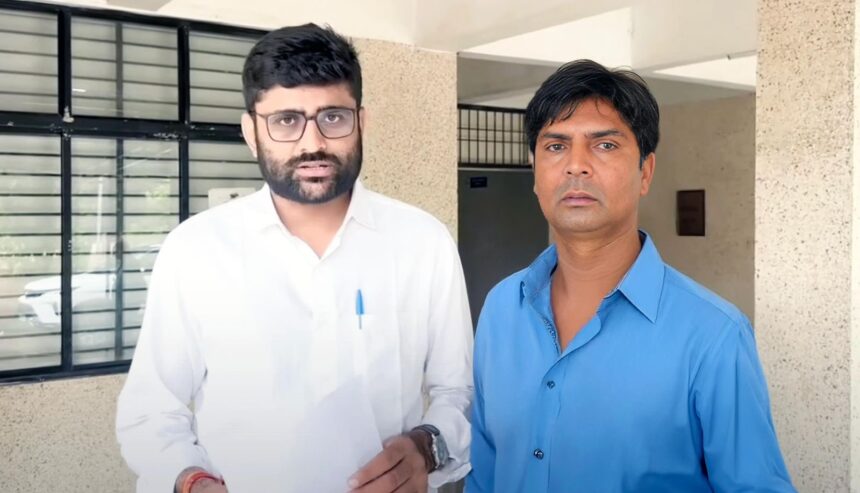
The political battle between the Aam Aadmi Party and the Bharatiya Janata Party in Gujarat escalated sharply this week after a controversial social media post allegedly linking AAP MLA Gopal Italia to the attacker of Delhi Chief Minister Rekha Gupta. Italia vehemently denied the accusations, asserting that the photo shared by BJP leader Harish Khurana was artificially generated using AI technology and misrepresented the facts. The dispute highlights the intensifying political friction in Gujarat ahead of upcoming elections, the role of technology and social media in political discourse, and the sensitivities surrounding public figures and misinformation campaigns. Italia’s response also raised broader ethical and legal concerns about the responsibilities of political leaders in handling information online, the preservation of family legacies, and the duty to ensure accurate reporting by the media.
AAP MLA Italia Challenges BJP Over AI-Manipulated Photo and Allegations
Gopal Italia, who recently won a by-election in Visavadar, Gujarat, expressed strong condemnation of the BJP leader Harish Khurana’s actions, describing them as equivalent to the behavior of a “petty troll.” Italia highlighted that Khurana’s social media post sought to link him with Rajesh Sakariya, the man accused of attacking Delhi Chief Minister Rekha Gupta, through an artificially manipulated photo. The MLA insisted that the AI-generated image was misleading, as it was constructed by merging a still from an old video of Italia with the face of another individual. Italia urged the media, political figures, and the public not to treat such unverified content as factual and to verify the accuracy of information before dissemination.
Italia further questioned whether Harish Khurana considered the reputation and legacy of his late father, former Delhi Chief Minister Madan Lal Khurana, before engaging in what he called a morally and ethically irresponsible act. He pointed out that Madan Lal Khurana had earned respect through decades of hard work and service to the public, and that the son’s sharing of unverified or manipulated content could tarnish that legacy. Italia argued that political accountability extends beyond public office to include the responsible use of digital platforms, particularly when accusations have the potential to harm reputations and inflame communal or partisan sentiments.
In his public statements, Italia suggested that the BJP’s actions were motivated by frustration following his victory in the Visavadar by-election. He stressed that the BJP had been unable to digest the win of a young politician from a non-political background, representing a relatively new party like AAP, against established political rivals. According to Italia, this sense of political setback had led to attempts to malign his reputation, that of his party, and its leader, Arvind Kejriwal. The MLA asserted that his political strength derives from direct connections with constituents and grassroots support, contrasting it with what he described as the BJP’s reliance on misleading narratives and digital manipulation to undermine opponents.
Italia’s criticism of Khurana also focused on the specific mechanics of misinformation. By using AI technology to fabricate images and videos, Italia argued, the BJP leader had not only misrepresented reality but also risked encouraging a wider culture of unverified content and rumor-driven political discourse. He underscored the potential legal ramifications of such acts, warning that continued sharing of manipulated images could compel him to pursue formal legal action. Italia framed this response as necessary not just for personal defense but also for preserving democratic norms and discouraging the spread of false narratives in political campaigns.
Political Context and Implications for Gujarat Politics
The controversy surrounding the AI-generated photo occurs against the backdrop of heightened political tension in Gujarat. Italia’s by-election victory in Visavadar, representing the Aam Aadmi Party, was seen as a significant upset against the BJP, highlighting a potential shift in voter sentiment and emerging support for alternative political platforms. Italia’s success has been perceived as symbolic of a generational change in politics, with younger leaders from non-traditional political backgrounds gaining traction. The BJP, according to Italia, has struggled to adapt to these changes, resulting in attempts to discredit emerging leaders through unverified social media claims.
The use of AI technology in political campaigns represents a new dimension of electoral competition, with implications for the reliability of information and the ethical responsibilities of political figures. Italia’s denunciation of Khurana’s post underscores the challenges posed by technological manipulation in the political sphere, where doctored images can be used to falsely implicate opponents and shape public perceptions. The incident raises questions about media literacy, fact-checking, and the need for regulatory frameworks to prevent the misuse of AI-generated content in politics.
In addition to the immediate personal and political dimensions, the controversy also touches upon broader issues of public safety, law enforcement, and electoral integrity. Rajesh Sakariya, the individual linked to the attack on Delhi Chief Minister Rekha Gupta, has been booked under Section 109(1) of the Bharatiya Nyaya Sanhita (BNS) for attempted murder. Delhi Police have described him as a serial offender with a history of multiple cases in Gujarat, many of which ended in acquittal. By linking Italia to such a figure through a manipulated image, Italia argued, Khurana’s actions not only risked personal defamation but also threatened to confuse public understanding of ongoing law enforcement proceedings and the responsibilities of elected officials.
Italia’s statements emphasize the need for responsible political communication, particularly in a digitally connected era where misinformation can spread rapidly and influence public opinion. The MLA framed his defense in terms of accountability to constituents, legal obligations, and the ethical standards expected of political leaders. He called on media outlets to prioritize fact-checking and discouraged the amplification of content based on mere social media posts, urging a distinction between unverified digital claims and credible reporting.
Beyond the immediate political battle, the incident has implications for the culture of political discourse in India. The Aam Aadmi Party, as represented by Italia, positions itself as a party emerging from grassroots activism and citizen-centered politics. By publicly addressing the misuse of AI technology and the spread of manipulated content, Italia reinforced the party’s commitment to transparency, accountability, and the ethical use of digital platforms in political engagement. He framed the controversy as a case study in how political actors must navigate the intersection of technology, media, and governance while preserving democratic norms and respecting personal reputations.
The confrontation also reflects generational and cultural shifts in Indian politics. Italia, a young leader with a background outside traditional political hierarchies, represents a wave of emerging politicians who leverage direct constituent engagement and digital communication to mobilize support. The BJP’s response, involving the circulation of AI-manipulated content, illustrates the friction between established political structures and new political entrants who challenge entrenched power dynamics. Italia’s critique highlights the potential for technology to be misused in efforts to suppress political competition and emphasizes the ethical responsibilities of leaders in an era of digital politics.
Finally, Italia’s comments serve as a broader call for political accountability, media responsibility, and public awareness. By challenging the dissemination of manipulated images and advocating for verification of claims before broadcasting, Italia framed the controversy as an example of the intersection between law, ethics, and political strategy. His warning of potential legal action underscores the seriousness of misinformation campaigns and the importance of maintaining integrity in political discourse. Through this episode, Italia positioned himself not only as a defender of his own reputation but also as a proponent of principled political engagement, highlighting the need for fact-based discussion, ethical leadership, and protection of individual rights in the rapidly evolving landscape of Indian politics.
This episode between Gopal Italia and Harish Khurana exemplifies the challenges that arise when technology intersects with politics, the responsibilities of public figures in ensuring accurate information, and the potential consequences of spreading manipulated content. The debate highlights the tension between emerging political actors and established parties, the role of AI in shaping narratives, and the ethical imperatives that accompany modern political engagement. As Gujarat prepares for upcoming elections, the controversy underscores the heightened stakes, the impact of digital misinformation, and the evolving dynamics of political accountability and public perception.