In response to the tragic Southport knife attack, the UK government has unveiled plans to impose stronger identity checks for anyone purchasing knives online. This move follows the disturbing case of Axel Rudakubana, who, at the age of 17, bought the knife used in the fatal assault from Amazon, despite existing laws that prohibit the sale of knives to individuals under 18.
The new measures will require online retailers to ask customers for two forms of identification when purchasing a knife. One of these will be an official identity document, such as a passport, while the other will involve a live video submission to confirm the buyer’s age. This step is part of an ongoing review of online knife sales, being led by Commander Stephen Clayman, who is also the National Police Chiefs’ Council’s lead for knife crime. The review was prompted by the Southport attack, where Rudakubana killed three young girls last summer using a knife he purchased online.
Amazon, which has faced scrutiny for the sale of the weapon, responded by stating that it takes its “responsibility around the sale of all age-restricted items, including bladed products, extremely seriously.” The company also launched an internal investigation following the incident.
At present, online retailers like Amazon ask customers to provide their date of birth when ordering knives and notify them that proof of age and a signature will be required upon delivery. However, the new government proposals will extend this process to include stronger age-verification methods. Under these plans, customers will be required to submit more stringent checks before they can make such purchases. It remains unclear whether these new measures will require fresh legislation, but the government is eager to expedite the process.
These proposals form part of the government’s wider strategy to combat the growing issue of knife crime, which has seen a dramatic rise in recent years. In the year ending March 2024, knife crime incidents in England and Wales rose by 54% compared to 2016 figures, prompting the government to introduce measures to halve knife-related offenses over the next decade.
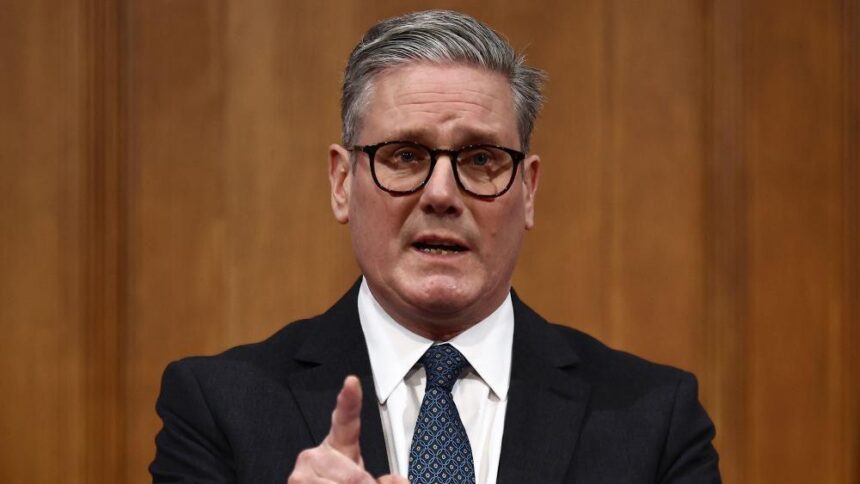
Prime Minister Sir Keir Starmer expressed his outrage in an opinion piece for The Sun, highlighting the ease with which young people can access dangerous knives online. Starmer condemned the lack of checks and barriers, referring to the Southport murder as a clear example of the failure to prevent underage sales. “A two-click killer,” he stated, referring to the ease with which Rudakubana was able to purchase the weapon. He called for the immediate implementation of age-verification checks, not just for knives used in violent crimes but also for kitchen knives purchased online.
The prime minister emphasized that the technology exists to enforce these checks and that it must now be used to protect children from future harm. He pledged to ensure that these changes are made a priority.
An Amazon spokesperson explained that the company already uses trusted ID verification services for checking the buyer’s name, date of birth, and address when an order for a bladed item is placed. Additionally, Amazon has an age-verification process for deliveries, where drivers are required to confirm the recipient’s age through an app on their devices before handing over an age-restricted item.
Rudakubana, who pleaded guilty to the murder of three young girls at a Taylor Swift-themed dance class last year, was able to bypass these safeguards and purchase the knife online, despite his history of violent behavior. On the first day of his trial, he admitted to killing six-year-old Bebe King, seven-year-old Elsie Dot Stancombe, and nine-year-old Alice da Silva Aguiar in July 2023. Rudakubana had a history of violent offenses, including a prior conviction for assaulting another child at school and multiple referrals to the government’s anti-extremism program, Prevent, between 2019 and 2021. He had also confessed to carrying a knife more than 10 times.
Home Secretary Yvette Cooper condemned the ease with which Rudakubana obtained the weapon, calling it a “total disgrace.” She emphasized that, despite his age and criminal record, he was able to order a knife online with minimal barriers or checks, highlighting the flaws in the current system.
The government’s proposals come at a time when public concern over the rise in knife crime continues to grow. By strengthening identity checks for online knife sales, the government aims to prevent future tragedies and ensure that young people are no longer able to easily acquire dangerous weapons from online retailers. The new measures are expected to play a crucial role in the fight against knife crime, marking a significant shift in how such weapons are sold in the UK.