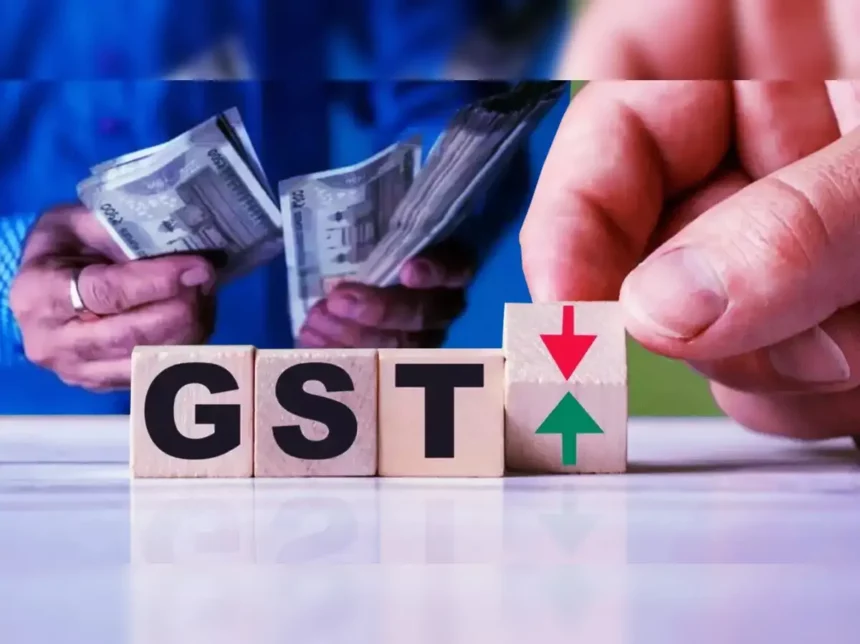
In a significant move aimed at simplifying India’s indirect tax regime, the central government has put forth a proposal to replace the current four-slab Goods and Services Tax (GST) structure with a streamlined two-slab system. Under the new proposal, most goods and services would fall under either a 5% or 18% GST rate, while select demerit or “sin” goods such as tobacco, pan masala, and luxury cars could be taxed at a much higher rate of up to 40%, including cess. The government’s stated objective is to make the GST structure more transparent, equitable, and easier to comply with, while reducing the tax burden on common-use items and boosting ease of doing business.
This reform plan, which is being positioned as a landmark shift towards a “simpler tax for a stronger economy,” has been sent to the Group of Ministers (GoM) constituted by the GST Council for review. The GoM will examine the proposal, deliberate on its finer points, and submit recommendations, with a target to implement most reforms by Diwali this year. The timing of the announcement, just days after Prime Minister Narendra Modi’s Independence Day speech where he highlighted upcoming GST reforms as a means to provide relief to small industries and citizens alike, has lent additional weight to the plan.
Proposed Two-Slab Structure and Rate Rationalisation
According to official sources, the finance ministry’s proposal replaces the current GST slabs of 5%, 12%, 18%, and 28% with just two standard rates — 5% for essential and mass-consumption items, and 18% for most other goods and services. Nearly all items currently taxed at 12% — around 99% of them — would be moved to the lower 5% slab. Likewise, approximately 90% of goods currently in the 28% bracket would shift to the 18% category, resulting in significant tax relief for a wide range of products.
However, the government intends to maintain a high tax rate for certain sin goods and luxury items to discourage consumption and maintain revenue streams. Under the proposal, these goods could attract a total levy of up to 40%, combining the 28% GST with an enhanced cess. This would apply to products such as cigarettes, pan masala, aerated drinks, and high-end cars — items considered either harmful to health or associated with conspicuous consumption.
Officials have emphasised that the move towards two slabs is not merely about changing numbers on paper; it represents a structural reform intended to simplify compliance, reduce classification disputes, and eliminate the cascading effects of multiple rate categories. The expectation is that a simpler structure will lower compliance costs for businesses, reduce the scope for litigation, and make tax administration more efficient.
The proposal also takes into account the need to balance revenue considerations with relief for consumers. While lowering rates for mass-consumption goods will reduce government revenue from those categories, higher rates on luxury and demerit goods, coupled with increased compliance efficiency, are expected to offset much of the loss.
Reform Goals, Implementation Timeline, and Political Context
The central government has underscored three key pillars of this GST reform proposal: structural simplification of the tax regime, rationalisation of rates to better align with consumption patterns, and improvement in ease of living and doing business. By moving away from a complex, multi-slab system, policymakers aim to create a more predictable tax environment that benefits both producers and consumers.
Sources in the finance ministry revealed that the idea is to make GST more citizen-friendly and business-friendly without undermining its role as a significant revenue source for both the Centre and the states. The reform also aligns with the government’s broader vision of boosting India’s manufacturing competitiveness, encouraging formalisation of the economy, and ensuring that essential goods remain affordable for the masses.
The GST Council, which includes the Union Finance Minister Nirmala Sitharaman as its chairperson and finance ministers from all states and Union Territories as members, is expected to take up the proposal for discussion in its upcoming meeting, tentatively scheduled for September. If consensus is reached quickly, the bulk of the reforms could be implemented within the current financial year, with the aim of rolling them out before Diwali — a timeline that would allow businesses to prepare for the new structure ahead of the festive season.
Politically, the timing of this reform push is also noteworthy. The announcement comes in the wake of the Prime Minister’s emphasis on tax reforms as a means to promote economic growth, create jobs, and provide relief to small and medium enterprises. By proposing a reduction in the number of GST slabs, the government is addressing a long-standing demand from industry bodies and tax experts who have argued that the current system is overly complicated and leads to frequent disputes over classification.
Presently, GST operates on a four-tier system: 5% for essential items, 12% for certain processed foods and services, 18% for a broad category of goods and services, and 28% for luxury and demerit goods. Additionally, there is a compensation cess on specific items such as tobacco, coal, and certain vehicles. Under the new plan, while essential goods would remain in the lowest bracket, the merger of 12% items into the 5% category and the migration of most 28% items into the 18% category could be a game-changer for consumers.
The GST Council’s approval will be crucial, as states depend heavily on GST revenue and may seek assurances that rate cuts will not adversely impact their finances. The Centre is reportedly prepared to address these concerns, possibly through adjustments in compensation arrangements or sharing additional cess revenues from high-taxed goods.
If implemented, the reform could significantly alter India’s tax landscape, making GST not only simpler but also more equitable — a shift that could benefit consumers, businesses, and tax authorities alike, while strengthening the federal consensus that underpins the GST framework.