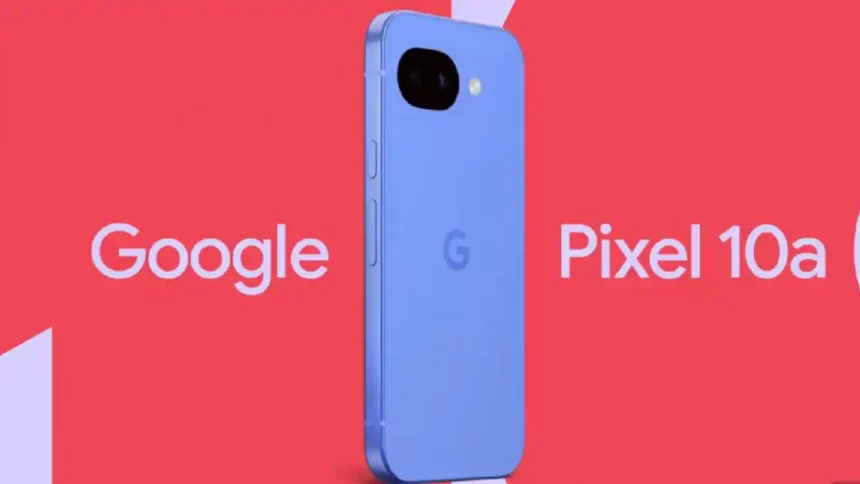
As anticipation builds around the official unveiling of the Google Pixel 10a, the focus is less on radical innovation and more on steady evolution. The Pixel a-series has traditionally targeted users seeking the core Pixel experience at a relatively accessible price point, and the 10a appears to continue that legacy. With pre-orders opening across multiple markets, Google has already begun teasing the device, offering glimpses of its design and hinting at select hardware upgrades. While expectations of a major overhaul remain tempered, the Pixel 10a is positioned as a practical refresh aimed at maintaining relevance in a fiercely competitive mid-range smartphone segment.
Design continuity and display upgrades define the Pixel 10a approach
From the outset, the Pixel 10a signals continuity rather than reinvention. Google has opted to retain the recognizable Pixel design language that has become synonymous with its recent smartphones. The official teasers reveal a device that closely resembles its predecessor, the Pixel 9a, with subtle refinements rather than bold departures. The familiar camera bar remains, reinforcing brand identity, while the overall chassis reflects a careful balance between durability and ergonomics.
The display is expected to be a 6.3-inch OLED panel, a size that aligns with contemporary consumer preferences for larger screens without crossing into unwieldy territory. Protection is reportedly handled by Corning Gorilla Glass 7i, an upgrade that suggests improved resistance to scratches and everyday wear. This move indicates Google’s awareness of durability concerns, particularly among users who rely on their devices without heavy protective cases.
In terms of physical dimensions, the Pixel 10a is said to maintain the same battery capacity as its predecessor while managing to reduce overall weight slightly. This is achieved despite the phone being marginally thicker, a trade-off that may go unnoticed in daily use but reflects internal adjustments aimed at balancing battery life, structural integrity, and component placement. The design philosophy here is clearly incremental, prioritizing comfort and familiarity over experimentation.
Connectivity also sees modest enhancements. The inclusion of Bluetooth 6 support represents a forward-looking update, potentially improving wireless audio stability and accessory compatibility. While such changes may not dominate marketing headlines, they contribute to a smoother long-term user experience, especially as peripheral ecosystems continue to evolve.
Performance, camera expectations, pricing strategy, and long-term software vision
Under the hood, the Pixel 10a is expected to rely on the same Tensor G4 chipset found in higher-tier Pixel models. This decision underscores Google’s emphasis on consistency across its lineup, allowing mid-range users to benefit from the same AI-driven features and computational photography capabilities as flagship owners. Paired with 8GB of RAM and storage options reaching up to 256GB, the device appears well-equipped for everyday multitasking, media consumption, and photography.
Camera hardware remains a cornerstone of the Pixel identity, and the 10a continues this tradition with a reported 48MP main sensor complemented by a 13MP ultra-wide lens. While these specifications mirror those of earlier models, Google’s strength has historically lain in its software optimization rather than raw sensor upgrades. Users can reasonably expect reliable image processing, accurate color reproduction, and strong low-light performance, all hallmarks of the Pixel camera experience.
Charging capabilities see a notable improvement, with reports suggesting support for 45W wired charging. This represents a significant jump from the previous 23W standard and aligns the Pixel 10a more closely with competitors that emphasize faster top-ups. For users juggling busy schedules, reduced charging times could prove to be one of the most tangible benefits of this generation.
On the software front, the Pixel 10a is expected to ship with Android 16 out of the box, reinforcing Google’s advantage in delivering the latest platform features without delay. The promise of seven years of operating system and security updates remains one of the most compelling aspects of the Pixel lineup. This long-term commitment not only enhances device longevity but also positions the Pixel 10a as a cost-effective option over time, particularly for users who value sustained software support.
Pricing is another critical factor shaping perceptions of the Pixel 10a. Leaks suggest a European starting price of EUR 499 for the 8GB and 128GB variant, with the 256GB model reaching EUR 599. When converted, these figures place the device firmly in the upper mid-range category, raising questions about value perception. As competitors introduce increasingly feature-rich alternatives at similar price points, Google’s challenge lies in convincing consumers that its software ecosystem, camera reliability, and update policy justify the premium.
The apparent absence of a 512GB variant further narrows choice for power users, reinforcing the notion that the Pixel 10a is designed primarily for mainstream audiences rather than storage-heavy workflows. Still, for many, the combination of clean software, dependable performance, and long-term updates may outweigh concerns about incremental hardware progress.
As the Pixel 10a officially launches and pre-orders commence, the broader narrative centers on refinement rather than disruption. Google appears content to solidify the a-series as a stable, dependable option within its smartphone portfolio, even if that means accepting criticism for limited innovation. In a market saturated with aggressive hardware specifications, the Pixel 10a’s value proposition rests on trust, familiarity, and the promise of consistent support over the years ahead.