Indian domestic cricket is set to gain added prominence as several high-profile international players return to the Vijay Hazare Trophy, turning the spotlight on form, fitness, and future selection debates. The tournament has acquired extra significance with Shubman Gill being named in Punjab’s squad soon after his exclusion from India’s T20 World Cup plans, while Rohit Sharma has joined Mumbai’s camp in Jaipur, confirming his availability for the opening phase of the competition. Together, these developments underline how the 50-over domestic tournament has once again become a crucial platform for elite players to reset, regain rhythm, and stake claims ahead of a packed international calendar.
For Gill, the Vijay Hazare Trophy offers a timely chance to silence questions around form and momentum after being left out of the national T20 set-up, despite recently serving as India’s vice-captain in the format. For Rohit, his return to domestic cricket is both symbolic and practical, reflecting a hands-on approach to match readiness and leadership continuity. With other established names such as Suryakumar Yadav, Shivam Dube, Abhishek Sharma, Arshdeep Singh, and Ishan Kishan also featuring across teams, the tournament promises intensity, quality, and renewed scrutiny of India’s white-ball depth.
Gill’s Punjab return and the quest to rediscover rhythm in white-ball cricket
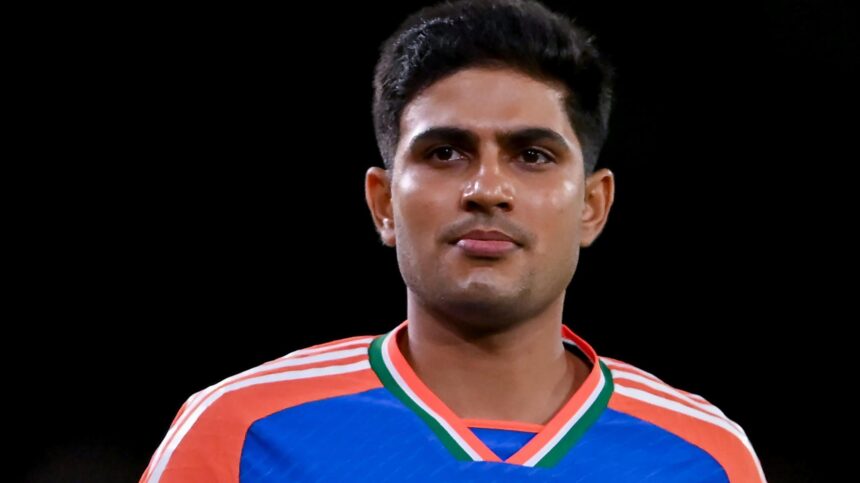
Shubman Gill’s inclusion in Punjab’s 18-member squad for the Vijay Hazare Trophy has drawn widespread attention, coming immediately after his omission from India’s T20 World Cup 2026 squad. At 26, Gill remains one of India’s most gifted batters, but recent months have seen him struggle to convert starts into big scores at the international level. The domestic one-day tournament now represents an opportunity to step away from the glare of global cricket and focus on fundamentals, fluency, and confidence.
Punjab’s squad is among the most balanced in the competition, combining international experience with domestic consistency. Alongside Gill, the team includes Abhishek Sharma, whose aggressive batting has made him a white-ball regular, and Arshdeep Singh, one of India’s most dependable left-arm pacers in limited-overs cricket. Their presence immediately elevates Punjab’s status as a serious title contender, especially after the team’s quarter-final exit last season.
For Gill personally, the stakes are high. Having been viewed as a long-term all-format mainstay, he now finds himself at a point where domestic performances could shape his immediate international trajectory. The Vijay Hazare Trophy, with its emphasis on tempo management, strike rotation, and innings construction, is particularly suited to Gill’s classical strengths. Strong performances here could reinforce his credentials as a premier one-day batter and restore confidence ahead of future international assignments.
Punjab begin their campaign on December 24 against Maharashtra, with all their league matches scheduled in Jaipur. The conditions are expected to test both batters and bowlers, offering pace and bounce early in the tournament and placing a premium on adaptability as pitches wear. Punjab’s batting depth, featuring players such as Prabhsimran Singh, Anmolpreet Singh, Naman Dhir, Ramandeep Singh, and Sanvir Singh, gives Gill the freedom to play with intent without carrying the entire burden of scoring.
The bowling attack, led by Arshdeep Singh, remains Punjab’s biggest strength. Arshdeep was the team’s highest wicket-taker in the 2024–25 season with 20 wickets and is expected to again spearhead the attack with the new ball and at the death. He will be supported by Gurnoor Brar and Krishan Bhagat, forming a unit capable of exploiting early movement and applying pressure in the middle overs. However, uncertainty remains over how long Gill, Abhishek, and Arshdeep will be available, as India’s ODI series against New Zealand begins on January 11, followed by a five-match T20I series from January 21.
Rohit’s Jaipur arrival, Mumbai’s star power, and a tournament rich in narratives
While Gill’s selection has dominated discussion in the north, the arrival of Rohit Sharma in Jaipur has generated equal excitement around Mumbai’s campaign. Rohit has joined Mumbai’s training session and confirmed that he will play the team’s first two matches in the Vijay Hazare Trophy. His presence is significant not only for Mumbai’s prospects but also for the broader message it sends about senior players embracing domestic cricket as a vital part of preparation and leadership.
Joining Rohit in Mumbai’s squad are India T20 captain Suryakumar Yadav and all-rounder Shivam Dube, both of whom are also slated to play two matches. This cluster of international stars adds considerable weight to Mumbai’s line-up and sets up fascinating contests within a competitive group that includes Punjab, Goa, Chhattisgarh, Uttarakhand, Himachal Pradesh, and Sikkim. With league matches running until January 8, the margin for error will be slim, and early momentum could prove decisive.
Rohit’s return to domestic cricket comes at a time when his role within Indian cricket continues to evolve. While his international credentials are firmly established, his participation in the Vijay Hazare Trophy highlights the importance of match practice and hands-on leadership. For younger Mumbai players, sharing the dressing room with a player of Rohit’s stature offers invaluable exposure to elite standards, preparation routines, and in-game decision-making.
Elsewhere in the tournament, leadership narratives continue to emerge. Ishan Kishan has been named captain of Jharkhand, fresh from a standout performance in the Syed Mushtaq Ali Trophy, where he scored a century to guide his team to their first-ever title. Kishan’s elevation to captaincy underlines his growing stature in domestic cricket and complements his inclusion in India’s T20 World Cup squad. For Jharkhand, his dual role as wicketkeeper and leader adds balance and clarity to their campaign.
The broader context of the Vijay Hazare Trophy this season is shaped by the international calendar. With India scheduled to face New Zealand in a three-match ODI series from January 11, followed closely by a T20I series, several players’ availability beyond the league stage remains uncertain. This uncertainty places added emphasis on depth and squad rotation, forcing teams to plan for multiple scenarios and test their bench strength.
Punjab, for instance, have yet to announce a captain, a decision that could influence team dynamics in a challenging group. Mumbai, by contrast, benefit from a clear leadership structure and the short-term presence of senior internationals. Jharkhand’s faith in Kishan reflects a long-term investment in leadership continuity. These differing approaches add strategic intrigue to the competition.
At a broader level, the participation of so many international players reinforces the Vijay Hazare Trophy’s relevance in India’s cricketing ecosystem. It is no longer merely a stepping stone for fringe players, but a proving ground where established stars recalibrate form and selectors monitor readiness. Performances here can shape perceptions, influence selection debates, and even alter career trajectories.
As the tournament unfolds, attention will remain fixed on how Gill responds to the challenge, how Rohit’s presence lifts Mumbai, and how emerging leaders like Kishan seize their opportunities. With competitive groups, varied conditions, and a blend of youth and experience, the Vijay Hazare Trophy promises to be more than a domestic fixture. It stands as a reflection of Indian cricket’s depth, its constant churn of talent, and the enduring importance of domestic performance in an increasingly crowded international landscape.