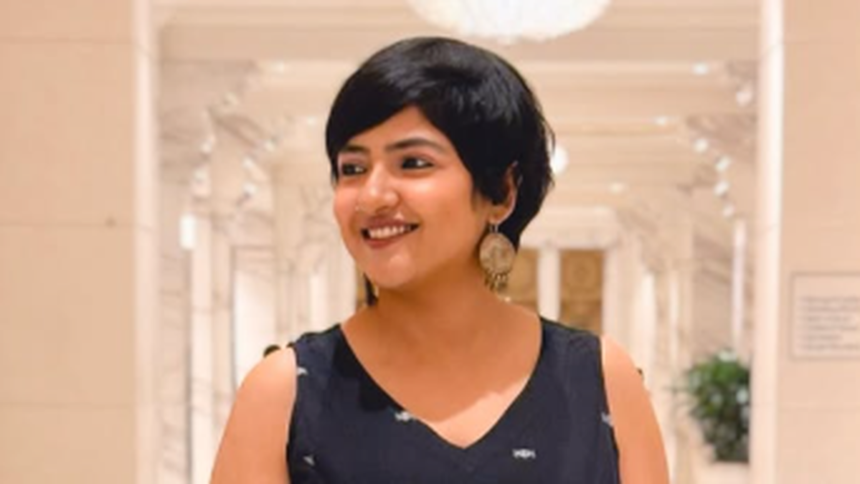
A disturbing incident at a private cultural programme in Kolkata has triggered widespread outrage after noted Bengali playback singer Lagnajita Chakraborty alleged that she was physically and verbally harassed for performing a devotional song. The singer has accused an event organiser, identified as Mehboob Malik and described as a local Trinamool Congress worker, of attempting to assault her on stage and threatening her life. The episode has ignited a broader debate around artistic freedom, cultural expression, political influence, and the safety of performers, particularly women, in public spaces.
Lagnajita Chakraborty, a well-known voice in Bengali cinema and independent music, described the incident in detail while speaking to news agency ANI. She stated that the attack occurred immediately after she sang a devotional song during her live performance, an act that she believes provoked the accused. A formal complaint has been lodged, the accused has been arrested by police, and the matter is currently under investigation, but the incident has already assumed wider social and political significance in West Bengal.
Singer recounts alleged attack during live performance after devotional song
According to Lagnajita Chakraborty, the incident took place during an evening performance at a school premises in Kolkata, where she had been invited to sing at a private function. She said she began her concert at around 7 pm, and the programme progressed smoothly for the first 45 minutes. By that time, she had already performed seven songs, all of which were well received by the audience.
She explained that her seventh song was “Jago Maa,” a devotional composition from the film Devi Chowdhurani, which had been released during the same Puja season. The song, dedicated to the divine feminine, is widely regarded as a cultural and spiritual expression within Bengali tradition. According to the singer, there was nothing unusual about performing such a song at a cultural programme, particularly during the festive period.
However, moments after completing the song, while she was interacting with the audience, the situation took a sudden and alarming turn. Lagnajita alleged that a man from the audience abruptly ran towards the stage and came dangerously close to her face. She said the speed and aggression with which he approached made it immediately clear to her that he intended to harm her.
The singer stated that the entire programme was being recorded by the school hosting the event, which she said is a common practice at such functions. However, she does not have access to the video footage, as it belongs to the school. She added that if the recording is made public, it would clearly show that the accused ran towards the stage with the intention of assaulting her.
According to her account, when people present at the venue rushed to intervene and pulled the man away from her, he continued shouting aggressively. She alleged that he yelled words to the effect of “wake up, mother, enough is enough, now sing some secular songs,” making it clear that his anger was directed specifically at her choice of a devotional song. Lagnajita said this statement left her deeply shaken, as it suggested an attempt to police artistic expression based on personal or ideological beliefs.
She further alleged that the man used disrespectful language while addressing her, referring to her using the informal and derogatory “tu,” which she said is considered inappropriate and insulting in Bengali culture when used for strangers or guests. She emphasised that Bengali is a rich and respectful language, with multiple forms of address, and that such language is typically reserved either for very close relations or as an insult. Being addressed in that manner in a public setting, she said, was humiliating and deeply offensive.
Lagnajita also suggested that the aggression went beyond verbal abuse and that she feared for her physical safety at that moment. She alleged that had people not intervened immediately, the situation could have escalated into serious violence. Describing the experience as traumatic, she said that no artist should ever have to fear for their life simply for performing a song.
Police action, political reactions, and wider debate on artistic freedom
Following the incident, a complaint was filed at the Bhagwanpur East Police Station in Purba Medinipur district. Acting on the complaint, Purba Medinipur Police arrested the accused, Mehboob Malik, and initiated an investigation into the allegations. Police officials have confirmed that the matter is being examined, including statements from witnesses and any available video evidence from the venue.
While the legal process is underway, the incident has quickly taken on political overtones. The accused is reportedly associated with the Trinamool Congress as a local worker or leader, a detail that has intensified reactions from opposition parties. Political rivals have seized on the case to accuse the ruling party of fostering an environment where intimidation and intolerance are allowed to flourish, particularly against artists and women.
The Bharatiya Janata Party demanded immediate and strict action against the accused, arguing that political affiliation should not shield anyone from accountability. Party leaders alleged that the incident reflects a broader pattern of intimidation in the state, where individuals linked to the ruling establishment feel emboldened to act with impunity. They called for transparency in the investigation and urged authorities to ensure the singer’s safety.
Supporters of Lagnajita Chakraborty from the cultural and artistic community also voiced strong reactions. Many artists, musicians, and social commentators expressed concern over what they described as a growing intolerance toward cultural and devotional expression. They argued that Bengal has a long tradition of blending spirituality, art, and progressive thought, and that attacking a singer for performing a devotional song represents a dangerous departure from that legacy.
The incident has also reopened discussions about the safety of women performers in public spaces. Several commentators pointed out that female artists often face disproportionate harassment and threats, and that such incidents discourage participation in cultural life. They emphasised that organisers, institutions, and authorities have a responsibility to ensure secure environments for performers, regardless of the content of their art.
Lagnajita Chakraborty, for her part, has maintained that her decision to speak publicly was not motivated by politics, but by a desire to ensure that such incidents do not recur. She said that she believes in the freedom of expression guaranteed by the Constitution and that artists should not be forced to censor themselves out of fear. Singing devotional or spiritual songs, she argued, is an integral part of Bengali culture and should never be grounds for hostility or violence.
The case continues to be investigated, but the incident has already left a deep impact on public discourse in West Bengal. Beyond the specifics of one alleged assault, it has raised uncomfortable questions about intolerance, misuse of power, and the shrinking space for artistic and cultural freedom. As the investigation proceeds, many will be watching closely to see whether justice is delivered swiftly and impartially, and whether meaningful steps are taken to protect artists from similar threats in the future.