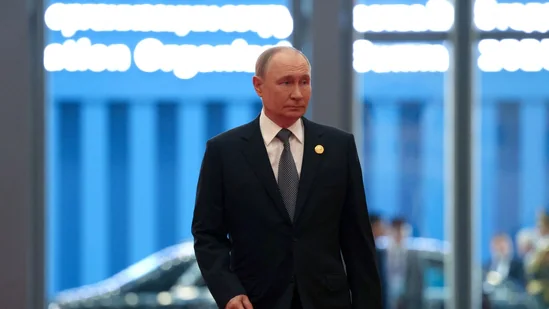
At the 25th Shanghai Cooperation Organisation Summit in Tianjin, Russian President Vladimir Putin delivered a detailed address that combined analysis of the ongoing Ukraine crisis, Russia’s diplomatic stance, and global security concerns. Speaking to a congregation of Eurasian leaders, including those from India and China, Vladimir Putin articulated Russia’s perspective on the origins of the Ukraine conflict, emphasizing principles of state sovereignty, non-interference, and the need for a balanced approach to security that does not compromise any nation’s interests. His speech underscored Russia’s assertion that the current tensions in Eastern Europe are the result of broader geopolitical maneuvers rather than unilateral aggression, while also recognizing and appreciating international efforts, particularly by India and China, to mediate and seek peaceful resolutions. The address also provided a diplomatic platform to reflect on recent high-profile meetings, including the Alaska summit with U.S. President Donald Trump, signaling Moscow’s intent to frame its global narrative in multilateral forums and reaffirm its commitment to internationally recognized principles of state sovereignty and security.
Understanding the Ukraine Crisis Through Vladimir Putin’s Lens
President Vladimir Putin’s address at the SCO Summit began with a comprehensive contextualization of the Ukraine conflict, laying out the historical and geopolitical factors that, according to Moscow, led to the current crisis. He emphasized that the origins of the conflict in Ukraine are deeply intertwined with Western expansionist policies, particularly NATO’s enlargement, which Russia perceives as a direct threat to its national security. Vladimir Putin argued that attempts by the West to incorporate Ukraine into NATO were a fundamental catalyst for tensions, asserting that such maneuvers disregarded regional stability and ignored Russia’s legitimate security concerns.
He elaborated that the crisis did not arise from a conventional military invasion as portrayed by some international narratives but was, in his words, the outcome of a coup d’état in Kyiv that received significant backing from Ukraine’s Western allies. This, Vladimir Putin claimed, disrupted Ukraine’s internal political continuity and created a situation where regional security imbalances escalated into open conflict. He underscored that these events had consequences not only for Ukraine but for the entire European security architecture, highlighting the interconnectedness of regional stability and global peace.
Vladimir Putin repeatedly stressed that Russia’s actions are guided by the principle that no nation can ensure its own security at the expense of another. He reinforced the notion that security must be a collective endeavor, where the stability of one state cannot compromise the territorial integrity or sovereignty of its neighbors. This framing was central to his argument, as it positioned Russia not as an aggressor but as a nation defending its strategic interests within a multilateral security paradigm. Vladimir Putin’s comments were also a subtle critique of what Moscow perceives as Western double standards in international diplomacy, particularly when it comes to military alliances, interventions, and political influence in sovereign states.
The Russian President also sought to highlight the human and structural dimensions of the crisis. He noted the socio-economic disruptions caused by prolonged instability in Ukraine and the ripple effects these tensions have had on energy, trade, and global security frameworks. By situating the Ukraine conflict within a broader context of international diplomacy and strategic alignments, Vladimir Putin aimed to articulate a narrative that underscores the complexity of the crisis beyond conventional media portrayals. His address repeatedly called for negotiation, dialogue, and a measured approach that prioritizes long-term stability over short-term strategic gains.
Diplomatic Engagements: India, China, and the Alaska Summit
In addition to analyzing the Ukraine situation, President Vladimir Putin’s address extensively acknowledged the diplomatic efforts undertaken by India and China in seeking peaceful resolutions. He lauded both nations for their constructive engagement, noting that their participation and mediation efforts contribute to creating a more balanced and stable approach to the crisis. Vladimir Putin emphasized that cooperative multilateral diplomacy is crucial for preventing escalation and ensuring that regional disputes do not spiral into broader conflicts with global repercussions.
Vladimir Putin also referenced his recent high-profile meeting in Alaska with U.S. President Donald Trump, highlighting it as a significant diplomatic milestone. He explained that discussions during the Alaska summit focused on reducing tensions, exploring potential pathways to de-escalation, and identifying mutually acceptable frameworks for dialogue on contentious issues. According to Vladimir Putin, the outcomes of that meeting were shared in subsequent discussions with Chinese President Xi Jinping and other global leaders, reflecting Russia’s strategy of maintaining open channels of communication across multiple power centers.
The President indicated that during bilateral meetings on the sidelines of the SCO Summit, he would brief other world leaders on the details of his discussions with Donald Trump. Vladimir Putin presented the Alaska summit as evidence of Russia’s willingness to engage constructively with global actors while maintaining a firm stance on core national interests. He suggested that the understanding reached during these meetings could potentially facilitate the creation of conditions conducive to peace in Ukraine, stressing the importance of dialogue that respects sovereignty, international law, and the principles enshrined in the United Nations Charter.
Vladimir Putin’s emphasis on respect for sovereignty and territorial integrity was particularly notable. He stated that these principles are as valid today as they have been historically and are foundational to maintaining global order. By reiterating these points in a multilateral setting like the SCO, Vladimir Putin reinforced Russia’s narrative that its approach is consistent with internationally recognized norms, even while Western nations may frame the same events differently. This strategic articulation serves to solidify Russia’s position among its allies and partners within the SCO, while subtly countering criticisms emanating from Western capitals.
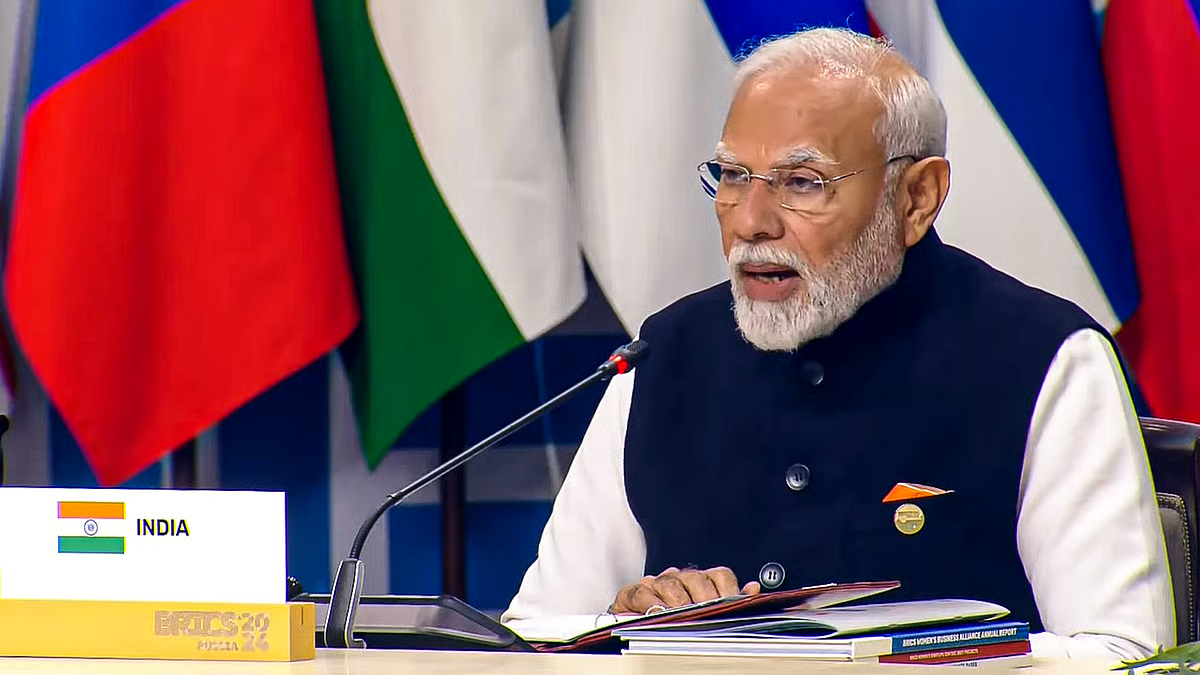
Another key aspect of Vladimir Putin’s address was his bilateral engagement with Prime Minister Narendra Modi. Ahead of the summit, the two leaders were observed sharing a cordial hug and engaging in informal discussions, signaling a strong personal rapport. PM Modi later shared the encounter on social media, highlighting the importance of personal diplomacy in complementing official dialogues. This interaction underscores India’s unique position as a strategic partner capable of engaging with both Russia and China, thereby facilitating balanced multilateral conversations within the SCO framework.
The summit also witnessed informal interactions among PM Modi, Vladimir Putin, and Chinese President Xi Jinping. Observers noted moments of candid dialogue and light-hearted exchanges, suggesting that personal chemistry among leaders can enhance diplomatic outcomes. These informal engagements are often pivotal in building trust, exploring common ground, and establishing frameworks for collaboration beyond formal statements and press releases. For Russia, this highlights the importance of maintaining strong relationships with India and China as counterweights to Western-centric narratives, ensuring that multilateral forums like the SCO remain relevant in shaping regional security agendas.
Vladimir Putin’s address also reflected Russia’s broader vision for the SCO as a platform not merely for economic cooperation but as a strategic venue for dialogue on global security issues. By contextualizing the Ukraine crisis within this multilateral framework, Vladimir Putin sought to reinforce the relevance of Eurasian collaboration in addressing challenges that extend beyond national borders. His emphasis on multilateral diplomacy, respect for sovereignty, and balanced security resonates with Russia’s long-term objective of positioning the SCO as a credible alternative forum for addressing global conflicts and reducing dependency on Western-led mechanisms.
Throughout his speech, Vladimir Putin maintained a careful balance between asserting Russia’s positions and acknowledging the importance of cooperative engagement. By linking the Ukraine crisis to NATO expansion, the coup in Kyiv, and Western support, he articulated a rationale for Russia’s stance that frames its actions as defensive and principled. Simultaneously, by appreciating the roles of India, China, and potential dialogues with the United States, he conveyed a willingness to participate in constructive negotiations, highlighting a nuanced diplomatic approach that seeks legitimacy on the international stage while defending core national interests.
Vladimir Putin’s narrative also touched upon the broader implications of the crisis for global stability. He suggested that unchecked tensions in Europe could have cascading effects on energy security, trade, and political alignments worldwide. By framing the discussion in these terms, Russia positions itself as a stakeholder advocating for stability and continuity, rather than as a provocateur. This strategic positioning is crucial in multilateral settings like the SCO, where perceptions of balance, fairness, and adherence to international principles can influence alliances, economic cooperation, and geopolitical leverage.
The SCO Summit itself provided a visible stage for Russia to communicate directly with other Eurasian powers, reinforcing its centrality within the organization. By addressing the Ukraine conflict comprehensively, acknowledging the contributions of India and China, and referencing recent engagements with the United States, Vladimir Putin presented a multi-dimensional narrative that combines realism, strategic assertiveness, and a call for cooperative problem-solving. His speech was as much about messaging to internal audiences and domestic constituents as it was about signaling intent and policy direction to the international community.
In framing the Ukraine crisis through his lens, Vladimir Putin emphasized the interconnected nature of modern geopolitics. He suggested that solutions must address root causes, including political upheavals, external influences, and structural security imbalances. By advocating for a principled approach rooted in respect for sovereignty and mutual security, Russia aims to position itself as a responsible actor capable of leading diplomatic initiatives while challenging interpretations that it deems biased or selective.
Moreover, Vladimir Putin’s approach at the SCO underscores the strategic importance of India and China as partners capable of influencing regional stability. Their involvement in mediation efforts, as highlighted by Russia, provides legitimacy to multilateral problem-solving while expanding Russia’s diplomatic leverage. It also communicates to Western powers that Eurasian actors are not passive observers but active participants shaping the trajectory of regional and global conflicts.
Throughout the summit, Vladimir Putin skillfully combined retrospection, analysis, and forward-looking diplomacy. His references to historical events, ongoing negotiations, and personal engagements served to contextualize Russia’s actions within a broader framework of security, sovereignty, and international law. By doing so, he reinforced the perception that Russia is pursuing a coherent, principle-based policy while remaining flexible enough to engage in dialogue with multiple global stakeholders.
Vladimir Putin’s SCO address was a multifaceted diplomatic communication. It highlighted Russia’s view of the Ukraine crisis, critiqued Western actions, acknowledged India and China’s mediation efforts, and integrated the Alaska summit into a broader narrative of engagement, negotiation, and security balance. By combining historical context, current geopolitical realities, and potential pathways for dialogue, the speech offered a comprehensive account of Russia’s priorities, strategies, and expectations from multilateral cooperation within the Eurasian framework.