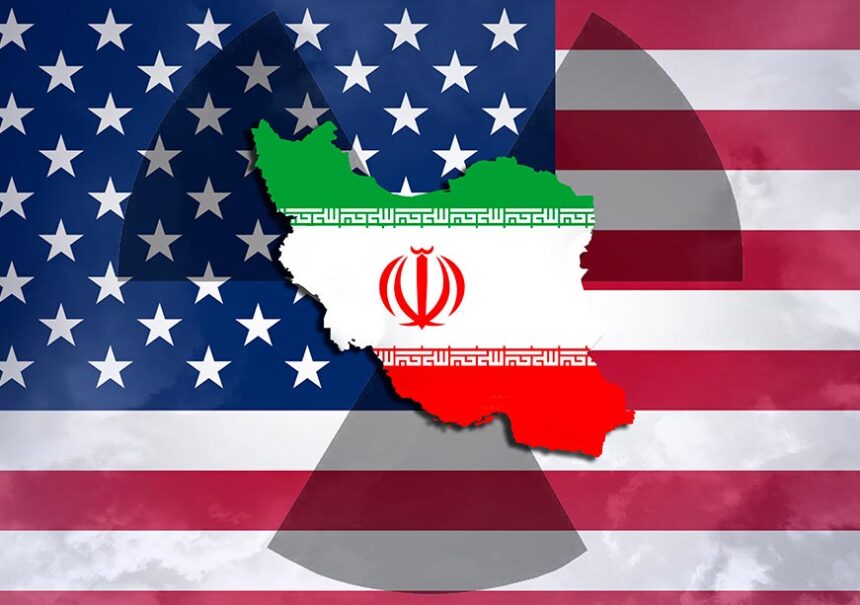
As global tensions continue to mount, a new chapter in the long-standing US–Iran nuclear saga is unfolding. More than a decade after the original Joint Comprehensive Plan of Action (JCPOA) was signed, Washington and Tehran are back at the negotiating table. This time, however, the dynamics are different—and so is the American president leading the talks.
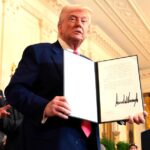
Donald Trump, who unilaterally pulled the US out of the JCPOA in 2018 during his first term, has returned to the White House. Instead of revisiting the old agreement, he wants a new deal—one that carries his signature brand and headlines, not the legacy of past administrations.
A Different Global Landscape
When the JCPOA was signed in 2015, the global political landscape was vastly different. Today, the US has shifted to a more assertive posture in the Middle East. Significant military deployments have been made around Iran, sending a message of pressure and strength ahead of renewed talks. These negotiations, reportedly set to take place in Oman, are unfolding alongside increased Israeli lobbying for military action against Iran’s nuclear facilities—though Washington has not endorsed such moves.
At the same time, Iran’s regional leverage is significantly weaker than it was in 2015. The informal alliance known as the “Axis of Resistance”—comprising groups like Hezbollah in Lebanon, Hamas in Gaza, and the Houthis in Yemen—has been badly weakened in the aftermath of recent conflicts. With its regional allies under fire and its economy strained by sanctions, Iran is under growing pressure.
Iran’s Readiness, Trump’s Strategy
Despite Trump’s earlier criticism of the JCPOA, Iran has signaled a willingness to engage—especially under President Massoud Pezeshkian, a moderate leader elected in 2024. Iran’s leadership appears open to diplomacy but remains firm on safeguarding national interests, particularly against Israel.
Iran’s top diplomats have subtly indicated that the onus is now on the US to act. Interestingly, public Iranian commentary has focused more on broader geopolitical aspirations and less on direct confrontation with Israel in this round of diplomacy.
Trump’s return has shifted the nature of US engagement. Instead of promoting a rules-based international order, Washington’s current stance leans toward transactional diplomacy—military might backed by expectations of cost-sharing from allies. This has led to perceptions of the US acting less like a global guardian and more like a security service with an invoice.
Challenges of the New Negotiations
While nuclear enrichment remains the central issue, the upcoming negotiations are expected to include wider demands from the US—particularly asking Iran to reduce its support for regional militias. One of the key criticisms of the 2015 JCPOA was that it focused solely on the nuclear program while ignoring Iran’s wider regional activities. This time, Washington is likely to link both issues, adding layers of complexity to the talks.
Meanwhile, Iran’s domestic political dynamics remain a key challenge. Although the current administration supports talks, the ultimate decision rests with Supreme Leader Ayatollah Khamenei. His conservative inner circle sees the JCPOA’s collapse as a warning against trusting the US. Yet, Iran’s economic distress and desire to navigate a multipolar world still make diplomacy a pragmatic choice.
A Fragile Moment for Global Nuclear Policy
Ironically, the unpredictability of Trump’s foreign policy has prompted broader questions about nuclear deterrence worldwide. In Europe and Asia, leaders are reconsidering their reliance on US military protection. Some voices are even calling for indigenous nuclear capabilities as a hedge against American unpredictability.
The situation also raises alarms about a potential nuclear arms race in the Middle East. If Iran is acknowledged—even tacitly—as a nuclear-capable state, regional rivals may seek similar capabilities, further destabilising an already volatile region.
Where This Could Go
The return of talks between Iran and the US is a rare opening amid rising global conflict. Whether or not they produce a new agreement, the mere act of dialogue is a step forward. However, these talks carry high stakes—not just for Iran and the US, but for the entire Middle East.
For diplomacy to work, both sides will have to compromise—while managing domestic pressures and balancing regional interests. A successful deal could ease tensions and restore a measure of predictability to the region. But failure could bring the world closer to a scenario no one wants: a nuclear-armed Middle East defined by instability.