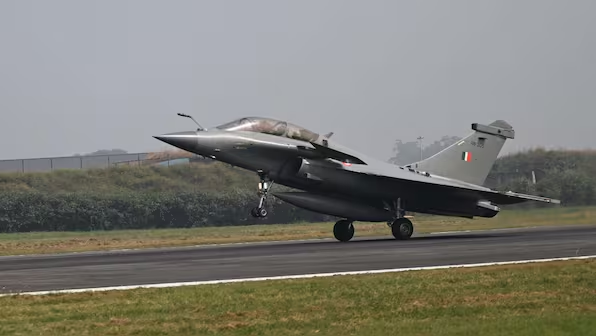
The French Navy has strongly rejected reports circulating in Pakistani media that a French officer confirmed Pakistan’s air superiority and the downing of Indian Rafale fighter jets during Operation Sindoor. Describing the article as “extensive misinformation and disinformation”, the French Navy stated the claims attributed to a French naval commander were entirely fabricated.
French Navy’s Refutation and Details of the Misreporting
According to Pakistani media outlets, particularly the channel Geo TV, a French naval commander named “Jacques Launay” had stated that Pakistan had dominated the aerial confrontation with India in May, and that Indian Rafales had been shot down, helped by Chinese support. The French Navy clarified this was false: the correct officer is Captain Yvan Launay, who never gave consent for publication of any such statement. The Navy emphasised that his actual role is limited to commanding the naval air station at Landivisiau, where Rafale Marine aircraft are stationed, and that his presentation at a conference was purely technical, not a briefing on combat losses.
In an official post on its social-media account, the French Navy stated:
“These statements were attributed to Captain Launay who never gave his consent for any form of publication. The article contains extensive misinformation and disinformation.”
The Navy also clarified that Captain Launay neither confirmed nor denied any claims about aircraft losses, and refused to comment on allegations about Chinese jamming of Indian aircraft. It added that he never referenced China’s J-10 fighter, which the Pakistani article purported to quote.
Implications for Media Credibility and Indo-Pak Strategic Narrative
This rebuttal by the French Navy has sparked fresh scrutiny of how information is being presented in the geopolitical sphere between India and Pakistan. The Indian side, particularly through spokespeople of the Bharatiya Janata Party (BJP), hailed the Navy’s statement as proof of “Pakistan’s misinformation machinery”. BJP IT-head Amit Malviya publicly criticised the Pakistani channel and journalist involved, saying: “When official institutions start debunking their propaganda, you know how desperate Pakistan’s misinformation machinery has become.”
The controversy underscores the strategic importance of narrative control in modern aerial and asymmetric conflicts. The original Pakistani article claimed over 140 fighter jets participated in the May 6-7 aerial engagement, and alleged that Indian Rafales were shot down. While India acknowledged air-combat losses during Operation Sindoor, neither side provided detailed public tallying of aircraft lost. The French Navy’s intervention adds to the complexity of verifying such claims and highlights how media outlets may amplify unverified or strategic narratives.
At a time when military hardware like the French-made Rafale jet is not only a combat asset but also a symbol of international alliances and defence exports, misleading claims can have reputational impacts beyond the battlefield. French intelligence and defence industry sources have previously warned of disinformation campaigns aimed at undermining the Rafale’s credibility. This episode may therefore contribute to broader questions of how modern conflicts are fought not just in the skies, but in information spaces.French Navy Accuses Pakistani Media of Spreading False Rafale Crash Claims During Indo-Pak Conflict