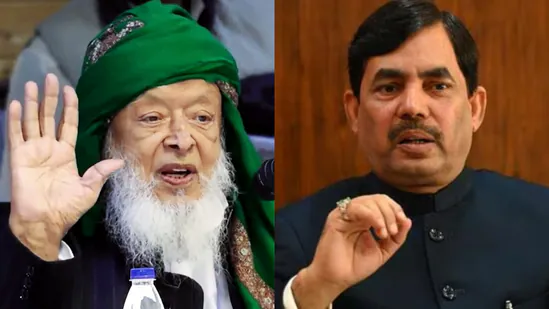
Arshad Madani, president of Jamiat Ulama‑e‑Hind (JUH), accused the Indian government of systematically preventing Muslims from attaining leadership roles. His remarks, made in connection with the investigation into Al Falah University, triggered sharp reactions from the ruling Bharatiya Janata Party (BJP) and divided responses from opposition parties.
Arshad Madani’s Allegations of Discrimination
Arshad Madani alleged that since independence, Muslims in India have been denied opportunities to rise to positions of leadership. He contrasted this with examples abroad—such as Zohran Mamdani becoming mayor of New York and Sadiq Khan serving as mayor of London—to argue that in India, even a Muslim becoming a university vice-chancellor is unusual. “A Muslim can become mayor of New York, a Khan can become mayor of London—but in India, a Muslim cannot even become a vice-chancellor of a university,” he said. He added that in those rare cases where a Muslim might be appointed, they risk being sent to jail, citing Azam Khan and the ongoing investigation into Al Falah University’s founder.
Arshad Madani claimed the government has worked to keep Muslims “with their heads bowed,” asserting that the belief in Muslim leadership deficiency stems from decades of systemic obstacles. He said the world may think the Muslim community is helpless or finished, but he rejected that notion outright.
Political Reactions and Broader Fallout
The BJP was quick to respond. Party leaders accused Arshad Madani of politicising the investigation into Al Falah University and of using communal rhetoric to deflect culpability. One BJP spokesperson accused him and his family of “looting the country’s Muslims” and claimed the JUH had engaged in “vote-bank politics” rather than genuine community welfare. They argued that Arshad Madani’s remarks ignored the numerous prominent Muslims in India who hold senior positions and instead unfairly painted the state’s institutions as biased.
On the opposition side, leaders from the Indian National Congress (INC) offered a different take. Udit Raj supported Arshad Madani’s claim of discrimination, even while condemning terrorism. He asked why, if irregularities were found at Al Falah University, were Muslim homes reportedly being razed or individuals being targeted, paralleling the situation with Israel-Gaza narratives. Other opposition voices said there is a “systematic campaign” against a particular religious community and urged the Prime Minister to address the allegations directly.
The exchange signals growing tensions over how issues of minority rights, institutional access and national security investigations intersect in India today. As the Al Falah University investigation continues and questions around institutional fairness gain traction, the debate sparked by Arshad Madani’s remarks is unlikely to die down quickly.