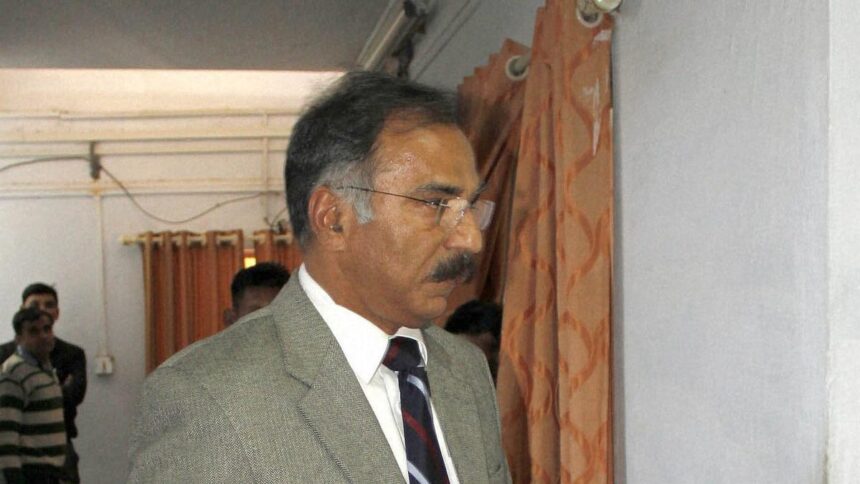
In a significant development in Gujarat’s corruption cases, former IAS officer Pradeep Sharma has been sentenced to five years in prison by a sessions court on Monday. The court also imposed a fine of Rs 75,000 on Sharma in connection with a 2004 corruption case. Sharma, who was serving as the collector of Kutch district at the time, was convicted for his role in the improper allotment of land to the Welspun Group, which allegedly resulted in a loss of Rs 1.2 crore to the government exchequer.
The case was registered by the Anti Corruption Bureau (ACB), and the principal district and sessions judge KM Sojitra found Sharma guilty of criminal misconduct under Section 13(2) and of obtaining undue advantage as a public servant under Section 11 of the Prevention of Corruption Act. In the court’s judgment, Sharma received a five-year jail sentence along with a Rs 50,000 fine for Section 13(2) and a separate three-year sentence with a Rs 25,000 fine for Section 11. Both sentences will run concurrently.
Pradeep Sharma is no stranger to controversy and legal battles. He is currently incarcerated in Bhuj for another corruption case, further reflecting his ongoing legal challenges. This latest verdict stems from a joint trial conducted for three separate corruption cases related to land allotments to the Welspun Group. According to details from the case, Sharma had allotted land to the company at a price significantly lower than the market rate, allegedly leading to a financial loss for the government.
In return for this favorable land deal, it is alleged that the Welspun Group made Sharma’s wife a 30 percent partner in one of its subsidiaries, Value Packaging. She reportedly received Rs 29.5 lakh as part of this arrangement. The charges were levied after Sharma was arrested by the ACB on September 30, 2014, for allegedly accepting a bribe of Rs 29 lakh from the private company when he was in charge of Kutch district.
Sharma’s involvement in corruption cases goes beyond the current land allotment issue. He had previously been a vocal critic of the state government, particularly during the tenure of then-Chief Minister Narendra Modi. Sharma had sought a CBI inquiry into allegations of snooping on a woman architect, after news portals released CDs of telephonic conversations that allegedly involved Union Home Minister Amit Shah, who was then Gujarat’s Minister of State for Home, and top police officials. The conversations, which were purportedly recorded between August and September 2009, referred to a “saheb” who was speculated to be the then-Gujarat CM, though the charge of snooping was firmly denied by Shah.
The case reflects the ongoing legal and political tensions in Gujarat, highlighting the intersection of public office, corruption, and the challenges of tackling misconduct in high-ranking positions. The sentencing of Pradeep Sharma adds to the growing number of corruption cases that have come to the forefront in the state over the years, with the courts continuing to deliver judgments on such matters.
As the legal proceedings continue, Sharma’s case serves as a reminder of the persistent issue of corruption within public offices and the efforts being made by agencies like the ACB to hold officials accountable. With a total of several corruption cases already registered against Sharma, this conviction adds further weight to his legal troubles, signaling a significant chapter in the long-standing fight against corruption in India.