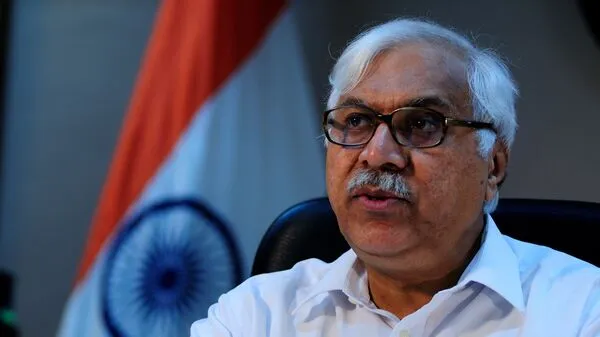
Former Chief Election Commissioner SY Quraishi has firmly responded to BJP MP Nishikant Dubey’s remarks referring to him as a “Muslim commissioner” instead of an election commissioner. In a strong statement, SY Quraishi defended his record in public service, emphasized the importance of constitutional values, and condemned the attempt to reduce his identity to religion. His comments come amid increasing instances of public figures facing attacks based on their faith rather than their professional contributions.
SY Quraishi, who served as the chief election commissioner from July 2010 to June 2012, said he believes in an India where people are recognized for their talents and work, not their religious identity. He noted that his entire career in the Indian Administrative Service and later as election commissioner was devoted to upholding the Constitution and democratic processes.
Quraishi Stands by Constitutional Principles
SY Quraishi said, “I served on the constitutional post of Election Commissioner to the best of my ability and had a long and fulfilling career in the IAS.” Stressing the need for a merit-based society, he added, “I believe in an idea of India where an individual is defined by his or her talents and contributions and not by their religious identities.”
SY Quraishi condemned the repeated attempts to communalize public roles, saying, “For some, religious identities are a staple to forward their hateful politics.” Despite such attacks, he said India has always stood up for its constitutional institutions and will continue to do so.
Dubey’s Controversial Remarks
The controversy was sparked by BJP MP Nishikant Dubey, who on Sunday referred to SY Quraishi as a “Muslim commissioner” while criticizing his comments. Dubey’s statement drew sharp criticism for using a religious identity as a political attack, raising concerns about the tone of public discourse.
SY Quraishi’s response has been seen as a dignified rebuttal that upholds the values of democracy and secularism. His message underscores a broader concern about growing communal narratives in Indian politics and the need to resist reducing individuals to their religious backgrounds in national debates. His firm defense of constitutional integrity has been widely appreciated by those who advocate for a more inclusive and merit-based society.