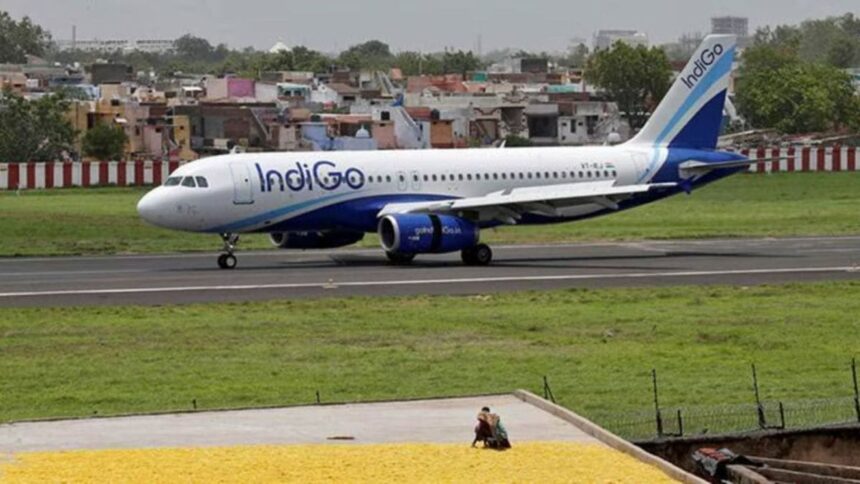
The sharp flight ticket price hike in India has prompted the central government to step in, as rising aviation fuel costs begin to significantly impact passenger fares. Following a steep increase in Aviation Turbine Fuel (ATF) prices, airlines—led by IndiGo—have revised their fuel surcharge structures, making both domestic and international travel more expensive. With mounting public concern, the government is now preparing to hold discussions with airlines to prevent further escalation in ticket prices and ensure affordability for common travelers.
Jet fuel, which accounts for nearly 40% of an airline’s operating expenses, plays a decisive role in determining airfare trends. Even a marginal rise in ATF prices can trigger a chain reaction across the aviation sector, forcing carriers to adjust pricing strategies. In the current scenario, however, the increase has been substantial enough to trigger widespread fare revisions, raising concerns about accessibility and demand in the travel market.
Officials have indicated that while no formal directive has been issued yet, airlines have been asked to explain their pricing mechanisms. The government’s primary focus remains on ensuring that the financial burden of rising fuel costs is not entirely transferred to passengers.
ATF Price Surge and Its Ripple Effect on Airfare Costs
The ongoing flight ticket price hike in India is closely tied to recent changes in ATF pricing. The government had allowed a cumulative increase of around 25% in aviation fuel prices to support the financially strained aviation sector. However, in an attempt to cushion the impact on domestic travelers, the effective increase for domestic operations was limited to approximately 8.5%.
Despite this moderation, the impact has still been significant. Domestic ATF prices have risen to around ₹1,04,927 per kiloliter, while international ATF prices have witnessed a dramatic surge, nearly doubling from earlier levels to over ₹2,07,000 per kiloliter. This sharp rise in fuel costs for international operations has particularly affected long-haul routes, where fuel consumption is substantially higher.
Global factors have also contributed to this spike. Supply disruptions linked to geopolitical tensions, especially around critical energy routes like the Strait of Hormuz, have tightened fuel availability and pushed prices upward. As a result, airlines operating international flights are facing unprecedented cost pressures.
Industry experts point out that airlines operate on thin profit margins, making it difficult to absorb such cost increases internally. Consequently, they often resort to adding or increasing fuel surcharges—a flexible pricing component that allows them to adjust fares without altering base ticket prices.
This mechanism, while practical for airlines, has a direct and visible impact on passengers, as it increases the final ticket cost. Unlike base fares, which are influenced by multiple factors including demand and competition, fuel surcharges are directly linked to fuel price fluctuations, making them a key driver of fare volatility.
IndiGo’s Revised Surcharge Structure and Government’s Response
At the center of the current flight ticket price hike in India is IndiGo’s decision to overhaul its fuel surcharge system. The airline has replaced its earlier flat surcharge of ₹425 with a distance-based model, introducing variable charges depending on the length of the journey.
For domestic routes, the new surcharge ranges from ₹275 to ₹950. While this offers some relief for short-distance travelers, passengers on longer routes are now facing higher costs. The impact is even more pronounced on international routes, where surcharges have surged significantly. On long-haul flights, particularly to destinations in Europe, the additional charge can go up to ₹10,000, marking a substantial increase in travel expenses.
These revised rates, implemented from April 2, reflect the airline’s attempt to align pricing with operational costs. However, they have also intensified concerns among passengers, especially those planning international travel, where ticket prices were already on the higher side.
The government’s planned intervention comes at a critical juncture. By engaging directly with airlines, authorities aim to strike a balance between sustaining the aviation industry and protecting consumer interests. Officials are expected to push for a more gradual adjustment of fares, ensuring that passengers are not subjected to sudden and steep price hikes.
Market analysts believe that such discussions could lead to partial rollbacks or stabilization of fuel surcharges, particularly on select routes. Airlines may be encouraged to absorb a portion of the cost increase or distribute it more evenly over time, rather than passing it on immediately to customers.
At the same time, the situation highlights the structural challenges within the aviation sector. With fuel costs forming such a large share of operating expenses, airlines remain highly vulnerable to global price fluctuations. This dependency makes fare stability difficult to achieve, especially during periods of economic and geopolitical uncertainty.
The concept of fuel surcharge itself underscores this complexity. It serves as a buffer for airlines, allowing them to respond quickly to changing fuel prices. However, for passengers, it represents an additional and often unpredictable expense, contributing to the overall flight ticket price hike in India.
As the government prepares to engage with industry stakeholders, the outcome of these discussions will be closely watched. Any decision taken could have far-reaching implications for airfare trends, airline profitability, and passenger confidence in the months ahead.