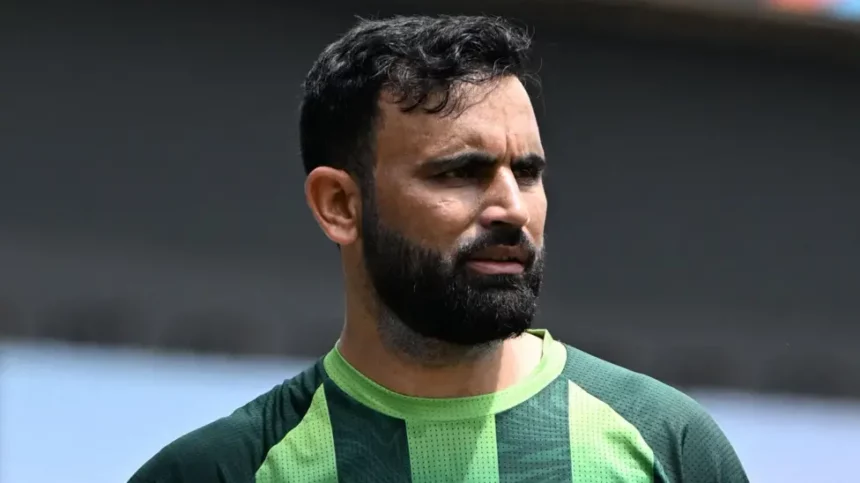
Pakistan international cricketer Fakhar Zaman has been handed a two-match suspension in the Pakistan Super League after being found guilty of ball tampering during a high-profile clash between Lahore Qalandars and Karachi Kings. The incident has sparked significant discussion around discipline and fair play in franchise cricket.
The sanction was imposed following a disciplinary hearing conducted by match referee Roshan Mahanama, who concluded that Fakhar had violated Article 41.3 of the PSL code of conduct, which pertains to altering the condition of the ball. The decision came after reviewing evidence and providing the player an opportunity to present his case.
The controversy unfolded during the final stages of the match, specifically at the start of the last over of Karachi Kings’ run chase. On-field umpire Faisal Afridi requested the ball from fast bowler Haris Rauf after noticing a potential irregularity. The ball had reportedly changed hands between Lahore Qalandars captain Shaheen Shah Afridi and Fakhar Zaman shortly before the inspection.
Following a detailed on-field discussion involving umpire Sharfuddoula, the officials decided to replace the ball, determining that its condition had been unlawfully altered. This decision immediately raised suspicions of ball tampering, triggering further investigation by match officials.
According to the PSL’s code of conduct, a Level 3 offence such as ball tampering carries a suspension ranging from a minimum of one match to a maximum of two matches for a first-time violation. In Fakhar Zaman’s case, the match referee opted for the maximum penalty, underscoring the seriousness of the offence.
Fakhar had initially contested the charge, prompting a formal hearing where all evidence, including match footage and on-field reports, was carefully examined. The hearing also included the presence of key team representatives such as captain Shaheen Shah Afridi, team director Sameen Rana, and team manager Farooq Anwar, ensuring transparency in the proceedings.
In its official statement, the Pakistan Cricket Board confirmed that the decision was made after a thorough review process and in accordance with the league’s disciplinary framework. The board emphasised its commitment to maintaining the integrity of the game and enforcing strict adherence to rules.
Ball tampering remains one of the most serious offences in cricket, as it directly impacts the fairness of the contest by altering the ball’s behaviour. Over the years, cricket authorities have implemented strict regulations and penalties to deter such practices and preserve the spirit of the game.
The incident involving Fakhar Zaman has once again brought the issue into focus, highlighting the importance of vigilance by match officials and adherence to ethical standards by players. In high-pressure situations, especially during crucial phases of a match, even minor infractions can have significant consequences.
For Lahore Qalandars, the suspension of a key player like Fakhar Zaman comes as a setback in their PSL campaign. Known for his aggressive batting and ability to change the course of a game, Fakhar plays a crucial role in the team’s lineup. His absence in the next two matches could impact the team’s performance and strategy.
The incident also raises broader questions about player conduct and the challenges of maintaining discipline in fast-paced T20 leagues. With matches often decided in the final overs, players are under immense pressure to deliver results, which can sometimes lead to lapses in judgment.
Experts believe that while strict enforcement of rules is essential, there is also a need for continuous education and awareness among players regarding the consequences of such actions. Leagues like the PSL have made efforts to reinforce codes of conduct, but incidents like this indicate that more work may be needed.
From a regulatory perspective, the swift action taken by the match referee and the PCB demonstrates the league’s commitment to upholding standards. By imposing the maximum penalty for a first-time offence, the authorities have sent a strong message that violations will not be tolerated.
For Fakhar Zaman, the suspension serves as a reminder of the importance of maintaining discipline and professionalism at all times. As an experienced international player, he is expected to set an example for younger teammates and uphold the values of the sport.
Despite the controversy, Fakhar’s contributions to Pakistan cricket and franchise leagues remain significant. However, incidents like these can impact a player’s reputation and highlight the need for consistent adherence to rules.
The broader cricketing community will be watching closely to see how Fakhar responds to this setback. A strong comeback, both in terms of performance and conduct, will be crucial in restoring confidence among fans and stakeholders.
Meanwhile, the PSL continues to attract global attention as one of the premier T20 leagues, featuring top players from around the world. Ensuring the integrity of the competition is essential for maintaining its credibility and appeal.
The incident also underscores the critical role of match officials in identifying and addressing potential violations. The proactive approach taken by the umpires in this case reflects the importance of vigilance and quick decision-making in maintaining fair play.
As the tournament progresses, teams will need to remain focused not only on performance but also on adhering to the rules and spirit of the game. Discipline and integrity are key components of success in professional sports, and any deviation can have significant consequences.
In conclusion, the two-match ban imposed on Fakhar Zaman highlights the seriousness with which cricket authorities treat ball tampering offences. While the incident is a setback for both the player and his team, it also serves as a reminder of the importance of fair play and adherence to the rules.
As the PSL continues, the focus will remain on competitive cricket played within the framework of established regulations. For Fakhar Zaman, the path ahead involves learning from this experience and returning stronger, both as a player and as a representative of the sport.