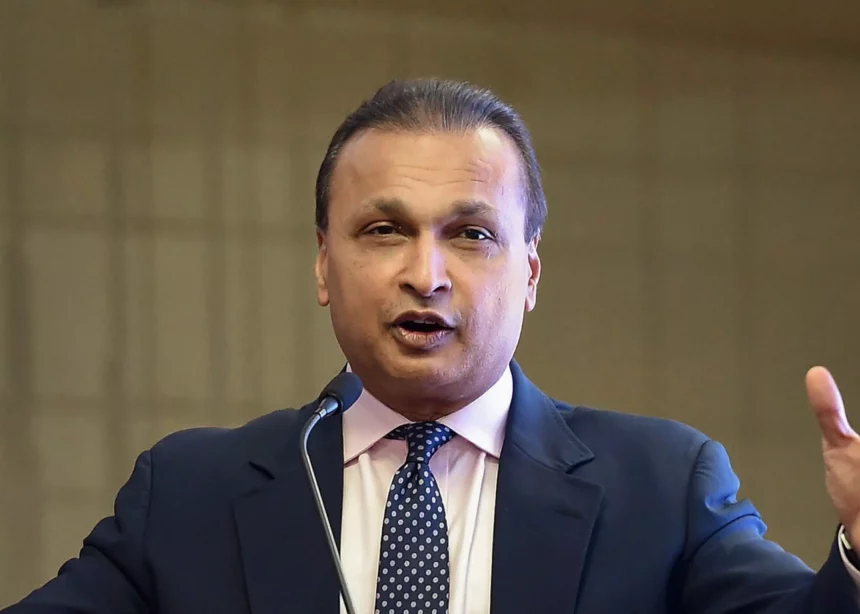
The Enforcement Directorate (ED) has summoned businessman Anil Ambani in a sweeping investigation into alleged financial irregularities involving loans worth thousands of crores. The case, which ties together alleged fund diversion, misuse of corporate loans, and questionable approvals by Yes Bank, has brought renewed scrutiny on the financial dealings of Reliance Group companies associated with Anil Ambani. The agency has directed Anil Ambani to appear before it on August 5, seeking clarity on his role in the disbursement and suspected misuse of funds extended to two key firms: Reliance Home Finance Limited (RHFL) and Reliance Commercial Finance Limited (RCFL).
Loans Under Scanner and Rising Corporate Debt
ED officials revealed that Anil Ambani is expected to be questioned on two specific loans sanctioned by Yes Bank to RHFL and RCFL. Investigators believe these loans were misused, with funds allegedly siphoned off through shell companies and routed into other group entities. The financial crime watchdog alleges that these transactions were in gross violation of regulatory and bank credit norms.
According to ED sources, the scale of corporate loans taken by RHFL dramatically surged in a short period, raising red flags. From ₹3,742.60 crore in FY 2017-18, the loan book jumped to ₹8,670.80 crore in FY 2018-19. This spike is under the agency’s lens, with suspicions that the rapid accumulation of debt may have been part of a broader scheme to divert public money.
The agency said that investigations revealed back-dated credit approval memorandums (CAMs), investment proposals made without any due diligence, and other procedural lapses that flouted Yes Bank’s credit policy. These procedural violations, ED said, enabled the routing of funds from sanctioned loans into group companies not originally listed as beneficiaries.
ED Raids and Role of Key Executives
The probe gained momentum following ED’s three-day raids, which concluded on July 27. In these raids, over 50 companies and 25 individuals, including several senior executives from the Reliance Anil Dhirubhai Ambani Group (ADAG), were searched. These raids are said to have yielded crucial documents and digital evidence that substantiate the case of large-scale financial mismanagement and fraud.
Officials stated that the ED investigation intersects with a parallel inquiry by the Central Bureau of Investigation (CBI), which had earlier named former Yes Bank chairman Rana Kapoor as an accused in relation to the same set of loans. The CBI had alleged that Kapoor played a key role in facilitating these loans, and ED officials now suggest that there may have been a coordinated effort to bypass banking norms in collusion with borrowers.
In one particularly damning revelation, the ED noted that the terms and conditions under which loans were granted were not just violated but manipulated to suit the interests of the borrower entities. This includes altering credit documentation, inflating asset valuations, and undermining oversight mechanisms to push through loans that ultimately ended up in shell firms or defunct entities.
Further widening the scope of the investigation, ED officials disclosed that Reliance Communications Ltd (RCOM) is also under probe for allegedly defrauding lenders of over ₹14,000 crore. The cumulative weight of these cases presents a picture of systemic abuse of lending protocols across multiple arms of the business group once helmed by Anil Ambani.
In response to the ongoing probe, a spokesperson from the Reliance Group, choosing to remain anonymous, issued a statement clarifying Anil Ambani’s current association with the implicated companies. The spokesperson said Anil Ambani stepped down from the board of Reliance Communications in 2019 and presently holds no official position in any other Reliance Group firm.
“RCOM and RHFL are not part of the existing Reliance Group, which now comprises only Reliance Infrastructure Ltd and Reliance Power Ltd as its listed entities,” the official noted. Furthermore, RCOM has been undergoing the Corporate Insolvency Resolution Process (CIRP) under the Insolvency and Bankruptcy Code since 2016, indicating that the company has long been non-operational under Anil Ambani’s direct control.
The spokesperson also voiced concerns over procedural fairness in the investigation. Highlighting a perceived discrepancy in treatment, the spokesperson claimed that the State Bank of India (SBI) had declined to provide Anil Ambani an opportunity for a personal hearing, even though it had dropped similar charges against other individuals in identical situations. “Mr. Ambani was not afforded the same treatment,” the official said.
Despite the statement from the group distancing Anil Ambani from the companies in question, ED sources maintain that his presence and influence during the critical period of these loans cannot be overlooked. The investigation, they emphasized, is not limited to present formal roles but extends to the period when the alleged financial decisions were made.
As of now, both Reliance Infrastructure Ltd and Reliance Power Ltd have informed stock exchanges that the ED’s recent actions have had no bearing on their daily operations. These filings, made after the conclusion of the raids, aim to reassure shareholders and investors about the business continuity of the currently active arms of the group.
The unfolding investigation underscores a broader concern about regulatory oversight, corporate governance, and accountability among India’s top business houses. With Anil Ambani now formally summoned, the case may signal a significant turning point in the country’s approach to tackling high-value white-collar financial crime.