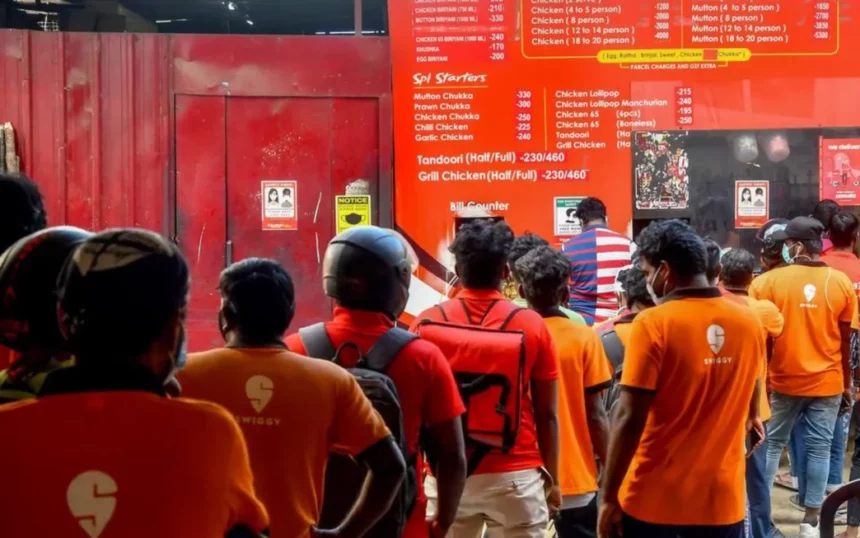
The Economic Survey 2025–26, tabled in Parliament, has cast a spotlight on the income inequalities and precarious working conditions facing India’s rapidly expanding gig economy, revealing that nearly 40 percent of gig workers earn less than Rs 15,000 per month. This revelation underscores a growing concern among policymakers, labor economists, and worker advocacy groups regarding the sustainability of gig employment, particularly for workers who depend on these roles as their primary source of livelihood. The Survey emphasizes that without immediate intervention in the form of minimum earnings, social security mechanisms, and regulatory reforms, the gig workforce risks continued economic vulnerability and widening disparities with regular employment. In addition, it highlights structural issues such as income volatility, algorithmic dominance, limited access to training and assets, and insufficient protections that amplify financial and occupational insecurity.
Income Volatility, Algorithmic Control, and the Need for Worker Protections
India’s gig economy has expanded at a staggering pace over the past few years, yet this rapid growth has been accompanied by significant challenges for workers navigating irregular pay and limited benefits. The Economic Survey draws attention to income volatility as a critical concern, noting that many gig workers have highly unpredictable earnings due to fluctuating demand, task-based pay structures, and waiting periods for assignments. This unpredictability not only constrains the ability of workers to meet monthly expenses but also severely limits access to formal financial services. Many gig workers are classified as “thin-file” clients in banking systems, lacking sufficient credit history to secure loans, mortgages, or even insurance products, which further entrenches financial insecurity. The Survey emphasizes that these challenges hinder upward mobility, and stress the need for systemic policy measures that guarantee predictable and fair compensation, enabling workers to participate in the broader financial ecosystem.
Beyond financial instability, the Survey also examines the growing dominance of platform algorithms in managing gig work. These algorithms, which dictate task allocation, performance metrics, compensation levels, and demand-supply alignment, can inadvertently impose a highly controlled work environment. The concentration of decision-making in algorithmic systems raises concerns about fairness, transparency, and the potential for bias, as workers may be evaluated and compensated based on opaque criteria beyond their control. Experts warn that such algorithmic oversight can contribute to chronic worker burnout, overwork, and mental stress, particularly when algorithms prioritize efficiency over worker welfare. Furthermore, the lack of regulatory safeguards means that gig workers often operate without the labor protections available to their full-time counterparts, leaving them exposed to systemic vulnerabilities.
The Survey also highlights the limitations in skill development opportunities for gig workers. As technological advances, particularly in artificial intelligence and machine learning, continue to transform labor markets, workers face heightened risks of job displacement and obsolescence. Many gig workers cannot transition to higher-skilled roles because they lack access to essential resources and training, such as vehicles, specialized equipment, or structured upskilling programs. By addressing these gaps, the Survey argues, platforms and policymakers can facilitate more equitable access to skill-building opportunities, helping workers secure more stable and better-paying employment.
Policy Recommendations, Sectoral Growth, and the Future of Gig Employment
To address these challenges, the Economic Survey advocates for immediate policy action to establish minimum earnings per hour or per task for gig workers. Such a policy framework would not only ensure fair compensation but also reduce disparities between regular and gig employment, preventing the erosion of labor standards. The Survey further recommends that platforms provide compensation for waiting periods, acknowledge the social contributions of gig workers, and implement measures to enhance transparency in algorithmic decision-making. It stresses that competition regulations, data accessibility, and algorithmic accountability are critical components of a modern labor policy capable of safeguarding worker welfare in digital labor markets.
The Survey also emphasizes the importance of co-investment in productive assets and training to promote upward mobility. Many gig workers, despite their willingness and ability to perform higher-skilled tasks, remain constrained due to lack of access to essential tools, including vehicles for delivery work or equipment for specialized services. Encouraging platforms and employers to co-invest in both assets and training can provide workers with the foundation necessary to pursue higher-value opportunities, mitigate income volatility, and strengthen their long-term economic security. By fostering an ecosystem that supports skill development and resource accessibility, the gig economy can evolve from a precarious employment model into a more sustainable and equitable labor platform.
The report underscores that India’s gig workforce is growing at an unprecedented rate, with the number of workers increasing by 55 percent over the past four years, from 77 lakh in FY21 to 1.2 crore in FY25, now representing more than 2 percent of the total workforce. Projections indicate that non-agricultural gig employment could constitute 6.7 percent of the total workforce by 2029–30, contributing an estimated Rs 2.35 lakh crore to the national GDP. These figures illustrate the strategic significance of the gig economy within India’s broader employment landscape, while simultaneously highlighting the need to institutionalize protections that can sustain this growth without perpetuating income insecurity.
The Survey also draws attention to ongoing labor unrest within the gig sector. Workers across food delivery, quick commerce, and other platforms have staged protests demanding fair wages, improved working conditions, and formal recognition under labor laws. These movements, combined with the Survey’s findings, signal an urgent need for a comprehensive policy response that balances platform growth with worker rights, ensuring that the expansion of digital labor markets does not come at the expense of the financial and occupational security of the workforce.
Moreover, the Survey addresses broader structural considerations, noting that the social contract governing gig work must be restructured to reflect the realities of modern labor markets. Policymakers are urged to create frameworks that incentivize platforms to provide equitable benefits, enable co-investment in training and assets, and implement minimum earning guarantees. The Survey stresses that policy design should prioritize genuine worker choice, rather than forcing individuals into gig roles due to limited labor demand, skill mismatches, or the absence of social safety nets. By recalibrating the framework of gig work, India can align the interests of platforms, workers, and the broader economy to foster more sustainable labor relations.
Additionally, the Economic Survey examines the macroeconomic and social implications of income volatility among gig workers. When a significant portion of the workforce earns below the threshold required to meet basic expenses, it affects not only household welfare but also broader consumption patterns, credit demand, and economic stability. The lack of predictable earnings reduces purchasing power and limits participation in long-term financial planning, such as investments in education, health, and housing. By stabilizing incomes through minimum pay guarantees and regulatory safeguards, policymakers can enhance economic resilience and create conditions conducive to inclusive growth.
While the gig economy presents significant opportunities for employment flexibility and entrepreneurship, it also exposes workers to unique risks that demand proactive intervention. The Economic Survey 2025–26 makes it clear that without minimum earnings, improved social protection, access to assets and training, and algorithmic transparency, the growing gig workforce will continue to face economic precarity. By implementing comprehensive policy reforms, India can ensure that the gig economy remains a driver of employment and innovation, while safeguarding the welfare of those who power its expansion.