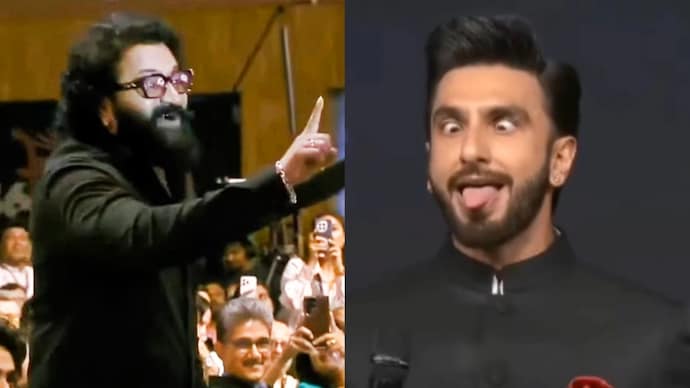
Bollywood actor Ranveer Singh, one of the leading figures in the Indian film industry, has found himself at the center of a controversy in Bengaluru after the city police registered a First Information Report (FIR) against him. The case stems from allegations that Singh, during a public event, mimicked a ritualistic act performed by actor Rishab Shetty in the acclaimed Kannada film Kantara. The act, referred to as the “Daiva act,” is part of the film’s depiction of traditional religious practices in coastal Karnataka. According to reports, certain individuals and community members found Singh’s imitation offensive, claiming that it hurt religious sentiments. The controversy has now escalated into a legal matter, prompting intervention from law enforcement authorities. Prior to the FIR registration, a city-based advocate, Prashanth Methal, had approached the jurisdictional court seeking permission to initiate criminal proceedings against Singh for allegedly insulting sacred customs and performing acts deemed disrespectful toward a revered cultural practice.
This incident has sparked widespread discussion among the public, with debates focusing on the boundaries of artistic expression, celebrity influence, and respect for religious traditions. Supporters of Singh argue that the mimicry was intended in a playful, entertainment-driven context rather than as an act of disrespect, while critics maintain that public figures carry a responsibility to avoid trivializing cultural or religious practices, particularly those with deep-rooted significance. Legal experts note that this case exemplifies the tensions that occasionally arise in India between freedom of expression guaranteed under the Constitution and laws that protect religious sentiments from deliberate or negligent insult. The registration of the FIR, a procedural step in initiating criminal proceedings, signals the seriousness with which authorities are treating the matter.
Legal and Cultural Context Surrounding the FIR
In India, the legal framework provides provisions for the protection of religious sentiments under sections of the Indian Penal Code, which criminalize deliberate acts intended to insult religion or provoke communal disharmony. FIRs, while not indicative of guilt, serve as the first step in investigating allegations of wrongdoing and can lead to further legal scrutiny if the investigation finds substantive evidence. The case against Ranveer Singh has brought these legal provisions into the spotlight, as courts will now have to consider whether the actor’s actions crossed the threshold from permissible public performance to actions that constitute deliberate offense.
Culturally, the act in question—the Daiva ritual depicted in Kantara—holds significant spiritual importance for certain communities in Karnataka. The film, which achieved critical acclaim for its portrayal of regional customs and traditions, presents the Daiva act as a form of reverence toward local deities and community rituals. Rishab Shetty’s performance in the original film was widely appreciated for its authenticity and respect toward the cultural practice. Critics of Singh’s mimicry argue that replicating such an act in a different context, especially in a manner perceived as entertainment or parody, can diminish its cultural and religious significance. This concern highlights the broader debate over how public figures engage with traditional practices in modern media and the entertainment industry, balancing creative freedom with cultural sensitivity.
Legal observers also note that the petition filed by advocate Prashanth Methal underscores the evolving role of citizens in seeking accountability for actions that potentially offend community sentiments. By approaching the court before the FIR was registered, the advocate sought to ensure that the matter received formal judicial consideration, reflecting growing public awareness of legal recourse in cases involving religion, culture, and celebrity conduct. The court’s permission paved the way for police to act on the allegations, demonstrating the procedural steps required when complaints involve high-profile individuals and sensitive social issues.
Impact on Public Perception and the Film Industry
The FIR against Ranveer Singh has ignited intense discussions across media platforms, social networks, and public forums. Fans of the actor have voiced support, arguing that the mimicry was innocent and intended for entertainment purposes, while detractors have criticized the apparent insensitivity toward sacred practices. The situation has highlighted the influence and visibility of Bollywood actors, who often serve as role models and trendsetters for large segments of the population. Public figures are increasingly scrutinized for their conduct, and incidents such as this demonstrate how actions that might seem benign or humorous in one context can have unintended consequences in another.
For the film industry, the controversy serves as a cautionary example of the complexities involved in portraying or referencing cultural and religious content. Bollywood, with its nationwide reach and cross-cultural influence, must navigate the delicate balance between creative expression and social responsibility. High-profile controversies can affect reputations, marketing strategies, and audience perceptions, prompting producers and actors to consider potential backlash when incorporating culturally sensitive material into performances, public appearances, or promotional content. The interplay between celebrity actions and audience reception underscores the evolving responsibilities of artists within a society that values both free expression and respect for tradition.
The case also raises questions about the role of social media in amplifying disputes and shaping narratives. Videos or images of Singh’s mimicry circulated widely, drawing attention from diverse communities and generating opinions across India and beyond. While social media provides a platform for immediate public reaction, it can also intensify conflicts and create pressure on authorities to act swiftly. Analysts note that the combination of digital visibility and celebrity influence has transformed how cultural disputes are perceived and managed, making legal interventions like FIRs a part of broader social negotiations regarding respect, representation, and public accountability.
Additionally, the incident has sparked conversations among legal scholars, cultural commentators, and sociologists regarding the boundaries of parody, satire, and artistic mimicry. Determining whether an act constitutes a punishable offense often requires nuanced interpretation of intent, context, and the potential for public harm or offense. In the case of Ranveer Singh, investigators will need to examine whether the mimicry was intended to provoke or demean, or whether it was simply a performance without malicious intent. The findings of this investigation may establish precedents for how similar cases involving celebrities, media, and religious practices are addressed in the future.
Public discourse surrounding the FIR has also brought attention to broader societal dynamics, including the tensions between modern entertainment culture and traditional practices. Urban audiences, often exposed to diverse media and globalized content, may interpret performances differently than local or community members with deep-rooted cultural affiliations. This gap in perception underscores the challenges faced by performers and producers in creating content that resonates with multiple audiences while remaining sensitive to cultural and religious sentiments.
Broader Implications for Law, Society, and Celebrity Conduct
The registration of an FIR against a prominent Bollywood actor is not merely a legal formality; it has social and cultural ramifications. For law enforcement agencies, managing high-profile cases involves careful coordination, ensuring that investigations proceed objectively while mitigating potential public unrest. The authorities must balance the need to uphold the law with considerations regarding public perception, media scrutiny, and community reactions. This case highlights the procedural and strategic challenges associated with addressing complaints that involve celebrity figures and sensitive cultural issues.
From a societal perspective, the controversy emphasizes the importance of dialogue between communities, artists, and institutions. Ensuring mutual respect while fostering creative expression requires ongoing conversations about cultural literacy, the limits of humor, and the responsibilities of public figures. Legal mechanisms, such as FIRs and court proceedings, act as instruments for resolving disputes, but broader education and awareness initiatives are equally essential in promoting understanding and reducing conflicts.
For Ranveer Singh, the FIR represents both a personal and professional challenge. The actor’s response, public statements, and engagement with legal authorities may influence public opinion and determine the trajectory of the case. Celebrities today operate under intense scrutiny, and their actions are subject to interpretation across multiple forums—legal, social, and cultural. How Singh navigates this situation could set an example for peers in the entertainment industry regarding accountability, sensitivity, and the management of public controversies.
Moreover, this case sheds light on the evolving relationship between cinema, traditional practices, and community sentiments. Films increasingly draw upon regional and religious motifs to create compelling narratives, yet the act of performing or referencing these motifs in public events can generate friction. As such, both filmmakers and performers must remain aware of the cultural significance of their content and anticipate the potential impact of public enactments or imitations.
The FIR also underscores the role of citizen participation in holding public figures accountable. By initiating legal action, individuals and advocacy groups ensure that concerns regarding cultural respect are formally addressed, contributing to a democratic process in which both legal and social norms are enforced. Cases like this highlight the importance of a responsive legal system capable of mediating disputes arising from the intersection of modern entertainment, celebrity influence, and traditional values.
As the investigation proceeds, legal experts will examine evidence, statements, and context to determine the legitimacy of the allegations. The case may involve assessments of intent, the perceived impact on community sentiments, and the extent to which the act can be classified as offensive under applicable law. Observers anticipate that the proceedings will be closely followed by both media and the public, reflecting the high stakes associated with celebrity involvement in culturally sensitive controversies.
The incident also contributes to ongoing conversations about the responsibilities of public performers, particularly in a society as diverse as India. The balance between humor, parody, and respect for religious and cultural practices remains a dynamic and contested area, requiring sensitivity, awareness, and thoughtful engagement. The FIR against Ranveer Singh exemplifies how legal, cultural, and social frameworks intersect to address perceived offenses, setting a benchmark for how similar situations may be navigated in the future.