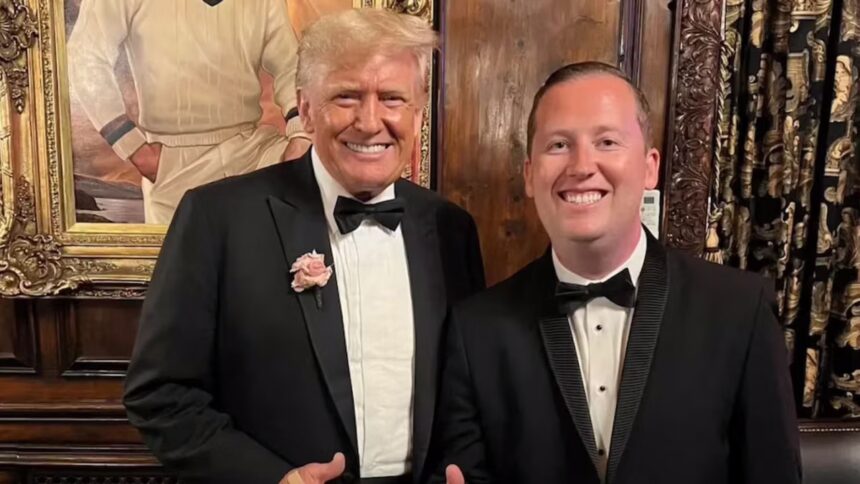
The relationship between India and the United States has entered a crucial juncture as Washington seeks to deepen strategic engagement with New Delhi, particularly amid growing concerns over China’s regional ambitions. Sergio Gor, President Donald Trump’s nominee for US Ambassador to India, underscored during his Senate confirmation hearing that America intends to prioritize drawing India closer and reducing its dependency on China. Sergio Gor emphasized that despite recent minor setbacks in the bilateral relationship, the longstanding cooperation between the two nations far surpasses India’s ties with Beijing. He also highlighted trade opportunities, particularly in energy markets, and reaffirmed America’s commitment to viewing India as a strategic partner and regional stabilizer, reflecting a broader agenda to strengthen geopolitical and economic bonds in the Indo-Pacific.
Strategic Priorities and Regional Dynamics
During the confirmation hearing, Sergio Gor articulated a clear vision for the US-India relationship, placing strategic alignment at the forefront of America’s foreign policy in South Asia. He acknowledged that both nations had experienced “moments of hiccups” in their engagement, referencing recent tensions arising from trade disputes and policy divergences. Nevertheless, Gor framed these issues as temporary setbacks, noting that the overarching trajectory of India-US relations remains positive and historically deep-rooted. He drew a comparison with China, emphasizing that while India maintains complex relations with Beijing, its partnership with the United States represents a far warmer, long-term, and mutually beneficial relationship.
Sergio Gor stressed that China’s expansionist policies, whether along the Himalayan border or across the broader region, necessitate a closer strategic alignment between India and the United States. He asserted that a key objective of his ambassadorship, once confirmed, would be to ensure India is “pulled into our side and away from them [China].” This statement reflects the Donald Trump administration’s broader Indo-Pacific strategy, which positions India as a cornerstone of regional stability and a critical partner in counterbalancing China’s influence. Analysts note that this approach dovetails with the Quad framework and other multilateral efforts to strengthen security cooperation, economic collaboration, and political trust among democratic powers in Asia.
Sergio Gor also underscored the importance of cultivating political goodwill, noting that the Indian government and people share deep, enduring ties with the United States across multiple decades. He suggested that India’s engagement in regional affairs, including trade, security, and energy, positions the country as an indispensable partner, not merely in bilateral terms but also in broader geopolitical calculations. This perspective indicates Washington’s intention to reinforce India’s strategic independence from China while offering incentives for deeper collaboration in defense, infrastructure, and technology sectors.
Trade, Energy, and Economic Engagements
Beyond the strategic and geopolitical priorities, Sergio Gor highlighted the economic dimensions of the US-India partnership. He specifically referred to the ongoing trade negotiations, emphasizing America’s interest in expanding its access to the Indian market, particularly in crude oil, petroleum products, and liquefied natural gas (LNG). Sergio Gor remarked that India’s growing middle class and expanding energy consumption present significant opportunities for US exports, framing economic engagement as a critical component of the bilateral agenda.
Recent disruptions in trade relations had caused friction, particularly following the imposition of a 50 percent tariff on Indian goods by President Donald Trump, which was subsequently doubled as a response to India’s purchase of Russian oil. Despite these tensions, Sergio Gor presented an optimistic outlook, noting that negotiations were progressing toward an agreement. He mentioned that US trade officials, along with India’s commerce and trade ministers, were actively working to narrow differences on key issues, signaling a pragmatic and solution-oriented approach from both sides.
Sergio Gor also framed economic collaboration within the broader context of strategic partnership. By linking trade facilitation, energy access, and market opportunities to regional stability and geopolitical alignment, he reinforced the idea that economic policies cannot be separated from broader diplomatic and security objectives. He emphasized that India represents not only a valuable market but also a critical partner in shaping resilient supply chains, securing energy resources, and fostering sustainable economic growth in a rapidly evolving international environment.
Political Endorsements and Future Outlook
Throughout his testimony, Sergio Gor consistently described India as a “strategic partner” and a “cornerstone of regional stability,” underscoring the importance of cultivating trust and goodwill between Washington and New Delhi. He referenced President Donald Trump’s personal engagement with Prime Minister Narendra Modi, noting that the two leaders have maintained constructive dialogue despite recent challenges. Sergio Gor’s statements sought to reassure both lawmakers and the Indian public that America is committed to supporting India’s sovereignty, economic growth, and security interests.
Sergio Gor’s ambassadorship also carries symbolic weight, particularly in the context of recent global tensions and the growing importance of India in US foreign policy. By framing India as a central player in countering Chinese expansionism and in stabilizing the Indo-Pacific region, Sergio Gor effectively positioned his role as instrumental in advancing both strategic and economic goals. His testimony reflects a nuanced understanding of the complexities in US-India-China relations, highlighting the intersection of diplomacy, trade, and defense in shaping the trajectory of bilateral engagement.
Additionally, Sergio Gor’s emphasis on trade and market access signals a recognition of India’s rising economic significance. By linking energy exports and commercial cooperation to strategic alignment, he presented a comprehensive agenda aimed at ensuring that India’s policy choices are increasingly favorable to American interests. This dual focus on security and commerce illustrates a sophisticated approach to diplomacy, where economic incentives complement strategic imperatives to reinforce bilateral bonds.
The broader context of Sergio Gor’s confirmation comes amid an evolving India-US partnership. Both nations have navigated challenges ranging from tariff disputes to differing stances on energy procurement, yet the overarching objective remains to solidify India’s position as a trusted ally. By prioritizing India’s alignment away from China, ensuring robust economic collaboration, and fostering strong political and cultural connections, Sergio Gor aims to build a foundation for long-term cooperation that transcends individual administrations.
Through this approach, the United States signals a clear intent to cultivate India as a strategic anchor in South Asia, a reliable partner in global initiatives, and a counterweight to rising Chinese influence. Sergio Gor’s testimony conveys confidence in India’s ability to play a decisive role in shaping regional security, trade networks, and multilateral collaborations, reflecting Washington’s broader vision for an Indo-Pacific order grounded in democratic values, open markets, and strategic balance.
As the Senate deliberates on his confirmation, Sergio Gor’s statements have underscored the intertwined nature of economic, strategic, and political priorities in the US-India relationship. By articulating clear objectives—ensuring India’s alignment away from China, facilitating trade access, and reinforcing long-term partnership—Gor has presented a roadmap for engagement that is as ambitious as it is pragmatic.
The ambassadorial appointment, once confirmed, is expected to have wide-ranging implications for policy coordination, defense cooperation, energy security, and trade facilitation. It also reflects the Donald Trump administration’s broader commitment to elevating India’s role in global affairs, balancing regional powers, and securing mutual interests in both economic and security domains. Sergio Gor’s vision encompasses a multifaceted strategy, one that combines diplomacy, trade negotiations, and strategic planning to ensure India’s active participation in shaping regional and global outcomes.
In sum, Sergio Gor’s confirmation hearing served not only as a procedural requirement but also as a platform to outline a coherent and forward-looking agenda for US-India relations. By emphasizing India’s centrality in regional security, economic opportunity, and geopolitical balance, Sergio Gor reaffirmed the strategic, economic, and diplomatic imperatives that will define the next phase of engagement between the two nations. His testimony signals a proactive and multidimensional approach, reflecting the United States’ determination to strengthen ties with India and ensure that New Delhi remains firmly aligned with American interests in a complex and competitive international environment.