In a recent development reflecting the intensifying global energy and geopolitical tensions, US President Donald Trump has urged European leaders to immediately halt purchases of Russian oil, warning that continued imports are directly financing Moscow’s war efforts in Ukraine. The statements, made during a video call with a coalition of European leaders following a summit in Paris, come just days after Washington imposed an additional 25 percent tariff on Indian imports, penalizing New Delhi for its ongoing Russian crude purchases. Donald Trump’s comments underline his administration’s increasingly assertive approach to international energy markets and global economic leverage, while also signaling frustration over what he perceives as insufficient global pressure on Russia and its allies.
Donald Trump Calls for European Action Against Russian Oil and Chinese Financing
During the high-level discussion on Thursday, Donald Trump emphasized to European leaders that purchasing Russian oil enables Moscow to sustain its military operations in Ukraine. According to a White House official who spoke to Reuters, Donald Trump stated that Europe must exert economic pressure on China as well, noting that Chinese entities are indirectly supporting Russia’s war efforts. The call included key leaders such as French President Emmanuel Macron, British Prime Minister Keir Starmer, and other members of the so-called “coalition of the willing,” a forum designed to coordinate international sanctions and strategies. Macron hosted the Paris summit, which Ukraine’s President Volodymyr Zelensky attended in person, while other leaders participated remotely via video conference.
The timing of Donald Trump’s intervention is significant, as it follows closely on the heels of the United States’ decision to impose an additional 25 percent tariff on Indian imports, a move aimed at pressuring New Delhi over its continued Russian oil purchases. The tariff action has raised concerns in diplomatic circles about Washington’s ability to balance its strategic priorities in Asia with its broader efforts to contain Russia’s war in Ukraine. While the new tariffs were aimed at India, Donald Trump’s call to European leaders further signals his intent to mobilize a coordinated international effort to cut off funding streams to Moscow and hold other major powers, such as China, accountable.
The White House official confirmed that Donald Trump highlighted the extent of Russian energy revenues, noting that Moscow earned 1.1 billion euros in fuel sales from the European Union in a single year. He stressed that the coalition must act decisively to limit these revenues, framing the effort as part of a broader strategy to weaken Russia’s capacity to sustain its military operations. European Commission proposals aim to phase out EU imports of Russian oil and gas by January 1, 2028, reflecting Brussels’ desire to sever decades-long energy ties with Moscow following the 2022 invasion of Ukraine. Most EU countries ceased importing Russian crude in 2022 and Russian fuel in 2023, although some nations, including Hungary and Slovakia, have continued imports, and refined products from Russian crude remain a point of discussion.
In addition to Russian energy, Donald Trump’s comments drew attention to China’s financial and economic involvement in supporting Russia. He urged European leaders to use economic leverage to pressure Beijing to stop enabling Moscow’s war efforts. Donald Trump’s remarks reflect ongoing US concerns over the intersection of energy security, global finance, and geopolitical alliances, highlighting the complexity of enforcing effective sanctions and the interdependent nature of international markets.
Strategic and Diplomatic Implications for Europe and the United States
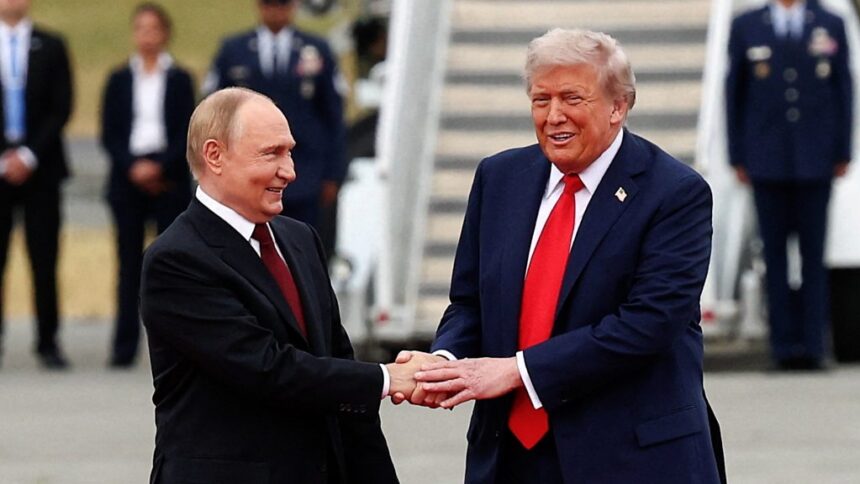
The Paris summit, hosted by President Macron, was intended to demonstrate Europe’s capacity to act independently of the United States, especially following Donald Trump’s direct talks with Russian President Vladimir Putin. European leaders appeared receptive to Donald Trump’s guidance, emphasizing the need for closer coordination with the United States on sanctions targeting Russia’s oil and gas sector, as well as on measures addressing China’s indirect support for Moscow. According to officials, Donald Trump also indicated that he plans to speak directly with Putin soon, and the Kremlin confirmed that such a call could be arranged promptly, signaling the potential for renewed direct diplomacy amidst rising tensions.
Donald Trump’s approach comes against a backdrop of frustration over his administration’s inability to halt the conflict in Ukraine. During his tenure, he had initially predicted that the war could end swiftly through negotiation and diplomatic pressure, yet fighting has persisted, and Moscow continues to find funding and resources to sustain its military operations. While Donald Trump has refrained from imposing new sanctions on Russia and China in recent months, his administration has aggressively increased tariffs on US imports from India, highlighting a strategy of economic coercion intended to influence global energy flows and geopolitical alignments.
The summit also highlighted a growing effort led by Macron to demonstrate European independence in foreign policy decision-making. By convening a coalition that includes both leaders physically present in Paris and others participating remotely, Macron sought to show that Europe can coordinate its own sanctions and pressure measures, even while remaining aligned with US strategic objectives. Donald Trump’s call reinforced this message, emphasizing the importance of a united front in countering Russian aggression and limiting China’s influence over Moscow’s war financing.
In discussions with European leaders, Donald Trump underscored the urgency of reducing Moscow’s oil revenue streams, highlighting the broader implications for global security and the economy. By linking Russian energy profits directly to the continuation of the Ukraine war, he framed Europe’s energy policies as a moral and strategic imperative. This stance also intersects with ongoing debates in Washington and Brussels regarding energy independence, reliance on fossil fuels, and the role of sanctions in achieving tangible geopolitical outcomes.
The call with European leaders revealed the tension between diplomatic rhetoric and practical implementation. While the EU has committed to phasing out Russian oil and gas, questions remain about the timeline and enforcement, particularly for countries that have continued importing Russian crude or refined products derived from Russian resources. Donald Trump’s explicit targeting of Europe’s energy policies and Chinese financial connections reflects a broader strategy to leverage economic measures in the pursuit of security objectives, demonstrating how trade, tariffs, and sanctions have become central tools of international diplomacy in the 21st century.
Donald Trump’s remarks also served to draw attention to the ongoing interplay between US domestic economic policy and global geopolitical considerations. By imposing additional tariffs on India, he signaled that the United States is prepared to use trade measures as leverage to influence energy sourcing decisions beyond Europe, creating a complex web of incentives and pressures affecting multiple major economies. The combination of tariffs, sanctions, and diplomatic engagement illustrates a multifaceted approach intended to maximize US influence while addressing perceived gaps in global enforcement against Russia and its allies.
The summit discussions revealed divergent perspectives among coalition members regarding timelines, enforcement mechanisms, and potential unintended consequences of aggressive sanctions. Donald Trump’s insistence on immediate action contrasted with some European leaders’ more gradual approach, reflecting differences in domestic energy dependencies, political considerations, and economic priorities. Nevertheless, the broader consensus emphasized close coordination with the United States, recognition of China’s economic role, and the strategic imperative of constraining Russian energy revenue streams.
In addition to the immediate sanctions agenda, Donald Trump’s comments highlighted broader concerns about global power dynamics. By pressuring Europe and China to act against Russia, he underscored the interconnected nature of energy, finance, and geopolitical stability. The discussion also illuminated the ongoing challenges faced by US policymakers in balancing bilateral and multilateral relationships while advancing strategic objectives that span continents and economic sectors.
Donald Trump’s strategy demonstrates a continued emphasis on leveraging US economic power to achieve political outcomes abroad. By combining tariffs on India with diplomatic calls to Europe, he sought to align multiple actors against what he perceives as a common threat: Russian aggression in Ukraine and Chinese support for Moscow’s war effort. The approach illustrates how trade policy, sanctions, and diplomatic engagement are increasingly intertwined, with energy markets serving as a critical nexus for global influence.
The Paris summit and subsequent video conference with European leaders marked a renewed effort to coordinate international responses, highlighting the need for both immediate action and long-term planning. Leaders discussed enhanced collaboration on sanctions, targeting oil and gas sectors, and ensuring that China’s financial contributions to Russia are curtailed. Donald Trump’s forthcoming communication with Putin represents another element of this coordinated approach, emphasizing the potential for both coercive and diplomatic tools to shape outcomes.
While the full impact of Donald Trump’s calls and the new tariffs on India remains to be seen, the move signals a more aggressive posture aimed at reshaping global energy flows and reducing Moscow’s access to resources. European leaders, for their part, appear committed to maintaining momentum on sanctions and reinforcing energy independence, balancing domestic needs with the strategic imperative of constraining Russia.