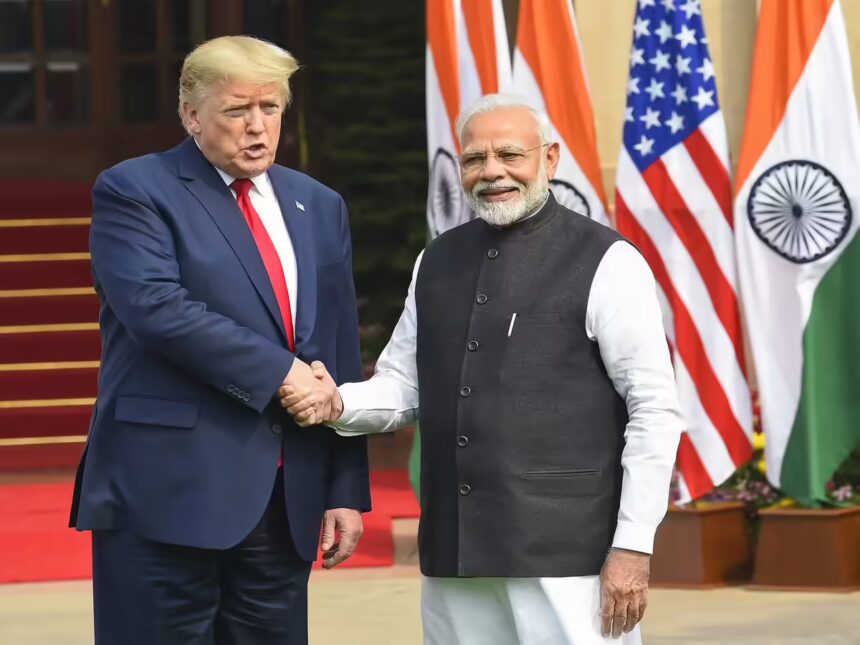
The United States has announced the rollback of an additional 25 percent tariffs on India, following a White House executive order detailing India’s commitments to stop Russian oil imports, increase purchases of American energy, and expand bilateral defense cooperation over the next decade. The move, effective from February 7, comes amid ongoing efforts to strengthen the India-US trade and strategic partnership, addressing both economic and national security priorities. The executive order underscores the significant progress in negotiations between the two nations, highlighting energy diversification, enhanced defense collaboration, and opportunities for expanded trade in a framework designed to benefit both countries. While the order focuses on compliance monitoring, particularly regarding Russian oil imports, it also signals a broader shift in strategic economic engagement and underscores India’s evolving role in global energy and security landscapes. Analysts have noted that the order represents a significant milestone in US-India relations, reflecting both countries’ intent to align energy, defense, and trade objectives in a manner consistent with shared geopolitical interests.
Strategic Commitments and Energy Realignment
The executive order issued by President Donald Trump makes clear that India has agreed to stop importing Russian oil, either directly or indirectly, and will purchase energy products from the United States. This decision aligns with broader US objectives to limit Russian crude influence in global markets while promoting American energy exports. The White House emphasized that US officials will monitor India’s compliance with this commitment and may recommend additional action, including the reimposition of punitive tariffs, if Russian oil imports resume. India’s decision reflects the complexity of balancing energy security for its population of 1.4 billion with evolving international trade pressures. The government has consistently maintained that energy security and diversification remain core priorities, and strategic sourcing decisions are guided by market conditions and global supply dynamics. Over recent months, India’s imports of Russian oil have declined to a three-year low, while imports from the United States have increased steadily. Trade data indicate that US crude now accounts for 7.48 percent of India’s oil imports, up from 4.43 percent in the previous year, while Russian oil’s share has decreased from nearly 38 percent to just over 32 percent. Indian public sector refiners have also begun importing American liquefied petroleum gas under one-year contracts, reflecting a broader strategy of diversification and integration of alternative energy sources.
While the executive order highlights a complete cessation of Russian oil imports, industry experts note that a total stop is unlikely in the near term. Technical and commercial challenges, coupled with long-term contractual obligations and considerations of strategic autonomy, require a gradual reduction of Russian crude volumes rather than an abrupt halt. Indian refiners, including Nayara Energy, which relies heavily on Russian crude, face operational constraints in replacing supplies immediately. Russian oil contracted through March and April remains in the pipeline, and refiners will require an extended period to adjust sourcing without disrupting production. Analysts predict that even with a substantial cut, Russian crude could still account for approximately 10 percent of India’s oil imports, down from its previous 35–40 percent share.
American crude offers a potential alternative, though challenges exist. Shipping costs from the US remain higher compared with West Asian sources, and differences in crude grades necessitate adjustments at Indian refineries. US crude, generally lighter and sweeter than Russian or West Asian varieties, requires compatibility assessments to optimize refinery output. Nevertheless, Indian refineries possess the technical capability to process a wide range of crudes, providing flexibility in implementing a phased shift toward American supplies. Additionally, ramping up imports of liquefied natural gas from the US is commercially more straightforward, given favorable pricing and consistency in quality. The United States now ranks as India’s second-largest LNG supplier, following Qatar, offering an alternative pathway for energy diversification.
The reduction of tariffs from 25 percent to 18 percent on Indian goods under the interim trade framework complements the energy commitments, providing financial incentives and strengthening market access. While the joint India-US statement does not mention Russian oil, the executive order separately highlights this aspect, demonstrating US intent to enforce compliance rigorously. The broader energy strategy, combined with trade incentives, reflects an alignment of economic and national security priorities, emphasizing India’s increasing role in global energy markets while preserving domestic supply stability.
Defense Cooperation and Long-Term Strategic Partnership
In addition to energy commitments, India has agreed to expand defense cooperation with the United States over the next ten years. The executive order frames this commitment as part of a strategic alignment encompassing national security, foreign policy, and economic interests. While details of specific defense arrangements are not included, the framework reflects a shared objective of enhancing interoperability, technology sharing, and collaborative initiatives in defense manufacturing and modernization. The commitment underscores the growing bilateral partnership beyond trade, with both nations seeking to balance strategic influence in the Indo-Pacific and beyond.
Analysts emphasize that this expanded defense collaboration, coupled with the rollback of tariffs, represents a coordinated approach to strengthen bilateral relations in multiple domains. The dual focus on energy and defense ensures that economic engagement is closely linked to strategic objectives, enabling India to maintain autonomy while accessing critical technologies and energy resources. The ten-year horizon for defense cooperation signals a commitment to sustained collaboration, ensuring predictability and stability in planning for both countries’ security needs.
The executive order further outlines monitoring mechanisms, particularly concerning the enforcement of the Russian oil import cessation. US officials will oversee India’s compliance and can recommend reimposition of tariffs if necessary. This provision illustrates the interconnected nature of trade, energy, and national security considerations in shaping policy. While India has not officially confirmed the cessation of Russian oil imports, the gradual reduction observed in recent months indicates an alignment with US expectations. Industry executives highlight that transitioning to higher volumes of American crude will require careful planning, taking into account shipping costs, refinery compatibility, and market pricing.
Simultaneously, the United States maintains the authority to impose additional tariffs on countries trading with Iran. This aspect of the order underscores broader US trade policy objectives, linking compliance on one front to potential enforcement on another. India’s trade with Iran has been limited, representing a small fraction of Iran’s overall imports, thereby reducing immediate impact but signaling the scope of US enforcement measures. For India, the order reinforces the need to balance multiple geopolitical and commercial factors while pursuing energy security, defense modernization, and economic growth.
The combined effect of energy diversification, trade tariff reduction, and long-term defense collaboration positions India to engage with the United States across strategic, economic, and security dimensions. Market and industry analysts note that gradual realignment of energy imports, particularly reducing dependency on Russian crude while increasing US supplies, reflects India’s pragmatic approach to strategic autonomy. Indian refiners are adjusting operations accordingly, maintaining contracted Russian volumes while planning for medium-term reductions. Concurrently, investments in American LNG and crude supply chains are expected to rise, providing additional flexibility and enhancing energy security.
The executive order, by codifying monitoring mechanisms and compliance expectations, reinforces accountability and transparency in bilateral agreements. India’s commitments, encompassing energy, defense, and trade dimensions, are designed to create a stable environment for long-term cooperation while supporting domestic economic priorities. By integrating strategic objectives across multiple sectors, the India-US partnership exemplifies a multifaceted approach to international collaboration, balancing energy security, defense modernization, and trade liberalization.
While the rollback of the 25 percent tariffs marks an immediate economic relief for India, the broader implications encompass energy diversification, enhanced defense collaboration, and alignment with US strategic priorities. Gradual reduction in Russian oil imports, increased American energy purchases, and long-term defense cooperation illustrate India’s evolving role in global geopolitics and energy markets. This integrated approach highlights the complexity of aligning trade, security, and domestic policy considerations, demonstrating India’s pragmatic strategy to safeguard national interests while strengthening bilateral relations with the United States.