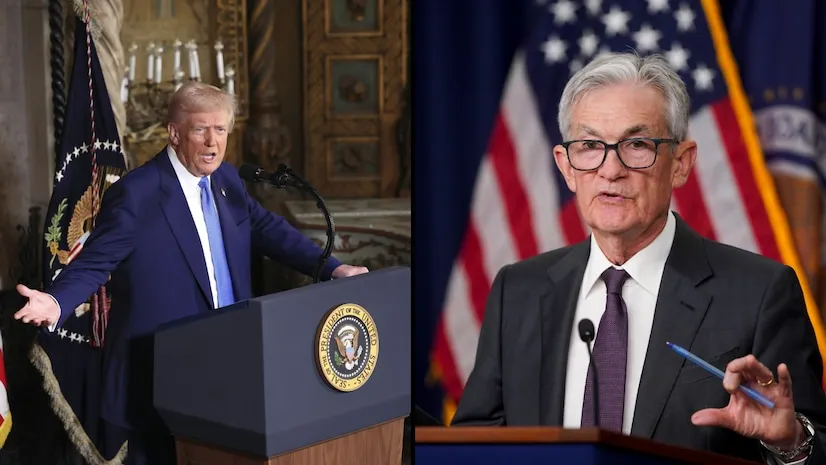
Former President Donald Trump has once again expressed dissatisfaction with Federal Reserve Chair Jerome Powell, criticizing him for maintaining high interest rates. Donald Trump, who has frequently attacked Powell’s decisions in the past, suggested he might even call him to address his concerns.
Donald Trump voiced his frustration during a recent event in the Oval Office, stating, “I haven’t called him. I might call him.” He further argued that Powell’s decision to keep interest rates high was a mistake, suggesting that the U.S. economy could perform even better if rates were lowered. The former president also accused Powell of being “too slow” in addressing the inflation crisis years ago, claiming that the Fed Chair had been tardy in making crucial decisions at that time.
Donald Trump’s recent remarks come after a series of harsh comments he made about Powell. Earlier, he referred to Powell as “a major loser” and expressed a desire for his “termination.” Donald Trump’s criticism focused on Powell’s delayed actions to reduce the benchmark interest rate, which affects borrowing costs across the country. These attacks have coincided with market losses, as investors reacted to Donald Trump’s statements on the Fed.
However, Donald Trump has recently softened his stance, claiming he has no intention of firing Powell. According to reports, advisers warned Donald Trump about the potential legal and economic consequences of removing the Fed Chair. Despite this, Donald Trump continued to express his discontent, remarking that Powell was nominated by someone he wasn’t particularly happy with. Donald Trump originally nominated Powell for the position in 2017, but their relationship has soured over time. In 2022, President Joe Biden re-nominated Powell for a second term.
While Donald Trump’s comments have generated significant attention, Powell has remained steadfast in defending the independence of the Federal Reserve. In response to Donald Trump’s criticisms, Powell emphasized that political pressure would not influence the Fed’s decisions. “We’re never going to be influenced by any political pressure,” Powell stated, reaffirming the Fed’s commitment to making decisions based solely on economic data and not on external factors.
Powell also addressed concerns over Donald Trump’s tariff policies, warning of the potential negative impact on the economy. He noted that tariffs could lead to higher unemployment and inflation, with the public bearing the brunt of the costs. Despite these warnings, Powell remains focused on the Fed’s mission to navigate the economy without political interference.