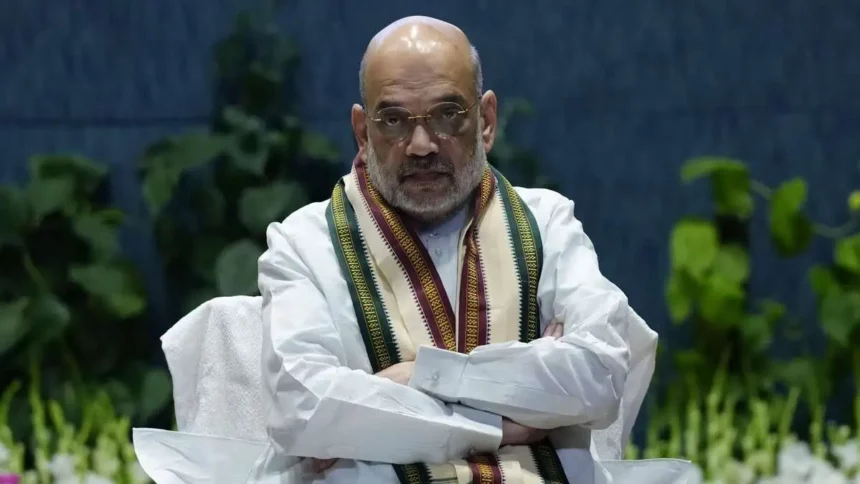
Union Home Minister Amit Shah has confirmed that the 2029 general elections will be held with women’s reservation, ensuring the implementation of the Nari Shakti Vandan Adhiniyam. In a wide-ranging interview, he also addressed contentious issues like delimitation, the Indus Waters Treaty with Pakistan, and regional political concerns, asserting the government’s firm stance on equitable representation and national interest. His remarks come amid growing anticipation around the future political roadmap and India’s assertive diplomatic posture following recent terror attacks.
2029 elections to see historic rollout of women’s reservation
Speaking to The Times of India, Amit Shah declared that the 2029 Lok Sabha elections will be conducted with women’s reservation in place. The Nari Shakti Vandan Adhiniyam, passed in September 2023, mandates one-third reservation for women in the Lok Sabha and state assemblies. This move, long awaited by gender rights activists and women leaders, is expected to reshape the Indian political landscape by significantly enhancing women’s participation in legislative affairs.
When asked about how the government plans to address southern states’ apprehensions about delimitation and the contrasting demands from the northern states for proportional representation, Amit Shah assured that a balanced approach will be taken. “No one will have any reason to complain when the exercise is conducted,” he said. Amit Shah added that the concerns raised by the DMK were politically motivated and timed to coincide with the 2026 Tamil Nadu assembly elections, emphasizing that delimitation would not be implemented before then.
Firm stand on Indus Waters Treaty and cross-border tension
On the issue of the Indus Waters Treaty, which was signed in 1960 between India and Pakistan under the World Bank’s auspices, Amit Shah made it clear that restoration was off the table. Following the April 22 Pahalgam terror attack that killed 26 people, India suspended the treaty as part of a series of diplomatic measures, including expelling Pakistani nationals.
Amit Shah asserted that while international treaties cannot be unilaterally annulled, India exercised its right to place the treaty in abeyance due to a breach of its spirit. “The treaty preamble mentions that it was for the peace and progress of the two countries, but once that has been violated, there is nothing left to protect,” he said.
He further declared that the waters rightfully belonging to India will now be diverted to Indian territory. “Paani Rajasthan tak jayega,” he said, revealing that a canal will be constructed to ensure water that was previously flowing to Pakistan is redirected to Rajasthan. Amit Shah said this move is aimed at ending Pakistan’s unjustified access to Indian waters and underlined that India will fully utilize its rightful share under the treaty’s framework.
These comments by the Home Minister reflect the central government’s evolving approach to longstanding issues, including gender equity in governance and cross-border diplomacy. Amit Shah’s remarks also indicate that the government is prepared to take politically bold steps that align with its strategic and national priorities.