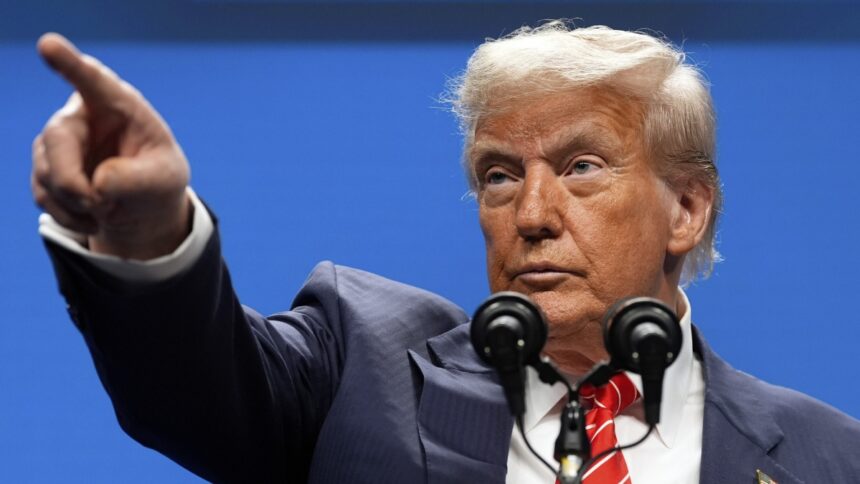
In a fresh twist to the global debate over Russian trade amid the Ukraine war, US President Donald Trump has publicly criticized India for its growing import ties with Moscow, especially in the energy sector. However, the remarks have reignited the issue of Western double standards, as both the United States and European Union continue to maintain billion-dollar commercial relationships with Russia across multiple sectors. While India’s energy trade with Russia has expanded significantly since the start of the Ukraine conflict, the West’s economic entanglements with Moscow remain deeply rooted, albeit more discreet. Analyzing trade data over the past four years paints a clearer picture of who’s buying what from Russia, and in what volume.
Despite Western pressure, India has rapidly deepened its energy ties with Russia, capitalizing on discounted crude oil prices. Meanwhile, the US and EU, although vocal in their criticism of Russian aggression, continue to import critical materials and commodities from Russia, such as enriched uranium, palladium, fertilizers, and liquefied natural gas. The situation underscores a complex web of geopolitical pragmatism, economic dependencies, and policy contradictions that transcend official narratives.
Europe’s Shrinking Trade, But Persistent Dependencies
Trade between the European Union and Russia has seen a dramatic contraction since the beginning of the war in Ukraine. From the first quarter of 2022 to the first quarter of 2025, imports from Russia dropped by a staggering 86%, according to the latest available data. The total value of imports in early 2025 stood at 8.74 billion euros (approximately $10.11 billion), compared to 30.58 billion euros four years earlier. Cumulatively, since January 2022, the EU has imported goods worth nearly 297 billion euros from Russia.
Yet, even as trade volumes shrink, Europe’s reliance on certain Russian commodities persists. Before the war, Russia was the EU’s largest supplier of petroleum products. By 2025, following sanctions and a ban on maritime imports of crude oil, Russia’s share in EU oil imports has dropped significantly to just 2.01%, from a high of 28.74% in 2021. Oil imports from Russia plummeted to 1.48 billion euros in the first quarter of 2025, a sharp decline from 14.06 billion euros four years prior.
Natural gas dependency, once a cornerstone of EU-Russia trade, has also seen a notable shift. Russia’s share of EU gas imports fell from 48% in early 2021 to just 17% by the first quarter of 2025. The transition reflects both Europe’s efforts to diversify energy sources and the tangible impact of sanctions.
However, in sectors like fertilizers, iron, steel, and nickel, Russia remains an indispensable exporter to the EU. Despite efforts to reduce reliance, Russia still provided 25.62% of all fertilizer imports to the EU in early 2025, down only slightly from 28.15% in 2021. The import share of Russian iron and steel fell to 7.71% from 18.28% over the same period. These figures show that, even as Europe tries to scale back trade with Russia, complete economic decoupling remains elusive.
India’s Growing Appetite for Russian Energy
In contrast to Europe’s retrenchment, India has significantly deepened its trade ties with Moscow, driven primarily by energy needs and economic pragmatism. India’s imports from Russia soared from $8.25 billion in 2021 to $65.7 billion in 2024, according to official Indian trade data.
Crude oil has been the single largest contributor to this growth. In 2021, India imported just $2.31 billion worth of Russian crude. By 2024, that figure skyrocketed to $52.2 billion, as Indian refiners snapped up discounted oil that many Western countries had turned away from.
India’s imports of coal and related products also surged, increasing from $1.12 billion in 2021 to $3.5 billion in 2024. Fertilizer imports from Russia, another crucial sector for Indian agriculture, rose sharply from $483 million to $1.67 billion in the same period.
These transactions have made India one of Russia’s top energy clients. And yet, Indian officials have consistently defended these purchases, citing national energy security and affordability. New Delhi has pushed back hard against Western criticism, labeling it hypocritical when many of those same countries maintain ongoing trade with Russia in other sectors.
The United States: Quiet but Continued Trade
While much of the political spotlight has been on India’s growing trade with Russia, the United States has not entirely severed its own commercial links. In fact, US imports from Russia amounted to $2.5 billion in the first half of 2025, down from $14.14 billion four years earlier. Since January 2022, the US has imported goods worth $24.51 billion from Russia.
One of the most notable imports is fertilizer. In 2024, the US imported around $1.27 billion in Russian fertilizers, up slightly from $1.14 billion in 2021. The fertilizer sector remains sensitive due to its impact on agriculture and food prices.
Another critical area is nuclear energy. Despite heightened tensions and sanctions, the US continues to import enriched uranium and plutonium from Russia. In 2024, these imports were valued at approximately $624 million, only a marginal drop from $646 million in 2021. This reliance is due in part to the lack of adequate domestic enrichment infrastructure and long-term supply contracts.
Palladium, a rare metal essential in catalytic converters and electronics, is another sector where Russia plays a significant role. In 2024, the US imported $878 million worth of Russian palladium, down from $1.59 billion in 2021. While the figures have declined, they remain notable and indicate ongoing interdependence.
The data paints a complex picture: while the US publicly champions strict sanctions and urges allies to minimize trade with Russia, it continues to import materials critical to its own industries and economy.
A Global Balancing Act of Interests and Ethics
The global reaction to Russia’s invasion of Ukraine has prompted a rethinking of economic alliances and dependencies, but it has also laid bare the inconsistencies in global policy. While countries like India have become targets of criticism, especially by Western leaders, the economic data reveals that the lines between principle and pragmatism are increasingly blurred.
The difference lies not so much in whether countries trade with Russia, but in how they justify those relationships. For India, energy security, price sensitivity, and developmental priorities drive its Russia policy. For the West, legacy dependencies and strategic sectors like nuclear power and agriculture present unavoidable complexities.
As geopolitical narratives continue to evolve, the trade realities between Russia and major global economies demonstrate that economic interdependence does not vanish easily, even in times of conflict. Instead, it adapts, rebrands, and finds new channels—sometimes under the radar, sometimes under criticism—but rarely under complete suspension.