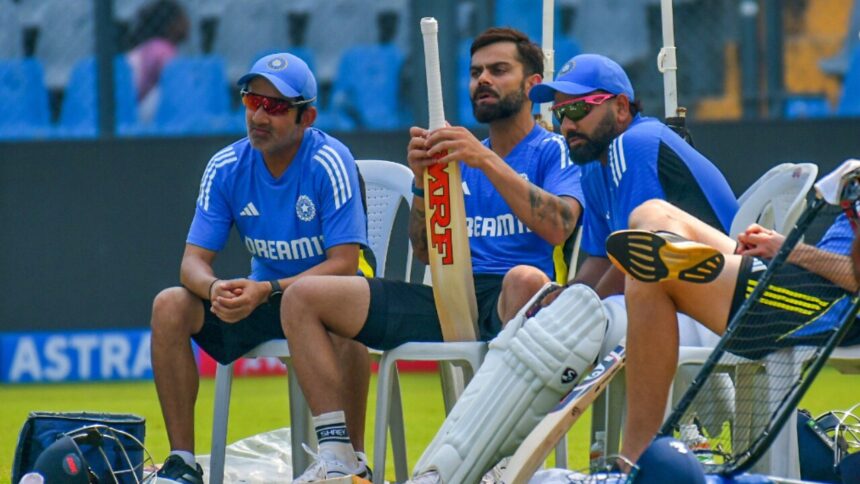
The future of Indian cricket legends Virat Kohli and Rohit Sharma in One Day Internationals (ODIs) is under serious consideration by the Board of Control for Cricket in India (BCCI), as the team looks to rebuild and transition with the 2027 World Cup in mind. While both stalwarts have signaled their intent to remain involved, their roles are no longer guaranteed, as India aims to balance experience with a rising generation of fresh talent.
Both Kohli and Rohit have made significant contributions to Indian cricket across formats. After stepping away from T20Is following India’s triumph in the 2024 T20 World Cup, the duo subsequently retired from Test cricket earlier this year. Their decisions, made just days apart, had sparked speculation that they were positioning themselves for one last shot at ODI glory in 2027. However, with the next 50-over World Cup still over two years away, the picture is more complex than initially imagined.
ODI Transition and the Age Factor
Kohli and Rohit will be nearing 40 years old by the time the 2027 World Cup kicks off in South Africa. While age alone doesn’t determine a player’s effectiveness, it does pose challenges in terms of fitness, workload, and consistency. Moreover, the Indian team is already undergoing a transformation, especially in Test cricket, with a younger crop of players establishing themselves. The ODI squad, too, appears poised for a similar evolution, where management may prioritize grooming the next generation.
From now until the end of 2026, India is scheduled to play 27 ODIs. These matches are scattered across various bilateral series, nestled between a packed calendar of Test matches and T20 fixtures. This limited number of ODIs poses an additional challenge: will Kohli and Rohit have enough consistent match practice to stay in peak ODI form?
Complicating matters is the likelihood that both players will not feature regularly in Tests or T20s, meaning fewer opportunities to build rhythm and momentum. The sporadic nature of their ODI involvement could lead to gaps in performance, especially with younger players pushing hard to claim their spots.
Fitness, Motivation, and Planning Ahead
While both players remain fit and motivated, and have hinted at personal goals aligned with the 2027 World Cup, the final call will rest on performance, physical readiness, and team dynamics. Kohli, during a public event earlier this year, reiterated his desire to win an ODI World Cup again before he calls time on his career. Rohit, meanwhile, is said to be working diligently to maintain top physical condition with the long-term goal of staying competitive.
However, the BCCI is looking beyond individual aspirations. Senior officials have indicated that while Kohli and Rohit will be treated with respect given their legendary status, decisions regarding their participation in the 2027 World Cup will be based on performance and merit, not legacy. There are plans to engage both players in detailed, candid discussions to assess their mental and physical state ahead of the next ODI cycle.
“Honest conversations” are expected to be held in the coming months to determine how both senior players see their roles going forward. It is likely that neither will be pushed to retire, but instead given the space to reflect and decide in alignment with the team’s broader strategy. If they are fit, performing, and part of the larger ODI vision, the door remains open.
Upcoming Series Crucial for Evaluation
The next opportunity to see both Kohli and Rohit in ODI action will be during India’s tour of Australia in October, which includes three ODIs alongside a T20I series. This will be a significant checkpoint in evaluating their match fitness and form. Following that, India faces South Africa and New Zealand in back-to-back ODI series between November and December.
These fixtures may help clarify whether the experienced duo can continue to perform at the highest level or if it’s time to pass the baton. Selectors and team management will be closely monitoring their performances, body language, and overall contribution to the team’s goals.
A Delicate Balancing Act
The situation with Kohli and Rohit reflects a larger theme within Indian cricket: the need to balance the wisdom and composure of experienced players with the energy and innovation of emerging talents. Youngsters such as Shubman Gill, Yashasvi Jaiswal, and Ruturaj Gaikwad are rapidly proving themselves, making the competition for top-order spots even more intense.
The 2023 World Cup, held in India, was seen as the perfect stage for Kohli to lift his second World Cup trophy and for Rohit to capture his first. However, the heartbreaking loss to Australia in the final left a void in what was otherwise a dominant campaign. The pain of that defeat, many believe, is what fuels both players to aim for one last title run.
Yet, Indian cricket is never short of talent, and the selectors have been known to take bold steps. With over two years remaining, there is ample time for change, experimentation, and planning. The inclusion of younger players in key series could help identify a core group for the future, one that may or may not include Kohli and Rohit.
Ultimately, the decision surrounding their ODI futures will not be made in haste. The BCCI understands the importance of experience in high-stakes tournaments, but it also acknowledges the need to prepare a robust and forward-looking squad. Until the final decision is made, all eyes will remain on the two icons of Indian cricket as they navigate this uncertain but crucial phase of their careers.