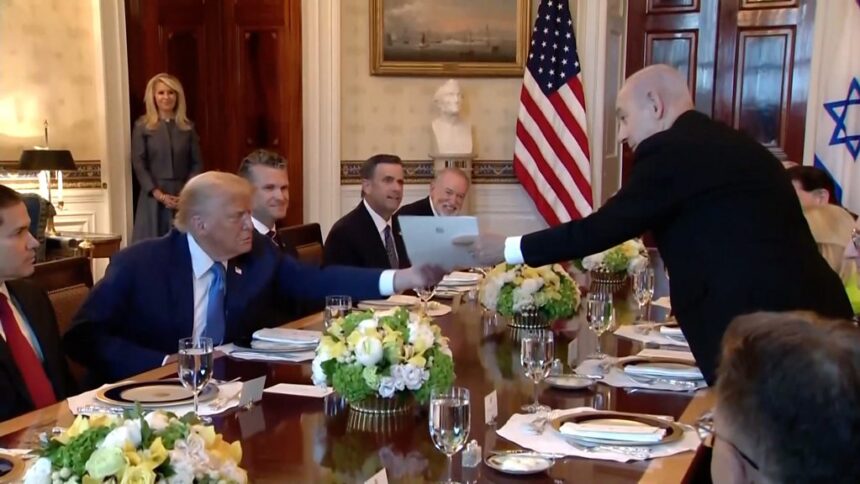
In a critical moment for Middle East diplomacy, U.S. President Donald Trump and Israeli Prime Minister Benjamin Netanyahu met for the second time in two days, seeking progress toward a potential Gaza ceasefire deal. The discussions, which come amid a protracted and devastating conflict in Gaza, signal cautious optimism as negotiators work to bridge the remaining gaps between Israel and Hamas.
Intensifying Diplomatic Efforts
On Tuesday, Benjamin Netanyahu met with President Donald Trump at the White House for just over an hour in the Oval Office, following a longer dinner meeting the previous evening. These meetings marked Benjamin Netanyahu’s third visit to the U.S. since the start of Donald Trump’s second term, reflecting the urgency both leaders attach to the evolving situation in Gaza. Earlier in the day, Benjamin Netanyahu met with Vice President JD Vance and visited Capitol Hill, where he engaged with congressional leaders to discuss ongoing efforts in the region.
Speaking to reporters after his meeting with House Speaker Mike Johnson, Benjamin Netanyahu reiterated that while Israel’s campaign in Gaza is not yet complete, negotiations toward a ceasefire are progressing. “We have still to finish the job in Gaza, release all our hostages, eliminate and destroy Hamas’ military and government capabilities,” Benjamin Netanyahu stated, underscoring Israel’s continued focus on dismantling Hamas while leaving room for diplomatic efforts to advance.
Hopes for a Temporary Ceasefire
Steve Witkoff, Donald Trump’s special envoy to the Middle East, expressed optimism that a temporary ceasefire agreement could be reached within the week. According to Witkoff, the number of unresolved issues between Israel and Hamas has narrowed from four to one, bringing the parties closer to a 60-day ceasefire plan that would include the release of ten living hostages and the return of nine deceased individuals currently held in Gaza.
Parallel to the Donald Trump-Benjamin Netanyahu meetings, a Qatari delegation involved in hosting indirect talks between Israeli officials and Hamas representatives met with senior White House officials on Tuesday, further intensifying the diplomatic efforts aimed at halting the violence in Gaza. While the White House did not comment publicly on the meeting, the engagement signals the multifaceted diplomatic channels being employed to facilitate a resolution.
The Gaza conflict escalated sharply in October 2023 when Hamas launched a deadly attack on southern Israel, resulting in the deaths of approximately 1,200 people and the taking of 251 hostages. Currently, around 50 hostages remain in Gaza, with about 20 believed to be alive. In response, Israel launched a retaliatory campaign in Gaza, which, according to the enclave’s health ministry, has resulted in over 57,000 Palestinian deaths, massive displacement, and a looming famine affecting nearly half a million people.
Donald Trump has maintained strong support for Benjamin Netanyahu during his tenure, even going so far as to comment on the Israeli leader’s ongoing corruption trial, where Benjamin Netanyahu faces charges of bribery, fraud, and breach of trust, all of which he denies. In his comments at the U.S. Congress, Benjamin Netanyahu highlighted the close cooperation between the United States and Israel, stating that the two nations have never experienced closer coordination in their shared history.
As the discussions continue, the world watches closely, hopeful that the narrowing differences will pave the way for a temporary ceasefire that could ease the humanitarian crisis in Gaza while opening the door for further negotiations toward a long-term resolution.