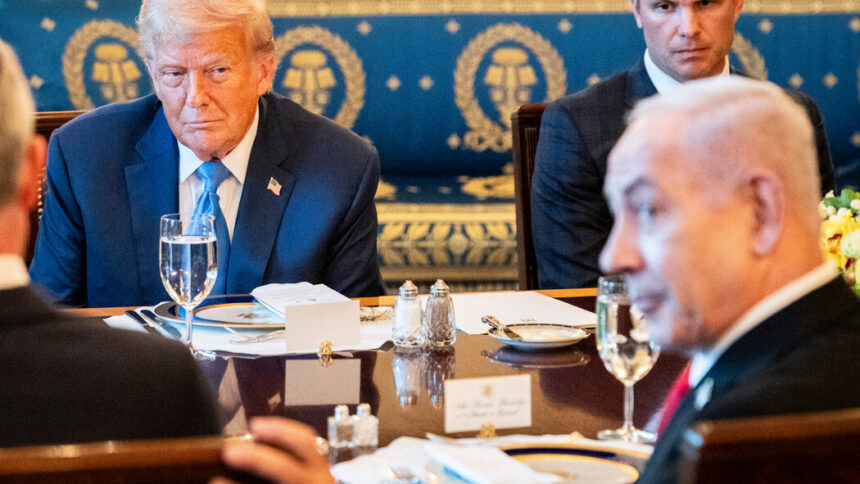
Amid global tensions and ongoing violence in Gaza, US President Donald Trump hosted Israeli Prime Minister Benjamin Netanyahu at the White House on Monday, with discussions focusing on potential ceasefire deals with Hamas, regional diplomacy, and renewed US-Iran talks. The meeting reflects Washington’s active attempts to mediate a path towards ending the Gaza conflict while managing regional challenges linked to Iran, with both leaders signaling cautious optimism.
During the meeting, Benjamin Netanyahu stated that Israel and the United States were working with other nations to provide Gaza’s Palestinians with a “better future,” hinting at potential resettlement options for those wishing to leave the besieged enclave. Donald Trump noted that surrounding nations were cooperating and expressed confidence in positive developments, despite the controversial nature of potential relocation plans, previously criticized by human rights groups as forced displacement.
Focus on Iran Talks and Regional Stability
Donald Trump announced that the US has scheduled talks with Iran, following recent hostilities that saw American support for Israeli airstrikes on Iranian nuclear sites and a subsequent ceasefire between Israel and Iran after 12 days of conflict. Donald Trump indicated a willingness to ease sanctions on Iran if discussions prove fruitful, aligning with remarks from Iranian President Masoud Pezeshkian, who suggested dialogue could resolve US-Iran tensions.
The meeting also highlighted the potential for leveraging Iran’s weakened position to push for a breakthrough in the Gaza conflict, with Donald Trump and Benjamin Netanyahu aiming to build momentum towards a ceasefire while managing Israel’s security concerns. US envoy Steve Witkoff, instrumental in crafting a 60-day ceasefire proposal in Qatar, is expected to travel to Doha this week to further negotiations with Hamas and regional mediators.
Efforts Towards a Gaza Ceasefire
While the White House discussions were underway, indirect negotiations between Israel and Hamas continued in Qatar. Talks have been hindered by disputes over humanitarian aid access, with Israel seeking to prevent supplies from being diverted by militants while Palestinians emphasize the urgent need for aid amid widespread displacement and famine threats.
The proposed US-backed ceasefire framework includes phased hostage releases, partial Israeli troop withdrawals from Gaza, and steps towards ending the war. However, challenges remain, with Hamas insisting on a complete end to the war before releasing hostages and Israel demanding the dismantling of Hamas’ militant capabilities before halting its operations.
Protests outside the White House during the leaders’ dinner underscored the deep divisions over US policy in the region, with demonstrators calling for an end to arms support for Israel and accountability for Benjamin Netanyahu, who faces an ICC arrest warrant over alleged war crimes in Gaza.
Benjamin Netanyahu, who also met US Secretary of State Marco Rubio and Middle East envoy Witkoff, is expected to visit the US Capitol to meet congressional leaders. The Israeli leader presented Donald Trump with a letter nominating him for the Nobel Peace Prize during the meeting, a symbolic gesture underscoring their close political alignment.
As discussions continue, the eyes of the international community and displaced Palestinians remain on potential breakthroughs that could halt the violence, alleviate humanitarian suffering, and reshape regional dynamics, even as the complex negotiations face significant hurdles driven by political and security considerations on all sides.