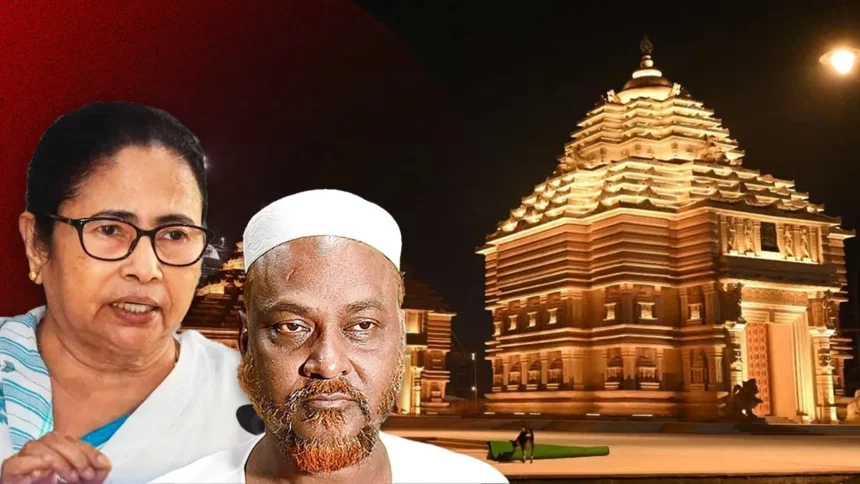
A controversy has unfolded ahead of the grand inauguration of a newly built Jagannath temple in Digha, West Bengal, as servitors from the famed Puri Jagannath Temple have declined Chief Minister Mamata Banerjee’s invitation to participate in the rituals. The boycott and accompanying statements have sparked a debate on religious customs, temple sanctity, and the cultural positioning of the new temple modeled after Odisha’s revered Shrimandir.
Puri servitors reject invitation, cite religious sanctity
The temple inauguration in Digha is scheduled for April 30, coinciding with the auspicious occasion of Akshaya Tritiya. Mamata Banerjee had extended invitations to servitors from Puri and specifically to the Chunara sevayat for the ceremonial flag-hoisting. However, the Nijog—the body of servitors in Puri—has firmly declined the invite, stating that any of its members who participate in the rituals at Digha would face a service ban.
The servitors argue that the sanctity of the Puri Shrimandir must be preserved and that its rituals cannot be replicated elsewhere. They insist that while devotion to Lord Jagannath is welcome across temples globally, the spiritual authority and legacy of the Shrimandir cannot be mimicked or substituted. The act of performing Puri-specific rituals like flag-hoisting in another temple is seen as an infringement on religious tradition.
Protests planned over use of Mahaprasad label
The Mahasuar Nijog, another servitor group, has warned of protests if food offerings in the Digha temple are marketed as “Mahaprasad,” a term sacredly associated with the Puri temple. They argue that commercializing the prasad using that label could dilute its sanctity and mislead devotees. The servitors emphasized that while darshan and prasad distribution are common in Jagannath temples across India, certain nomenclature and ritualistic practices must remain exclusive to Puri.
Further stirring controversy, some servitors have demanded that the West Bengal government restrict entry to the Digha temple strictly to Hindus, claiming that failing to do so could compromise its religious essence and turn it into a secular monument or museum. These demands have drawn criticism and concern from various quarters, igniting a broader conversation about inclusivity, temple administration, and cultural preservation.
The dispute reflects deeper sensitivities around religious symbolism and identity, especially when iconic traditions are emulated beyond their original geographic and spiritual contexts.