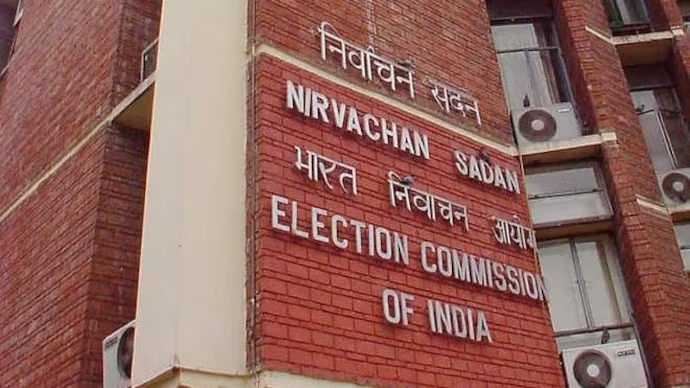
A controversy erupted after an Election Commission document carried BJP’s seal, with opposition raising concerns before officials clarified it was a clerical mistake.
A political controversy broke out in Kerala ahead of Assembly elections after an Election Commission-related document surfaced bearing the seal of the Bharatiya Janata Party. The issue quickly escalated as opposition parties questioned the neutrality of the poll body, raising serious concerns over electoral integrity. However, the Election Commission clarified that the presence of the BJP seal on the document was due to a clerical error and not indicative of any bias or misconduct. The incident has triggered a wider debate on transparency, administrative lapses and the credibility of institutions during election periods.
How BJP Seal Appeared on Election Commission Document
The controversy began when a document linked to the Election Commission was circulated among political parties in Kerala with the seal of the Bharatiya Janata Party visible on it. The document was related to earlier guidelines issued in 2019 regarding the disclosure of criminal antecedents of election candidates. The Communist Party of India Marxist first flagged the issue publicly, sharing screenshots of the document and questioning how an official communication could carry a party symbol. The matter gained traction quickly as several political leaders and parties began raising concerns about whether the Election Commission was maintaining institutional independence. The Commission later issued a clarification explaining that the BJP’s Kerala unit had submitted a photocopy of a 2019 directive while seeking clarification on certain rules. This copy already carried the party’s seal, and due to an oversight, officials failed to notice it before forwarding the same document to other parties. The poll body stated that the document was mistakenly circulated and that the error was purely clerical in nature. Officials further confirmed that the erroneous document had been withdrawn and replaced with a corrected version once the issue was identified.
Opposition Reaction and Political Controversy Intensifies
The incident sparked sharp reactions from opposition parties, particularly the CPI(M) and Congress, which alleged that the presence of a BJP seal on an official document raised serious questions about the independence of the Election Commission. The CPI(M) accused authorities of allowing “casual swapping of seals” and suggested that the distinction between political entities and constitutional institutions was being blurred. Congress leaders also questioned how such a lapse could occur and whether it indicated deeper issues within the system. Trinamool Congress leaders joined the criticism, with some alleging that the incident pointed to a larger pattern of institutional bias. On the other hand, BJP leaders dismissed the controversy as misinformation and defended the Election Commission’s explanation. They argued that the document in question was an old directive and that the issue had been unnecessarily politicised. The timing of the controversy, coinciding with the election period, further intensified the debate, as political parties sought to use the issue to strengthen their narratives. The situation reflects how even minor administrative lapses can escalate into major political controversies, especially in a charged electoral environment.
Election Commission Clarification and Administrative Accountability
In response to the controversy, the Election Commission moved quickly to issue an official clarification, emphasising that the error was identified and corrected immediately. The Chief Electoral Officer’s office stated that the oversight occurred during the processing of documents submitted by political parties and was not intentional. A formal withdrawal notice was issued to all concerned parties, including district election officers and returning officers, instructing them to disregard the earlier document. The Commission also urged the public and media to avoid spreading misinformation and reiterated its commitment to maintaining a fair and transparent electoral process. Experts note that while the clarification may address immediate concerns, the incident highlights the importance of strict administrative checks and verification mechanisms in handling official communications. Ensuring accuracy in such documents is crucial to maintaining public trust, particularly during elections when scrutiny is high. The episode serves as a reminder of the need for institutional vigilance and accountability, as even small errors can have significant political and public repercussions.