New Delhi witnessed a sharp rise in temperature on Sunday, with the mercury soaring to 27.4 degrees Celsius, making it the warmest day of the year so far. This was four degrees above normal, surpassing the previous high of 27 degrees Celsius recorded on January 31. Despite the warmer daytime conditions, the minimum temperature dipped to 7.8 degrees Celsius, two notches below normal, compared to 9 degrees Celsius recorded the previous day.
With winter gradually transitioning into spring, meteorologists predict that Delhi’s temperature may reach 30 degrees Celsius by the end of February. Historical data suggests that the highest February temperature last year was 29.7 degrees Celsius, recorded on February 19. In previous years, February highs included 33.6 degrees Celsius on February 21, 2023, 28.4 degrees Celsius in 2022 on February 19, and 33.2 degrees Celsius on February 26, 2021. The highest-ever February temperature recorded in Delhi was 34.1 degrees Celsius on February 26, 2006, according to India Meteorological Department (IMD) records.
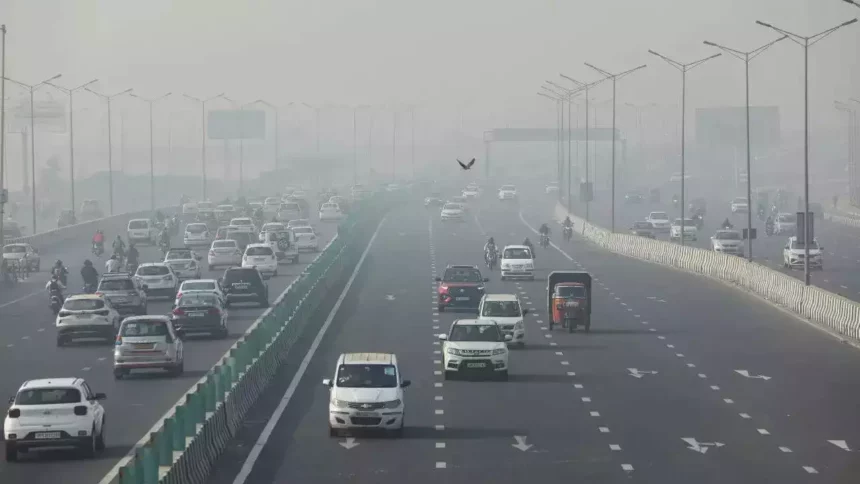
The regional meteorological centre in New Delhi has forecast smog and shallow fog in the morning, followed by a partly cloudy sky, with smog and mist likely to persist at night on Monday. The maximum and minimum temperatures are expected to hover around 27 degrees Celsius and 9 degrees Celsius, respectively. Warm conditions are likely to continue until Tuesday, with the mercury reaching 28 degrees Celsius due to low wind speeds. The IMD predicts that from Monday to Friday, the city will experience smog and mist in the morning, mainly clear skies during the day, and occasional strong surface winds at speeds of 15-25 kmph.
Even as the temperatures rise, air pollution remains a persistent concern. After two days of relatively better air quality in the ‘moderate’ category, Delhi’s air quality deteriorated to the ‘poor’ category on Sunday due to stagnant air trapping pollutants. The city’s 24-hour average Air Quality Index (AQI) surged to 227 at 4 pm, a significant jump from 152 recorded the previous day. Data from 38 out of 39 monitoring stations revealed PM2.5 as the primary pollutant affecting the city.
According to the six-day air quality forecast, the AQI is expected to fluctuate between ‘poor’ and ‘moderate’ levels in the coming days. The Central Pollution Control Board (CPCB) classifies air quality into six categories: ‘good’ (0-50), ‘satisfactory’ (51-100), ‘moderate’ (101-200), ‘poor’ (201-300), ‘very poor’ (301-400), and ‘severe’ (above 400). As air pollution levels continue to rise, residents are advised to take precautions, especially those vulnerable to respiratory illnesses.