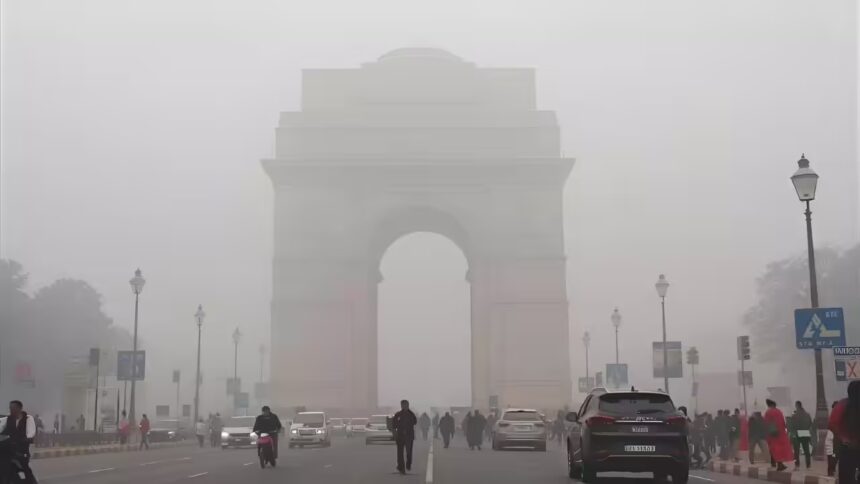
Delhi’s air quality continued to remain in the ‘poor’ category for the second consecutive day on Saturday, raising fresh concerns over the health implications of prolonged exposure to toxic air. The city’s overall Air Quality Index (AQI) was recorded at 257 at 8 am on October 25, indicating that the air remains unhealthy for the general population, especially after a post-Diwali spike in pollution levels. Major areas in the national capital recorded ‘poor’ to ‘very poor’ air quality, while Anand Vihar emerged once again as the most polluted locality, breaching the ‘severe’ category. The worsening air conditions have prompted a surge in demand for air purifiers and masks, while doctors across the city have sounded an alarm over rising respiratory and cardiac complications among vulnerable groups.
Delhi’s Air Quality Worsens Across Key Areas
According to data from the Central Pollution Control Board (CPCB), the overall 24-hour average air quality in Delhi stood at 275 on Friday at 4 pm, compared to 257 at 8 am on Saturday. The figures indicate only a marginal improvement, but pollution levels continue to remain far above the safe threshold. Several monitoring stations in Delhi reported alarming AQI levels, highlighting the capital’s ongoing struggle with deteriorating air quality. Anand Vihar recorded the highest AQI of 413, placing it in the ‘severe’ category, while areas like Wazirpur (342), Shadipur (329), and Jahangirpuri (320) remained in the ‘very poor’ range. Other regions such as Punjabi Bagh (296), Burari (292), Alipur (289), and Ashok Vihar (284) also fell under the ‘poor’ category.
In the National Capital Region (NCR), air quality remained worrisome as well. Gurugram’s Sector 51 registered an AQI of 330, categorised as ‘very poor’, while Ghaziabad’s Indirapuram recorded 300, Faridabad stood at 229, and Noida at 307. Even Meerut, situated further away, reported an AQI of 263. These readings underscore how widespread the pollution problem has become, with nearly all major NCR cities experiencing toxic air levels.
Environmental experts attribute the worsening air quality to multiple factors including post-Diwali fireworks, vehicular emissions, stubble burning in neighbouring states, and calm wind conditions that trap pollutants close to the surface. Despite some improvement in visibility on Thursday morning, a thin layer of smog continued to blanket large parts of Delhi, especially during the early hours.
Meteorological conditions have also played a significant role in aggravating the situation. The India Meteorological Department (IMD) reported that the city recorded its lowest minimum temperature in October in the past two years. On Thursday night, the temperature dipped to 17 degrees Celsius, slightly below normal by 0.2 degrees. The drop in temperature coupled with low wind speed has led to the formation of an inversion layer that prevents pollutants from dispersing, thereby trapping them near the ground and worsening air quality.
With pollution levels climbing, residents have begun taking precautionary measures. Reports suggest a surge in the purchase of air purifiers, face masks, and anti-pollution gear, with traders witnessing a 60–70 percent increase in sales compared to last week. Many households are also resorting to indoor plants and air-purifying devices as temporary measures to combat the growing pollution menace. However, experts caution that these steps offer only limited relief unless broader and sustained interventions are implemented at the policy level.
Doctors Warn of Rising Health Hazards
As Delhi’s air continues to remain polluted, medical professionals have warned that the health consequences could be serious and long-lasting. Former AIIMS Director Dr. Randeep Guleria highlighted the alarming impact of poor air quality on public health, particularly for individuals suffering from chronic respiratory or cardiovascular conditions. In an interview with ANI, Dr. Guleria stated that the “current high levels of air pollution, indicated by poor AQI, are leading to acute health effects, particularly among individuals with underlying heart or lung conditions, the elderly, and young children.”
According to Dr. Guleria, hospitals have begun reporting a rise in cases of chest tightness, coughing, shortness of breath, and aggravation of asthma and bronchitis. Many patients with pre-existing ailments are finding it increasingly difficult to manage their symptoms as the air quality worsens. Children, in particular, are more susceptible due to their developing lungs and higher rate of outdoor activity, while the elderly are at risk of complications such as high blood pressure, stroke, and cardiac distress triggered by prolonged exposure to polluted air.
Doctors recommend several preventive measures for residents, including staying indoors during early mornings and late evenings when pollution levels are at their peak, wearing N95 or equivalent masks when stepping out, and maintaining proper hydration. For those with chronic respiratory conditions, physicians suggest adhering strictly to prescribed medication, using inhalers regularly, and seeking immediate medical help if breathing becomes difficult.
Public health experts have also pointed out that air pollution not only affects the lungs and heart but can also trigger a range of systemic issues, including fatigue, headaches, reduced immunity, and mental health strain. Long-term exposure has been linked to an increased risk of lung cancer, chronic obstructive pulmonary disease (COPD), and even premature death.
The situation has prompted fresh debate over the capital’s air management policies. Despite years of awareness campaigns, the capital continues to face recurring pollution spikes every winter. Experts argue that while the government has taken several steps—such as banning certain firecrackers, regulating construction dust, and imposing restrictions on diesel vehicles—the measures have yet to yield lasting impact. Stubble burning in Punjab and Haryana, a major contributor to Delhi’s smog, remains a persistent challenge despite repeated warnings and incentives for farmers to adopt eco-friendly alternatives.
Meanwhile, environmental activists are calling for more proactive measures such as stricter implementation of the Graded Response Action Plan (GRAP), improved public transport, and large-scale afforestation drives within and around the city. Urban planners also suggest redesigning road networks to minimise traffic congestion, one of the leading sources of particulate matter in the air.
Delhi’s worsening air quality crisis continues to serve as a grim reminder of the urgent need for collective action—by authorities, industries, and citizens alike. While short-term measures like using masks and air purifiers may help individuals cope temporarily, experts insist that the only sustainable solution lies in reducing emissions at the source through coordinated regional policies, cleaner technologies, and stricter enforcement of environmental norms.
For now, as the capital city remains enveloped in a haze of smog, Delhiites are once again bracing themselves for the onset of the toxic winter season—one that threatens not just the skyline but also the health and well-being of millions.