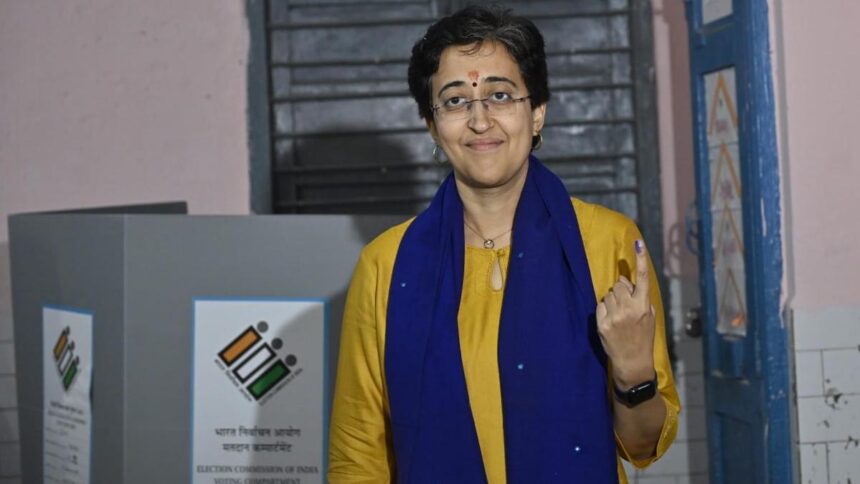
The election for the 70 assembly seats in Delhi, one of the most anticipated contests in the nation, is taking place today, with intense political stakes for all parties involved. This election holds particular significance for Arvind Kejriwal and his Aam Aadmi Party (AAP), as it faces a crucial test of its credibility amid mounting corruption allegations. The political battle is set to be a triangular contest between the ruling AAP, the Bharatiya Janata Party (BJP), and the Congress, each with its own motivations and hopes for victory.
Over the past two terms, the AAP, led by Arvind Kejriwal, has dominated the Delhi political scene, winning sweeping victories. However, the party’s image has been tarnished recently due to corruption allegations related to the now-scrapped liquor policy, which have put immense pressure on the party and its leadership. Despite this, Kejriwal and his party have maintained a stronghold in Delhi, and Kejriwal’s leadership continues to be a focal point in this election.
The BJP, on the other hand, is determined to break the AAP’s dominance. The party has ramped up its campaign with massive rallies spearheaded by Prime Minister Narendra Modi, who has become a central figure in the BJP’s electoral strategy. The BJP’s machinery, known for its vast reach and influence, has already mobilized considerable resources in a bid to unseat the AAP. After a decade of political struggle in Delhi, the BJP is hopeful of finally securing a victory and regaining control of the capital.
The Congress, which has struggled in recent years, also sees this election as an opportunity for a comeback. After years of being relegated to the political fringes of Delhi, the party is now focusing on regaining its lost ground. The Congress’s hopes hinge on its ability to present itself as a viable alternative to both the AAP and the BJP, despite its diminishing influence.
Amidst this contest, Arvind Kejriwal’s personal and political struggles have taken center stage. Arvind Kejriwal, along with several key AAP leaders such as Manish Sisodia, has been caught up in legal battles, with both figures spending time in jail over various charges. Arvind Kejriwal himself had to step down from the Chief Minister’s post temporarily, with Atishi taking charge in his absence. Despite this, Arvind Kejriwal made a moral stand, stating that he would return to power only after receiving a “certificate of honesty” from the people of Delhi. This stance has resonated with some voters who view him as a symbol of accountability, even amid the corruption accusations against his government.
The political standoff between the AAP government and the Lieutenant Governor (LG) of Delhi has also contributed to the tension surrounding this election. Despite a ruling from the Supreme Court asserting that the elected Delhi government has full authority except in three specific areas, the Union government issued an ordinance granting the LG additional powers over bureaucrats. This move escalated the political conflict and played a role in the arrest of both Arvind Kejriwal and Sisodia, who were implicated in a liquor scam that has shaken the city’s political landscape.
Manish Sisodia, who was arrested and jailed for 17 months, and Arvind Kejriwal, who spent six months in jail, were at the center of the corruption allegations. The arrests and the scandal have had a profound impact on AAP’s credibility, particularly since the party came to power on the anti-corruption platform championed by Gandhian Anna Hazare. AAP’s fight against corruption has been a hallmark of its rise, and the party faces the daunting challenge of defending its track record amid these legal challenges.
AAP’s first victory in 2015 was marked by Arvind Kejriwal’s apology to the people of Delhi and a promise to complete a full five-year term. In the second term, AAP’s success was driven by its focus on governance in areas like education and healthcare. The party’s model of governance in Delhi gained national attention and contributed to AAP’s rise as a national political force, helping the party secure a significant victory in Punjab as well.
The party’s success in Delhi has had a lasting impact on its national aspirations. A loss in Delhi would be a major blow to AAP’s credibility, undermining its position as a serious competitor to the BJP. On the other hand, a victory in Delhi against all odds would solidify AAP’s status as a formidable political force in India, especially as it continues to challenge the BJP’s dominance.
With the election underway, political analysts are closely watching the voter turnout and the potential impact of the ongoing corruption allegations on AAP’s prospects. For the BJP, securing a victory in Delhi would mark a significant triumph, while for Congress, it would represent a much-needed resurgence. The next few hours will determine which party will claim victory and define the political trajectory of Delhi in the coming years.