New Delhi, January 21, 2026:
In a significant policy move aimed at accelerating Delhi’s transition toward renewable energy, Power Minister Ashish Sood on Tuesday announced sweeping reforms to simplify the installation of solar power plants on agricultural land. The decision is being seen as a major step toward unlocking Delhi’s solar potential and transforming the national capital into a leading solar energy hub.
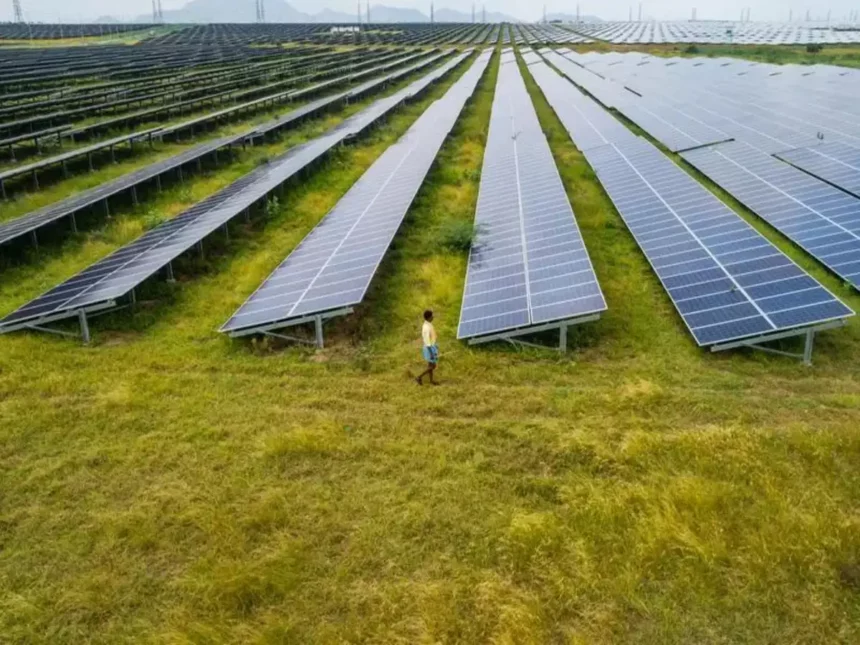
Addressing the issue of long-standing regulatory hurdles, the Power Minister said the government has clarified that the installation of elevated solar systems on farmland does not violate the Delhi Land Reforms Act, 1954. As a result, farmers will no longer be required to obtain Change in Land Use (CLU) permissions for setting up solar energy projects on their agricultural land.
End to Regulatory Bottlenecks
For years, complex land-use regulations have limited the expansion of solar infrastructure in Delhi, particularly in rural and agricultural areas. With the latest clarification, the government has effectively removed a major administrative barrier that delayed renewable energy projects.
Ashish Sood said the reform would allow farmers to generate income from solar power while continuing agricultural activities. “Farmers can now earn double income by harvesting the sun above their fields while continuing traditional cultivation below,” he said.
He added that the move ends decades of red tape that kept farmers waiting for permissions. According to the minister, the new directive replaces lengthy approval processes with a simplified, standardized undertaking to be accepted by the Revenue Department.
Vision for Dual-Use Farmland
Under the revised framework, agricultural activities will continue strictly beneath elevated solar structures, ensuring that food production is not compromised in the pursuit of energy security. Officials said the dual-use land model strikes a balance between clean energy generation and agricultural sustainability.
The minister emphasized that the policy ensures farmers retain full rights over their land while benefiting from modern renewable energy technologies. “Every farm in Delhi should not just grow crops, but also produce the clean energy that powers our city’s future,” he said.
Alignment With National Renewable Goals
The reform aligns Delhi’s energy policy with India’s broader renewable energy and Net Zero ambitions. Officials said the decision supports the national push toward decentralized clean energy and contributes to reducing carbon emissions from conventional power sources.
Ashish Sood noted that the new policy positions Delhi alongside progressive global cities that are adopting innovative solar solutions to meet future energy demands. He said Delhi cannot afford to lag behind at a time when India is racing toward global renewable targets.
Net Metering Benefits for Farmers
Projects developed under the new framework will benefit from the Delhi Electricity Regulatory Commission’s Group Net Metering (GNM) and Virtual Net Metering (VNM) regulations. This will allow farmers to monetize surplus power injected into the grid, providing them with a stable additional income stream.
Officials explained that these provisions make solar investments more financially viable for small and marginal farmers, enabling wider participation in the clean energy transition.
Inter-Departmental Coordination
The Power Minister said the reform was achieved through close coordination with the Delhi Development Authority, the Law Department, and the Revenue Department. According to him, the current administration cleared legal ambiguities in record time to ensure that renewable energy projects are not stalled by procedural delays.
He credited the leadership of Delhi Chief Minister Rekha Gupta for providing clear direction and political will to push through the reforms. “While previous administrations spent years in consultations without outcomes, this government has delivered a solution that balances farmers’ rights with future-ready energy policy,” he said.
Toward a Solar Hub
The government described the reform as a cornerstone of its broader strategy to turn Delhi into a solar hub. By making solar energy accessible at the grassroots level, particularly to farmers, the administration aims to promote energy equity alongside social and economic equity.
Officials said empowering farmers to participate in clean energy generation will not only strengthen Delhi’s renewable capacity but also contribute to inclusive growth. The Power Minister reiterated that energy equity forms the foundation of social equity and sustainable development.
With the new policy in place, the government expects a significant rise in solar installations on agricultural land, positioning Delhi as a benchmark for other Indian cities and global metropolises pursuing renewable energy transformation.