New Delhi, January 21, 2026:
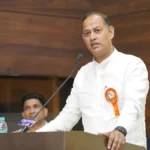
In a major policy decision aimed at transforming Delhi into India’s solar capital, Delhi’s Power Minister Ashish Sood on Tuesday announced far-reaching reforms to simplify the installation of solar power plants on agricultural land. The move is expected to unlock vast solar potential in rural areas of the capital and enable farmers to significantly enhance their income while continuing traditional farming activities.
Addressing the media, the Power Minister said that decades of bureaucratic hurdles had constrained Delhi’s renewable energy growth, particularly on agricultural land. He announced that the government has now officially clarified that installing elevated solar systems on farmland does not violate the Delhi Land Reforms Act, 1954. Consequently, farmers will no longer be required to seek Change in Land Use (CLU) permissions for green energy projects.
End to Long-Standing Red Tape
For years, complex and outdated land regulations had limited solar energy development in Delhi, keeping farmers trapped in lengthy approval processes. With the new clarification, the government has removed a major administrative bottleneck that delayed renewable energy projects and discouraged investment.
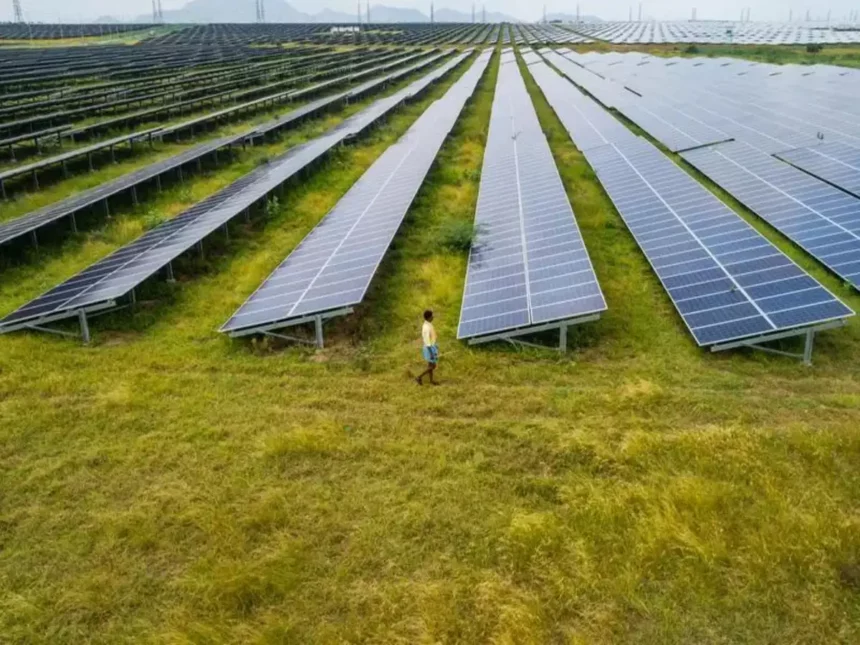
Ashish Sood said that under the revised framework, farmers will be able to generate “double income” by producing solar energy above their fields while continuing conventional cultivation below. “Delhi’s energy potential was locked in a decades-old legislative maze. While the world moved toward decentralized clean energy, our farmers were stuck waiting for permissions that never came,” he said.
He added that the government has now put an end to the era of “No Objection” hurdles by replacing lengthy procedures with a simple, standardized undertaking to be accepted by the Revenue Department.
Dual-Use Farming Model
Under the new policy, agricultural activities will continue strictly beneath elevated solar structures. Officials said this dual-use land model ensures that food security is not compromised in the pursuit of energy security. The approach allows clean energy generation without affecting farmers’ primary livelihood.
The Power Minister emphasised that the reform respects farmers’ land rights while embracing modern renewable technologies. “Every farm in Delhi should not just grow crops, but also produce the clean energy that powers our city’s future,” he said.
Aligned With National Renewable Goals
Officials said the reform aligns closely with India’s national renewable energy push and Net Zero ambitions. By encouraging decentralized solar generation, the policy supports the reduction of carbon emissions and promotes sustainable development.
Ashish Sood noted that Delhi cannot afford to lag behind when India is rapidly advancing toward global renewable energy targets. “We are not content with being just another city in the solar race. We want Delhi to set a benchmark that other global metropolises follow,” he said.
Net Metering Benefits for Farmers
Projects set up under the new framework will benefit from the regulations of the Delhi Electricity Regulatory Commission, including Group Net Metering (GNM) and Virtual Net Metering (VNM). These provisions will allow farmers to monetise surplus electricity injected into the grid, creating a steady additional income stream.
Officials explained that these mechanisms make solar investments financially viable even for small and marginal farmers, enabling broader participation in Delhi’s clean energy transition.
Inter-Departmental Coordination
The Power Minister said the reform was achieved through coordinated efforts involving the Delhi Development Authority, the Law Department, and the Revenue Department. According to him, the current administration resolved long-pending legal ambiguities in record time to ensure that renewable energy projects are not stalled by procedural delays.
He credited the leadership of Delhi Chief Minister Rekha Gupta for providing clear direction and political will. “While previous administrations spent years in consultations without results, this government has delivered a solution that balances farmers’ rights with 21st-century technology,” he said.
Toward a Solar Hub
The government described the reform as a key pillar of its broader strategy to transform Delhi into a “Solar Hub.” By making solar energy accessible at the grassroots level—particularly to farmers—the administration aims to promote energy equity alongside social and economic equity.
Officials said empowering farmers to participate in clean energy generation will not only strengthen Delhi’s renewable capacity but also contribute to inclusive growth. Ashish Sood reiterated that energy equity forms the foundation of social equity and sustainable development.
With the new policy now in place, the Delhi government expects a significant increase in solar installations on agricultural land, positioning the capital as a model for other Indian cities and global urban centres pursuing renewable energy transformation.