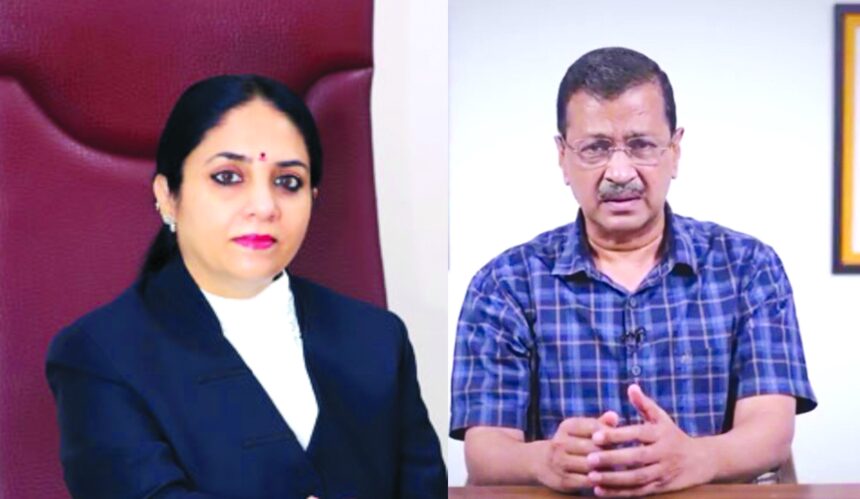
The Delhi High Court is set to hear a significant contempt petition involving senior Arvind Kejriwal and Manish Sisodia in a case that has intensified political debate and legal scrutiny across the national capital. The hearing has generated considerable attention because it involves two of the most prominent leaders associated with the Aam Aadmi Party and comes at a time when legal battles and political narratives continue to dominate public discourse in India.
The contempt petition reportedly concerns allegations related to statements, actions, or conduct connected with ongoing legal proceedings. While courts generally maintain strict standards regarding comments or activities that may influence judicial processes, contempt proceedings often become politically sensitive when public figures and elected leaders are involved. The Delhi High Court is expected to examine whether any legal boundaries were crossed and whether the actions under question violated judicial authority or procedural discipline.
The development once again places Arvind Kejriwal and Manish Sisodia at the center of India’s political and legal landscape. Over the past several months, both leaders have faced intense political pressure, multiple investigations, courtroom hearings, and sustained criticism from political opponents. Supporters of the Aam Aadmi Party argue that several legal actions against party leaders are politically motivated, while opposition voices maintain that accountability and judicial scrutiny are essential in a democratic system governed by the rule of law.
Contempt proceedings in Indian courts carry significant constitutional importance because they are directly linked to maintaining the dignity, authority, and functioning of the judiciary. Courts possess powers under the Contempt of Courts Act to take action if any person is found obstructing justice, influencing proceedings improperly, or undermining the authority of judicial institutions. Legal experts often describe contempt law as a mechanism designed to preserve public confidence in the judicial system while ensuring that court processes remain fair and uninterrupted.
The upcoming hearing is likely to attract legal experts, political analysts, and media attention because of the broader implications surrounding the case. In recent years, the relationship between politics and legal institutions has become a recurring subject of national debate. High-profile court proceedings involving political leaders frequently generate extensive public discussion, especially when allegations relate to governance, corruption investigations, institutional authority, or constitutional responsibilities.
Arvind Kejriwal remains one of the most influential regional political leaders in India. Beginning his political career as an anti-corruption activist, he rose to national prominence through mass movements focused on transparency and governance reforms. Under his leadership, the Aam Aadmi Party expanded from a regional political movement into a significant electoral force. The party gained strong political support in Delhi through policies centered on education reform, healthcare expansion, electricity subsidies, water access, and welfare-driven governance.
Manish Sisodia, regarded as one of the key architects of the Delhi government’s education reforms, also became a prominent political figure within the party. His role in shaping school infrastructure and administrative changes received attention both nationally and internationally. However, recent investigations and legal disputes involving the party leadership have overshadowed many of those governance narratives and shifted focus toward courtroom proceedings and allegations of administrative irregularities.
Legal observers believe the contempt hearing may revolve around whether certain public remarks or actions interfered with judicial processes or crossed permissible legal limits. Courts in India have repeatedly emphasized the importance of responsible public commentary, particularly when cases remain under judicial consideration. Judges often stress that criticism of institutions is permissible within democratic frameworks, but attempts to prejudice ongoing proceedings or weaken institutional trust may invite judicial intervention.
Political reactions to the hearing are expected to remain sharply divided. Supporters of the ruling establishment may present the proceedings as evidence of judicial independence and institutional accountability, while supporters of the Aam Aadmi Party are likely to interpret the case as part of a broader political campaign against opposition leaders. Such polarization reflects the increasingly confrontational nature of Indian politics where legal developments quickly evolve into major political narratives.
The Delhi High Court occupies a central position within India’s judicial structure and regularly hears constitutionally significant cases involving governance, public administration, criminal law, and political disputes. Decisions emerging from the court often carry national implications because of Delhi’s status as the country’s capital and administrative center. Any major development in the contempt proceedings could therefore attract widespread legal and political analysis.
The broader legal context surrounding the case also reflects the growing public focus on accountability in democratic governance. Indian courts increasingly find themselves balancing multiple constitutional principles including freedom of speech, judicial independence, political expression, and institutional integrity. Contempt proceedings particularly highlight the delicate balance between allowing open democratic criticism and protecting the authority of judicial systems from deliberate interference.
In recent years, courts across India have dealt with several high-profile contempt matters involving politicians, activists, media figures, and public commentators. Such cases often reignite debates over the scope and interpretation of contempt law in a modern democracy. Some legal scholars argue that contempt powers remain necessary to safeguard judicial credibility, while others believe such powers should be exercised cautiously to avoid restricting democratic expression.
The hearing involving Kejriwal and Sisodia may also influence the political atmosphere ahead of future elections and policy debates. Legal proceedings involving senior opposition figures frequently become central themes in political campaigns, public rallies, and media discussions. Political parties across the spectrum often attempt to frame such developments in ways that strengthen their own narratives before voters.
Observers note that Indian politics has increasingly witnessed the overlap of legal battles and electoral competition. Court hearings involving prominent leaders now receive continuous public attention through television debates, digital platforms, and political messaging campaigns. This growing intersection between politics, law, and media has transformed many legal proceedings into nationally discussed events with implications extending beyond courtroom outcomes.
The Aam Aadmi Party leadership has repeatedly stated that it respects constitutional institutions while also defending its political positions strongly in public forums. Party representatives have argued that legal challenges will ultimately be resolved through judicial processes and have expressed confidence in the legal system. At the same time, rival political parties continue demanding transparency and accountability from opposition leaders facing investigations or judicial scrutiny.
The Delhi High Court hearing may therefore become an important legal moment not only for the individuals directly involved but also for broader discussions concerning democratic accountability, political communication, and judicial authority in India. Regardless of the eventual outcome, the proceedings are likely to contribute to ongoing debates regarding the relationship between elected representatives and constitutional institutions.
For ordinary citizens, cases involving senior political leaders often serve as reminders of the judiciary’s role in maintaining constitutional balance. Courts remain one of the most important pillars of Indian democracy, responsible for interpreting laws, protecting rights, and ensuring institutional accountability. Public confidence in judicial processes therefore becomes especially significant during politically sensitive hearings.
As the hearing proceeds, legal experts are expected to closely monitor the arguments presented by both sides, the observations made by the bench, and any interim directions issued by the court. The developments could shape future discussions on political conduct, public commentary, and the legal responsibilities of elected representatives during ongoing judicial proceedings.
The contempt case against Arvind Kejriwal and Manish Sisodia thus stands at the intersection of law, governance, and politics. The Delhi High Court’s examination of the matter is expected to carry significance beyond the immediate legal questions involved, reflecting the broader tensions and challenges present within India’s evolving democratic and institutional landscape.