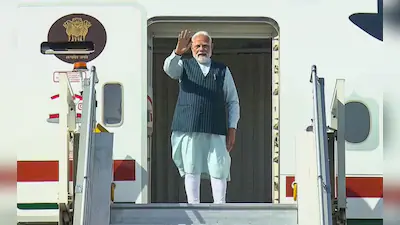
Prime Minister Narendra Modi has begun an important diplomatic tour of Europe with a focus on strengthening India’s partnership with Nordic countries and major European powers. The visit includes participation in the third India-Nordic Summit in Norway, followed by bilateral engagements in the Netherlands, Sweden, and Italy. Although the summit was originally scheduled for May last year, it was postponed after Operation Sindoor. The rescheduled visit now arrives at a critical moment in global geopolitics when countries across the world are reassessing their economic and strategic partnerships.
India’s outreach toward Europe has accelerated in recent years as New Delhi seeks to diversify its global relationships beyond traditional alliances. The changing global order, uncertainty in international trade systems, supply chain disruptions, and shifting security priorities have pushed India to deepen engagement with reliable and technologically advanced partners. Nordic nations have emerged as especially important in this strategy because of their leadership in innovation, sustainability, renewable energy, digital technology, clean infrastructure, maritime cooperation, and advanced manufacturing.
The India-Nordic Summit is expected to focus on strengthening cooperation in several sectors including green energy, semiconductors, artificial intelligence, defense innovation, climate action, healthcare technology, and sustainable urban development. Nordic countries such as Norway, Sweden, Denmark, Finland, and Iceland are globally respected for their expertise in clean technologies and social innovation. India views these nations as valuable partners in achieving long-term economic modernization and technological transformation.
One of the key goals of the Prime Minister’s Europe visit is to attract investments into India’s rapidly expanding manufacturing and technology sectors. India has been positioning itself as a global manufacturing destination through initiatives focused on industrial growth, infrastructure development, and supply chain diversification. European companies are increasingly looking toward India as a stable and large-scale market capable of supporting future growth. The strengthening of ties with Nordic countries could lead to greater investment in clean energy projects, electric mobility, green hydrogen production, smart city infrastructure, and advanced digital systems.
The recently concluded India-European Union Free Trade Agreement has also created fresh momentum in bilateral engagement. The agreement is expected to improve market access, increase exports, simplify trade regulations, and encourage greater economic cooperation between India and European countries. With trade relations expanding, Prime Minister Modi’s visit is likely to focus on ensuring that political and strategic relations move forward alongside economic partnerships.
Security and defense cooperation are also expected to remain major topics during the visit. Europe’s geopolitical environment has changed significantly in recent years because of ongoing global conflicts and rising security concerns. India is increasingly viewed as an important strategic partner in maintaining stability across the Indo-Pacific region. Nordic countries, despite their relatively smaller populations, possess advanced defense technologies and strong maritime capabilities. Cooperation in cybersecurity, naval security, intelligence sharing, and defense manufacturing could become stronger outcomes of the summit discussions.
Another important dimension of the visit is climate diplomacy. Nordic nations are global leaders in renewable energy, carbon-neutral technologies, sustainable transport, and environmental governance. India has ambitious climate targets involving renewable energy expansion, emission reduction, and sustainable industrialization. Partnerships with Nordic countries can help India gain access to advanced green technologies and policy expertise that can accelerate its environmental goals while supporting economic growth.
The visit also reflects India’s broader foreign policy realism. Instead of depending heavily on any single global power, India has increasingly pursued a multi-alignment strategy that balances relations with different regions and major economies. Europe has become an essential part of this approach because it offers technological collaboration, investment opportunities, and political support without the strategic unpredictability associated with some traditional global powers.
The Netherlands is expected to be an important stop during the tour because of its strong role in global trade logistics, semiconductor technologies, water management expertise, and agricultural innovation. India hopes to strengthen cooperation in port infrastructure, food processing, digital technology, and climate-resilient urban systems through deeper engagement with Dutch institutions and companies.
Sweden remains one of India’s most significant Nordic partners due to its advanced industrial base and innovation-driven economy. Swedish companies have maintained a strong presence in India for decades across sectors such as telecommunications, automotive manufacturing, engineering, defense systems, and renewable energy. Discussions during the visit may include future cooperation in advanced manufacturing, startup ecosystems, innovation partnerships, and defense technology collaboration.
Italy, another major destination on the tour, holds importance because of its industrial capabilities, luxury manufacturing sector, and strategic position within Europe. India and Italy have been improving ties in areas including defense, renewable energy, space cooperation, and industrial partnerships. Greater cooperation between the two countries may also strengthen India’s access to European markets and advanced technologies.
The India-Nordic partnership also carries strong significance for technology cooperation. Nordic countries rank among the world’s leading nations in digital governance, telecommunications, artificial intelligence research, and innovation ecosystems. India’s expanding digital economy offers enormous opportunities for collaboration in fintech, digital public infrastructure, cyber resilience, data management, and smart governance systems.
Healthcare cooperation may emerge as another major outcome of the summit. Nordic countries possess advanced healthcare systems and expertise in biotechnology, pharmaceutical innovation, and medical research. India, as one of the world’s largest pharmaceutical producers, could benefit from collaborative research, healthcare technology transfer, and medical innovation partnerships.
Education and research partnerships are also expected to receive attention during the visit. India has been actively encouraging academic collaborations, student exchanges, and joint research initiatives with global universities and institutions. Nordic universities are internationally respected for scientific research and innovation. Closer educational ties could strengthen India’s human capital development and innovation capabilities over the long term.
The visit is also symbolically important because it demonstrates India’s growing diplomatic confidence on the global stage. India is increasingly engaging with multiple power centers simultaneously while maintaining strategic autonomy. This balanced foreign policy approach allows India to pursue national interests more effectively in a rapidly changing global environment.
For Europe, stronger ties with India are equally important. European countries are seeking stable economic partners, diversified supply chains, and trusted geopolitical relationships. India’s large market, growing economy, technological talent, and strategic location make it an increasingly attractive partner for long-term cooperation.
Prime Minister Modi’s Europe tour therefore represents much more than a routine diplomatic visit. It reflects a larger transformation in India’s global strategy where economic growth, technological partnerships, strategic security, and climate cooperation are being integrated into a comprehensive foreign policy vision. The outcomes of the India-Nordic Summit and the broader European engagements could shape India’s partnerships with Europe for many years to come.
As global power equations continue to shift, India’s deeper engagement with Nordic countries and European partners highlights New Delhi’s effort to build resilient, future-oriented, and mutually beneficial international relationships. The visit is expected to strengthen India’s position as a major global economic and strategic power in the evolving international order.