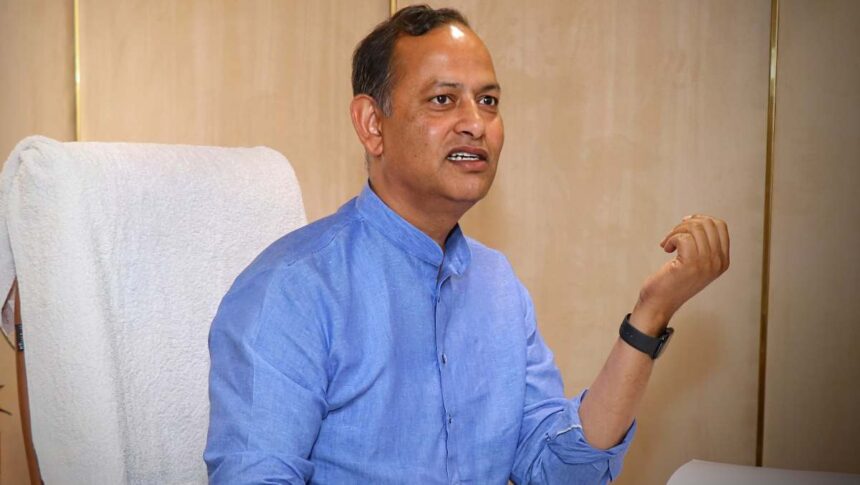
New Delhi, December 16, 2025: The Delhi government has announced an ambitious plan to develop the national capital into a National Hub of Cooperatives, aiming to promote cooperative-linked products from across the country, strengthen marketing support, and enhance income opportunities for farmers, artisans, and small entrepreneurs. The announcement was made by Delhi’s Minister for Social Welfare, SC/ST/OBC Welfare, Cooperation and Elections, Ravindra Indraj Singh, at the inauguration of the “Sahakar Haat” organised by NABARD at the State Emporia Complex in New Delhi.
Addressing the gathering, the minister said Delhi would serve as a major platform for cooperative institutions and individuals associated with the sector, providing them access to a large consumer market and improved marketing avenues. He emphasised that the cooperative movement remains the backbone of India’s economic and social empowerment and that the Delhi government is committed to taking this movement to new heights through focused policy interventions and infrastructure support.
Ravindra Indraj Singh stated that under the vision of Prime Minister Narendra Modi, the slogan “Sahakar se Samriddhi” has evolved into a nationwide movement, significantly strengthening the cooperative sector. He said people associated with cooperatives would play a decisive role in achieving the goal of a developed India by 2047. According to him, true self-reliance for the country can only be achieved when farmers, artisans and small entrepreneurs are empowered through sustainable income opportunities and access to markets.
Highlighting Delhi’s strategic importance, the minister said the capital is not only the political centre of the country but also one of its largest consumer markets. He noted that effective marketing of cooperative products from Delhi would benefit farmers and cooperative members across the country by connecting them directly with consumers. The government, he said, is working to ensure that cooperative producers receive fair value for their products while also increasing their visibility in urban markets.
As part of this initiative, the Delhi government plans to open modern cooperative stores across the city, particularly within housing societies. Ravindra Indraj Singh announced that from the New Year onwards, several cooperative stores will be launched in Delhi, providing a dedicated marketplace for handloom, handicrafts, agricultural produce and rural products. These stores, he said, would help eliminate middlemen, ensure better pricing for producers and offer quality products to consumers.
The minister also revealed plans to develop a digital platform that will allow cooperative members to register and market their products online. This platform will be designed to enable wider participation, including small entrepreneurs and individuals who have so far remained outside the cooperative framework. He said digital integration would play a key role in expanding the reach of cooperative products and making the sector more inclusive and transparent.
Referring to the current state of cooperative institutions in Delhi, Ravindra Indraj Singh said there are more than 2,000 cooperative societies in the capital, but many of them suffered neglect under previous governments. He pointed out that cooperative banks and societies were deprived of necessary reforms and institutional support for years. To address this, the Delhi government has begun working on essential legal amendments aimed at strengthening the cooperative ecosystem.
He added that continuous discussions are being held with NABARD to improve banking structures, credit societies and other cooperative institutions. The focus, he said, is on enhancing transparency, strengthening governance mechanisms and improving access to financial services for cooperative members. These reforms are expected to restore confidence in cooperative institutions and enable them to function more efficiently.
Speaking about the Sahakar Haat, the minister said participants from across the country had come to Delhi, reflecting the strength, diversity and nationwide reach of the cooperative movement. He described the event as a powerful example of how cooperatives can bring together farmers, artisans and entrepreneurs on a single platform. He expressed confidence that such initiatives would encourage innovation, collaboration and sustainable livelihoods within the cooperative sector.
Ravindra Indraj Singh praised NABARD and the organising team for successfully hosting the Sahakar Haat and said such platforms play a vital role in promoting cooperative values and economic self-reliance. He noted that direct interaction between producers and consumers helps build trust, boosts income for grassroots producers and strengthens the cooperative model.
The Delhi government’s cooperative-focused roadmap signals a broader policy push to integrate traditional sectors such as agriculture, handicrafts and rural enterprises with modern marketing and digital tools. By positioning Delhi as a national hub for cooperatives, the government aims to create a robust support system for cooperative members while contributing to inclusive economic growth.
The initiative reflects the government’s stated priorities of increasing incomes of people associated with cooperatives, providing marketing assistance and promoting self-reliance. Officials indicated that further announcements and policy measures related to cooperative development are expected in the coming months as the government works towards transforming Delhi into a central marketplace for cooperative products and innovation.