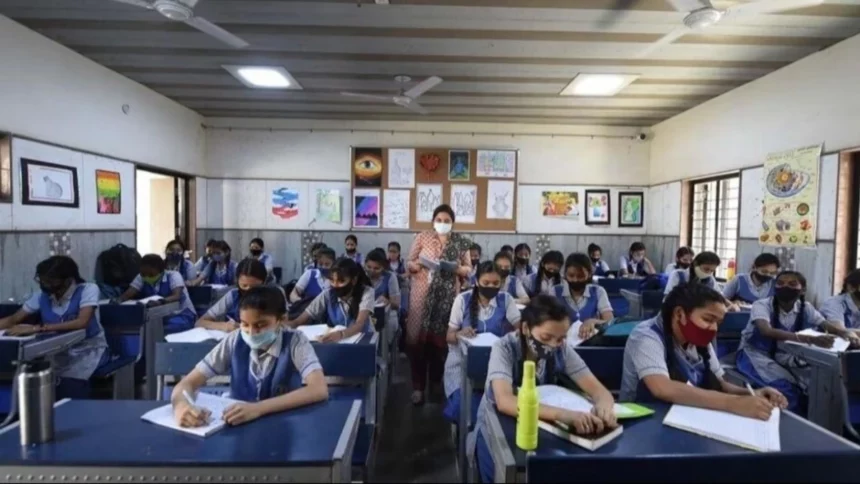
From the next academic session, parents in Delhi will have a significant new choice for their children’s education: the option of studying in English-medium sections in all classes at government schools. The Directorate of Education (DoE) has issued a circular mandating that all government schools in the city begin operating at least one English-medium section in every class starting from the 2025-26 academic year, reflecting the growing aspirations of parents who believe English instruction will better prepare their children for higher education and future careers in technology, science, and professional fields.
A New Policy for Changing Aspirations
The circular, dated July 8, 2025, instructs all heads of government schools to implement this change by the upcoming session, ensuring that every class from primary to senior secondary will have an English-medium section running alongside existing Hindi-medium sections. Admissions to these sections will be based on student interest and aptitude, with merit considered if demand exceeds available seats. The decision comes amid a visible shift in public preference towards English-language instruction as parents increasingly view it as a gateway to competitive exams, better higher education opportunities, and employment in emerging sectors.
Under this initiative, all subjects except regional languages will be taught in English to enable full linguistic immersion for students. The DoE circular also specifies that appropriate textbooks, teaching materials, and learning resources will be provided to support effective instruction in English. School heads have been directed to update their official records and reflect these changes on the Unified District Information System for Education (UDISE) portal to ensure accurate tracking and implementation across Delhi’s government school network.
Challenges in Implementation
While the move is expected to widen access to English-medium education, it also raises practical challenges at the ground level. One immediate concern is whether government schools currently have enough teachers trained to teach in English across all subjects, especially in mathematics and science, where the demand for clear, concept-based instruction in English is high. Many students from Hindi-medium backgrounds may initially struggle with the transition, requiring targeted academic support to adjust to a new medium of instruction without hampering their overall learning progress.
Additionally, questions remain on whether infrastructure—such as classrooms equipped with digital learning tools and updated English-language teaching materials—can be scaled up swiftly to support the expansion of English-medium sections without compromising the quality of education for existing students. The directive from the DoE instructs all district and zonal authorities to closely monitor the implementation process and extend necessary support to schools, underlining the importance of robust planning and continuous oversight.
The move reflects a broader trend of rising demand for English-language education across India’s public school system, aligning with parental aspirations for their children’s future prospects. However, the success of the initiative will largely depend on addressing teacher training gaps, providing additional learning support for students transitioning from Hindi-medium backgrounds, and ensuring schools are adequately resourced to deliver quality English-medium education.