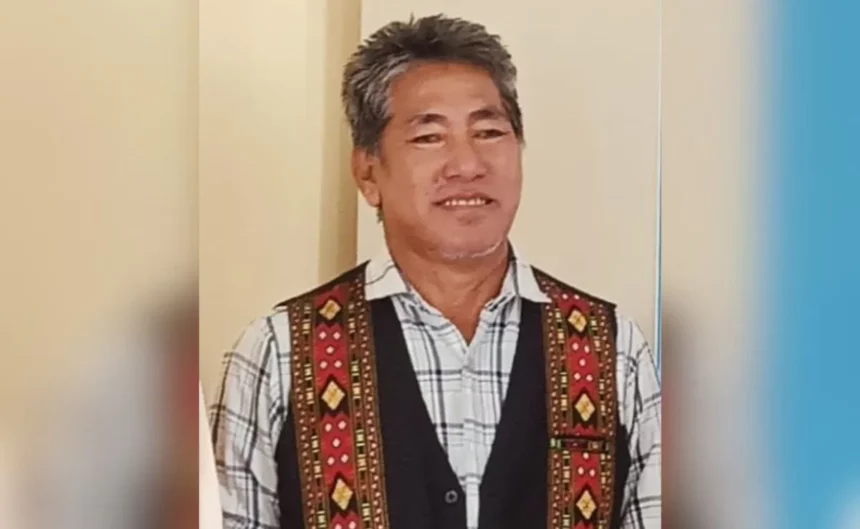
The Thadou tribe in Assam has raised urgent demands for decisive action against Kuki insurgents following the brutal murder of Thadou leader Nehkam Jomhao in Karbi Anglong last month. The incident has sparked widespread concern among the Thadou community, civil society, and student organisations across Assam and Manipur, highlighting persistent ethnic tensions in the region. Nehkam Jomhao, 59, a respected figure and chairman of the Thadou Literature Society, was attacked and killed by Kuki insurgents despite prior warnings and earlier attempts to maintain peace. In response, Thadou organisations have submitted memorandums to the Assam Chief Minister, demanding the immediate arrest and prosecution of the perpetrators, the dismantling of insurgent camps, and the revocation of any suspension of operations agreements with Kuki militant groups. The community asserts that repeated acts of violence against its members threaten not only their safety but also their distinct cultural identity, compelling the government to act without delay.
Protests and Demands for Justice by Thadou Organisations
On Wednesday, members of the Thadou tribe staged protests in Guwahati, demanding justice for Nehkam Jomhao and calling on the Assam government to take strict action against the Kuki Revolutionary Army (KRA) and other insurgent groups operating in the state. The KRA had admitted that five of its insurgents were involved in the killing but claimed that they acted independently without the organisation’s knowledge. Despite this claim, the Thadou organisations emphasised that the murder was part of a deliberate campaign by Kuki insurgents to assert dominance over the Thadou community and expand their influence from Manipur into Assam. The protesters submitted a detailed memorandum to Chief Minister Himanta Biswa Sarma, calling for the designation of all Kuki militant groups, including KRA, Kuki Liberation Army (KLA), and United Kuki Democratic Army (UKDA), as terrorist organisations under relevant laws and for their camps to be dismantled.
The memorandum stressed that the suspension of operations (SoO) agreements with Kuki insurgents, despite established ground rules, has failed to curb violence. Members of the Thadou Students’ Association in Guwahati reiterated that the Thadou community, a small and law-abiding group without armed factions of its own, continues to place its faith in the government to ensure protection under the rule of law. They emphasised that while the community stands committed to peace, it cannot remain silent in the face of terror, persecution, and attempts to erode its cultural and linguistic heritage. The memorandum underlined the urgent need for the government to safeguard the Thadou people and ensure justice, security, and protection for the community without any delay.
The brutal killing of Nehkam Jomhao, who had actively participated in peace initiatives in Manipur, underscores the peril faced by those attempting to foster communal harmony. Jomhao had attended a peace meeting in Imphal on August 6, sharing a platform with civil society organisations from the Meitei community. His participation was widely regarded as a constructive step toward reconciliation amid ongoing Meitei-Kuki ethnic tensions in Manipur. However, Kuki insurgents reportedly viewed his involvement as a betrayal. Shortly after his return to Assam, he was attacked and killed, sparking widespread outrage and condemnation.
The Thadou memorandum submitted to the Assam Chief Minister described the murder as an assault on both individual and collective identity, highlighting that repeated acts of violence by Kuki militant groups have pushed the community toward cultural and physical extermination. The Karbi Anglong district administration confirmed on September 6 that memorandums seeking decisive action against Kuki insurgents had been forwarded to all relevant departments of the Assam government, the Chief Minister’s office, and the autonomous district councils, urging appropriate action from the concerned authorities.
Historical and Cultural Context of Thadou-Kuki Relations
The Thadou community has historically resisted attempts by Kuki supremacists to subsume their distinct cultural identity under the broader Kuki umbrella. Thadou leaders allege that these groups aim to appropriate their language, traditions, and cultural capital, further exacerbating inter-community tensions. Thadou organisations in Assam and neighbouring Manipur have consistently pushed back against these attempts, asserting their independence as a distinct ethnic group recognised under the 1956 Presidential Order as one of the 29 original Scheduled Tribes of Manipur.
The Thadou Convention held in Assam’s Guwahati last November marked a landmark event in the community’s efforts to assert its unique identity. Leaders and delegates from across India, as well as Mizoram-based organisations, participated in the two-day convention. The declaration issued at the event emphasised that Thadou is neither Kuki nor part of Kuki, but a separate and independent entity with its own language, culture, traditions, and history. This declaration underscores the community’s determination to preserve its heritage and resist external attempts at cultural assimilation.
Civil society and student organisations from other ethnic communities, including Karbi and Dimasa, have also joined the Thadou protests, reinforcing calls for action against Kuki insurgents operating in Assam. The proactive response of the Assam police in previous encounters with insurgent groups, including the National Socialist Council of Nagaland and Hmar militants, has set a precedent for law enforcement’s ability to address insurgency threats effectively. The KRA’s admission of involvement by five insurgents appears to have coincided with increased monitoring by top Assam officials, suggesting heightened vigilance by authorities following the murder of Nehkam Jomhao.
The Thadou memorandum highlighted that the Kuki insurgents’ activities in Assam indicate an intention to expand the ethnic crisis from Manipur into neighbouring states. The community urged the government to dismantle insurgent camps and take decisive legal and administrative measures to prevent further violence. The memorandum noted that such targeted action is essential not only to protect individual members but also to safeguard the community’s cultural and social identity from systematic erosion.
Through protests, memorandums, and public advocacy, the Thadou community continues to demand that the government of Assam recognise the severity of the threat posed by Kuki insurgent groups. They insist that these groups’ continued ability to operate freely under SoO agreements undermines the rule of law, perpetuates violence, and threatens the stability of Assam’s autonomous districts. The Thadou organisations have repeatedly called for immediate arrests, prosecutions, and the application of anti-terror laws to Kuki militant outfits, stressing that failure to act decisively will further endanger their community and create long-term security challenges for the state.
The murder of Nehkam Jomhao, coupled with prior threats and warnings submitted to police, makes clear that Kuki insurgent groups are systematically targeting Thadou leaders and activists engaged in peacebuilding and cultural preservation. According to Thadou leaders, repeated attacks against their community exemplify a broader strategy to undermine their distinct identity while asserting Kuki dominance across Assam and Manipur. The memorandum submitted to the Chief Minister urges an immediate response to prevent further escalation of violence and to reassure the Thadou community of the government’s commitment to their safety and cultural preservation.
In light of these developments, the Thadou community emphasises that peace, law, and order must be actively enforced. They appeal to the Assam government to ensure that all necessary legal and administrative measures are implemented to deter Kuki insurgent activities, dismantle militant camps, and protect the Thadou people from both physical and cultural threats. The memorandum concludes with an urgent plea to act without delay, reflecting the community’s deep concern for the safety, identity, and future of its members.
The ongoing situation underscores the fragility of peace in Assam and the broader Northeast region, where inter-ethnic tensions, insurgent activity, and historical grievances continue to challenge governance and security. Thadou organisations insist that the government’s swift intervention is critical to preserving communal harmony, safeguarding cultural identities, and preventing the spread of conflict from Manipur into Assam. The submission of memorandums, coupled with public protests and coordinated advocacy, reflects a comprehensive effort by the Thadou community to ensure that justice is served and that their distinct heritage is protected.
By highlighting the murder of a peace advocate, the ongoing insurgent threats, and the broader cultural implications, Thadou organisations have brought attention to the urgent need for decisive state action. Their advocacy emphasises that protecting the community’s safety and identity is integral to maintaining law, order, and social stability in Assam’s autonomous districts. In doing so, they appeal to both local and central authorities to recognise the systematic nature of the threat posed by Kuki insurgent groups and to take measures commensurate with the gravity of the situation.
The Thadou memorandum and protests demonstrate the community’s resilience and commitment to peace despite facing targeted violence. By appealing directly to the Assam Chief Minister, the Thadou community has reinforced the importance of immediate government action, not only to ensure justice for Nehkam Jomhao but also to prevent future attacks and secure the community’s cultural and social integrity. The ongoing mobilisation of civil society, student organisations, and allied ethnic groups underscores the broader implications for regional security and communal harmony, necessitating a coordinated and decisive response from authorities.