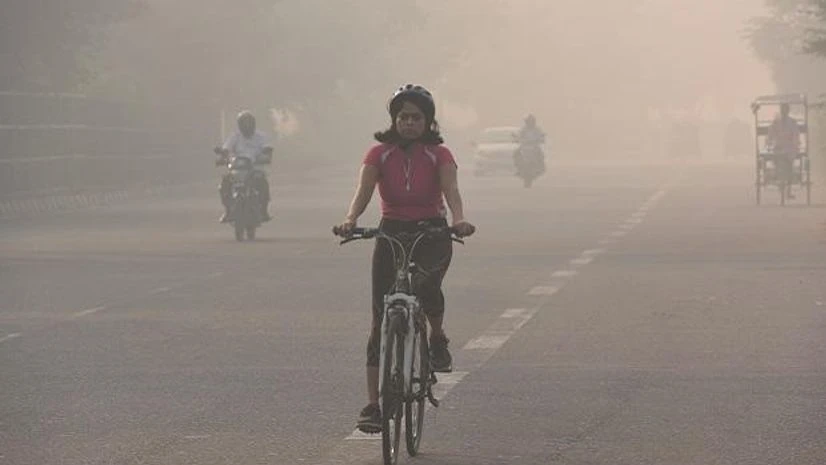
cEnvironment Minister Manjinder Singh Sirsa announced that the administration is “fully prepared” to carry out cloud seeding operations in the Capital, a scientific method aimed at inducing artificial rainfall to reduce the hazardous levels of air pollutants that accumulate during and after the festival. With four successful trial flights already conducted over northwest Delhi, authorities are now awaiting the final green signal from the India Meteorological Department (IMD), along with the optimal cloud conditions required for the operation. The initiative, which represents one of the city’s most advanced efforts to combat post-festive pollution, is being closely coordinated with IIT Kanpur, which has modified a Cessna-206H aircraft for cloud seeding, and involves meticulous planning of flight paths, weather monitoring, and coordination with multiple government agencies.
Delhi’s Cloud Seeding Preparations and Operational Strategy
Cloud seeding, the scientific technique planned by the Delhi government, involves dispersing substances such as silver iodide into clouds to enhance their precipitation potential, thereby inducing artificial rain. The objective is to leverage rainfall to wash out the suspended particulate matter and other pollutants that spike in the air following Diwali festivities, particularly the use of firecrackers. The selected zone for the pilot project is northwest Delhi, an area identified for its high pollution levels during the post-festival period. Over the course of four days, trial flights have been successfully conducted in this zone, allowing pilots to familiarize themselves with the flight paths and operational protocols. The aircraft designated for the operation is stationed at Meerut, and the pilots involved have completed extensive preparatory work to ensure precision in cloud seeding maneuvers once the IMD gives its final clearance.
While the project has completed significant preparatory steps, its execution is heavily dependent on atmospheric conditions. Nimbostratus clouds, which are ideal for cloud seeding, typically form between 500 meters and 6,000 meters above ground level and must contain at least 50 percent moisture content for successful precipitation. Currently, Delhi’s skies do not exhibit sufficient moisture or cloud density, causing a delay in the operation. IIT Kanpur officials involved in the project are closely monitoring atmospheric conditions, looking for the right combination of cloud formation, wind speed, and ambient humidity that can maximize the effectiveness of seeding. The government hopes that, once the conditions are optimal, the first cloud seeding operation could be conducted the day after Diwali or the following day, depending on weather patterns.
The Delhi Cabinet approved the cloud seeding initiative at a cost of ₹3.21 crore in May, and permissions from over ten regulatory bodies, including the Union environment, defence, and home ministries, the Directorate General of Civil Aviation (DGCA), Bureau of Civil Aviation Security (BCAS), the Airports Authority of India (AAI), and the UP government, have already been secured. Additionally, a formal memorandum of understanding with IIT Kanpur was signed on September 25, following flight clearance granted by the DGCA. The timing of cloud seeding has been adjusted multiple times due to monsoon variability and unexpected rainfall events. Originally slated for May–June, initial trials were postponed, and a revised window in August–September was missed because the monsoon extended until late September. Further trials scheduled for early October were delayed due to unseasonal rainfall from a western disturbance.
Expected Impact on Air Quality and Challenges Ahead
Experts suggest that artificial rainfall induced through cloud seeding has the potential to significantly improve air quality in Delhi by reducing particulate matter concentrations. Depending on the intensity and spatial coverage of the rainfall, air quality index (AQI) levels could see a reduction of 50–80 points. If the AQI is in the “very poor” category during the post-Diwali period, it could improve to “poor,” while “poor” levels could be brought down to “moderate.” However, light rain or drizzle is unlikely to have a meaningful impact; sustained and strong showers are necessary to achieve a substantial “washout effect” across the city. Factors such as wind speed, the area of influence, and rainfall intensity will determine the degree to which pollution levels can be mitigated, according to Dipankar Saha, former head of the Central Pollution Control Board’s air lab.
While the Delhi government remains optimistic about the project, experts urge caution. Similar experiments have been conducted in other countries with mixed results. In Dubai, cloud seeding has been used primarily to address drought conditions rather than pollution, while in Pakistan, attempts at cloud seeding for air quality management led to only temporary reductions in AQI, which rebounded almost immediately. For Delhi, the challenge is particularly complex, as cloud seeding would need to influence the entire urban expanse to achieve significant air quality improvements. Additionally, there remains uncertainty regarding whether the seeding will generate sufficient rainfall to produce the desired reduction in pollutants, given the city’s variable atmospheric conditions.
The Delhi project is unique in its collaboration with IIT Kanpur, which has adapted a Cessna-206H aircraft specifically for cloud seeding operations. This includes retrofitting the plane with equipment to disperse silver iodide into clouds at precise altitudes, ensuring optimal coverage for precipitation. The pilots have undergone extensive training and trial runs to master the technical and operational aspects of the project. Coordination between the aircraft crew, meteorologists, and air traffic authorities is critical to ensuring both safety and effectiveness. The meticulous planning reflects the government’s commitment to deploying a technologically advanced solution to a problem that has long plagued the city during the post-Diwali period.
Authorities highlight that while cloud seeding is a promising tool, it is not a standalone solution to Delhi’s air pollution crisis. It must be complemented by other measures, including stricter enforcement of firecracker bans, increased monitoring of industrial emissions, and long-term strategies for vehicular pollution control. Nonetheless, if successful, the cloud seeding initiative could offer immediate relief to residents struggling with severe smog and high AQI levels during the festive season.
The operation’s timing is critical. To maximize the impact on post-Diwali pollution, seeding must coincide with cloud formations that are dense enough to carry moisture and allow artificial rain to fall over significant parts of the city. Meteorologists from IIT Kanpur and the IMD are constantly analyzing satellite imagery, humidity levels, and wind patterns to identify the most suitable window for the operation. The collaboration between scientific institutions and the government underscores the importance of evidence-based interventions in managing urban environmental crises.
Beyond the immediate environmental impact, the project also carries political and administrative significance. Successfully reducing post-Diwali pollution through cloud seeding could position Delhi as a pioneer in urban air quality management, setting a precedent for other heavily polluted cities in India. Conversely, any operational delays or failures could draw criticism, highlighting the challenges inherent in applying high-tech solutions to complex environmental problems.
Financially, the ₹3.21 crore allocation underscores the government’s willingness to invest in advanced technological solutions to address public health issues. The comprehensive approvals from multiple government bodies indicate that authorities are committed to ensuring compliance with aviation regulations, environmental norms, and inter-state coordination requirements. The involvement of multiple stakeholders, from the DGCA to the UP government, highlights the multifaceted nature of executing such a large-scale intervention in a densely populated urban environment.
Experts emphasize that cloud seeding alone cannot permanently resolve Delhi’s air quality issues. While rainfall can temporarily reduce particulate matter and improve AQI, long-term improvements require sustained measures across multiple sectors, including transportation, industry, waste management, and urban planning. Nevertheless, the post-Diwali cloud seeding initiative represents a proactive, science-driven attempt to mitigate one of the most visible and harmful environmental challenges faced by the city each year.
The Delhi government’s post-Diwali artificial rain plan illustrates a significant shift toward embracing technological and scientific approaches to environmental governance. With meticulous preparation, collaboration with premier scientific institutions, and coordination with regulatory authorities, the initiative demonstrates a structured and evidence-based approach to tackling severe air pollution. The coming days, as IMD clears the project and cloud conditions become favorable, will be critical in determining whether artificial rain can offer tangible relief to millions of Delhi residents struggling with the annual post-festive pollution crisis. The project embodies a careful balance of innovation, environmental science, and governance, highlighting the potential of cloud seeding as part of a broader strategy for urban air quality management.